How We Provide Design Digital Services: A Step-by-Step Guide
Did you know that 94% of small businesses had a planned increase in their marketing budgets in 2024? The world has leaped its way into the digital design age – a time where living, working, and interacting online has become the norm. While daily life has already assumed a new shape, business operations have also transformed with the integration of technology.
No wonder this has spurred the demand for innovative, seamless, and user-friendly digital solutions across sectors. Companies are expected to provide intuitive digital design experiences in delivering their products and services. After all, the customer’s needs have evolved with the digitization of productivity, communication, and customer service.
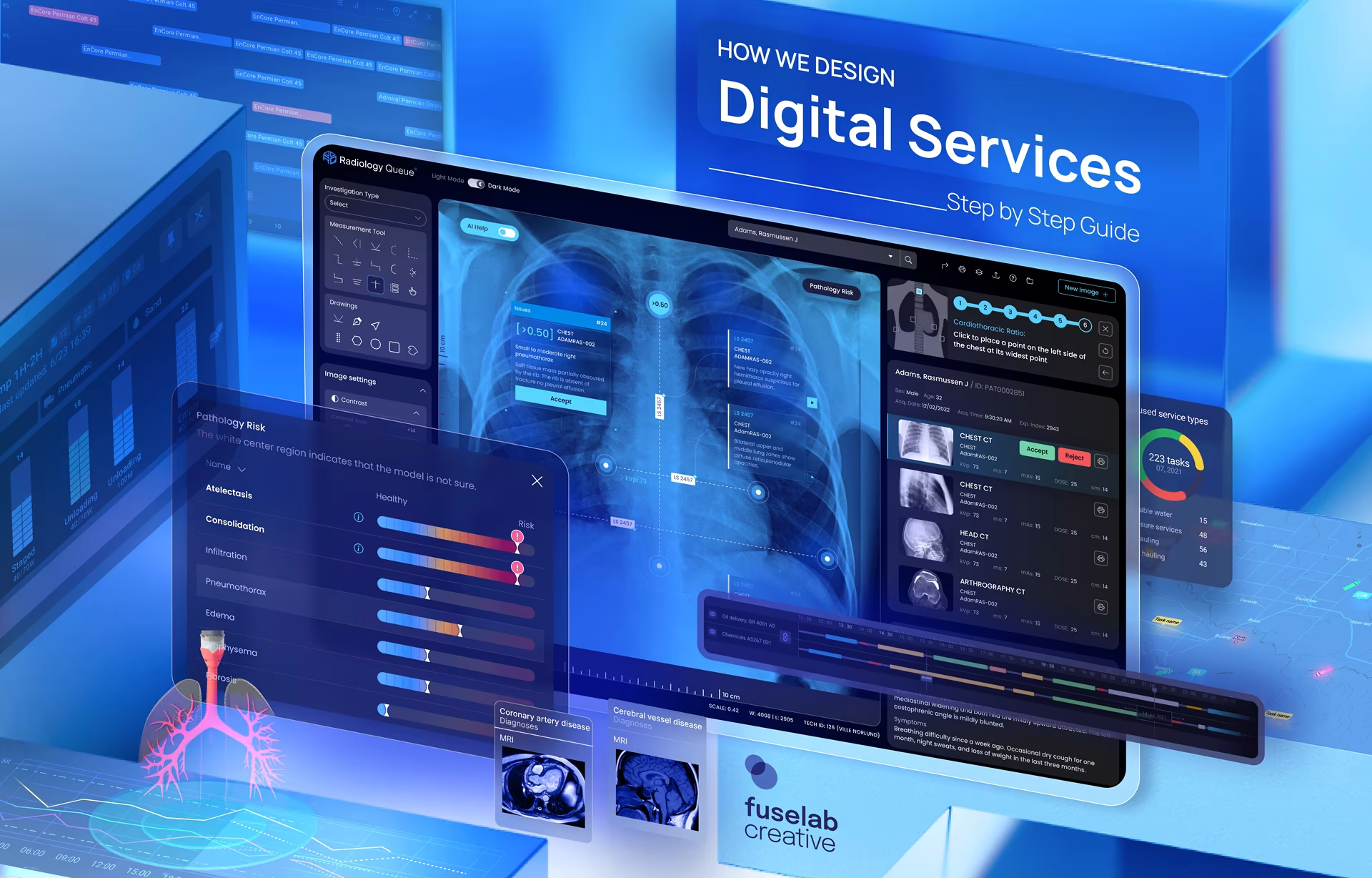
At Fuselab, we are dedicated to designing and delivering high-quality, user-centric digital services that not only meet but exceed user expectations. This guide gives you an inside look at our step-by-step design process for creating meaningful digital services. From initial concept development to final implementation, here are the methods and principles that guide our time-tested approach.
#1 Discovery and Research
The foundation of any successful digital design service project, the discovery and research phase is where we begin decoding the client’s vision, aligning it with the end user’s needs, and gathering critical insights to shape the design process.
The goal here is to develop a digital design roadmap that will ensure that the final product resonates with users while delivering on the client’s strategic objectives. Here’s how we ensure this, step by step:
- Initial Consultation: This is the first step where we meet you to understand in detail your goals, brand values, and the target audience you wish to serve. Think of this as the root of our collaboration, setting the stage for aligning expectations and developing a shared vision for the project.
- User Research: Once we clearly understand your goals and desires, we start gathering feedback directly from the intended user base. We identify user pain points and preferences through surveys, interviews, and usability studies. This ensures that the service design addresses real, on-ground needs instead of just working on assumptions.
- Competitive Analysis: A critical step for us in the discovery and research phase, competitive analysis helps us understand what other solutions exist in the market. This helps us differentiate our digital design while eyeing opportunities for innovation.
- Market Analysis: This is the final step in this phase, where we collect industry-specific data highlighting current digital design trends, best practices, and dynamic user expectations.
Think of the discovery and research phase as the first and crucial step in digital design services. It is the most important element for informed design decisions and data-driven strategies. In fact, United Airlines was able to increase online ticketing by 200% and double its sales by conducting user research.
#2 Design and Prototyping
The digital design and prototyping phase is where creativity and user insights come together for the digital service’s solid output. Fuselab believes in crafting interfaces that are visually appealing, intuitive, and user-centric at the same time. This is why we translate our research findings into wireframes outlining the basic structure and flow at this stage.
Next, our designers work out high-fidelity mockups emphasizing ease of navigation and cohesive visual design, so user engagement with the service is nothing short of seamless. Prototype development comes next, where we create interactive models mimicking the final product as closely as possible without adding any code development, which saves our clients time and money.
This gives clients and stakeholders a tangible preview of the service for adjustments before costly development begins. Fewer redesigns translate into a smoother end product and more cost savings. Take the example of a Mozilla support site, which was able to get a 233% improvement out of prototype redesigning for usability.
The final step is user testing, where real users are brought in to interact with the prototype and their feedback is collected. User comments on the prototype’s usability and functionality give us a peek into how best to refine design elements and ensure that the digital services meet the goals. Fuselab uses an iterative approach in this stage, blending together user input and foundational web design principles – intuitive navigation, clear call-to-actions, engaging visual layout, etc. – to drive results.
#3 Digital Design Development and Implementation
The development and implementation phase is where our designs come to life. At Fuselab, we focus on transforming the interactive blueprint into a robust product aligned with client expectations and user needs.
Modern development standards and methodologies ensure that the end product is reliable and high-performing. Both front-end and back-end development are crucial to this process – front-end to translate UX/UI digital designs into attractive interfaces using clean, efficient code, and back-end to build scalable, secure architectures for efficient data handling.
The next step involves integrations and functionality testing so the product works harmoniously with existing platforms, APIs, and third-party tools. This helps minimize user disruptions while extending the service utility. Our team conducts multiple integration checks to iron out potential issues early on.
Finally, quality assurance (QA) is where we test the digital services in-depth to ensure they function as expected across devices and browsers. We assess performance, security, and responsiveness to ensure any bugs are caught before launch. No wonder QA has taken center stage in development budgets in large enterprises, with around 40% of the overall cost allocated to it.
#4 Launch and Post-Launch Support
The final launch phase marks the end of digital design and development, when the digital service is made available to actual users. Fuselab values the importance of a smooth and well-coordinated launch, which is why we work closely with our clients to ensure every detail is in place and are available 24/7 to jump back in to solve any unexpected issues.
Rely on our launch strategy around timing, marketing campaigns, and user engagement tracking to generate excitement and ensure user readiness. We also implement tools to track initial user behavior and feedback, lending valuable insights for continuous optimization.
After launch, monitoring and maintenance are key to ensuring the digital service remains relevant and functional. Fuselab offers continuous support to address technical issues, make necessary updates based on user feedback, and improve features or fix bugs as needed. Research suggests that 90% of customers consider an immediate response essential for customer service.
At Fuselab, we also offer client training to ensure you are equipped to manage and maintain the digital service after launch. Browse our tutorials and training sessions to make the most of your new service, update content, and troubleshoot basic issues on your own. Use and update your digital service with confidence, without having to rely on external support for every little change.
Conclusion: Why Our Process for Digital Design Services Works
Fuselab’s creative step-by-step design process stands out from the crowd because of its customer-centric approach, built on a foundation of research and collaboration. Each phase, from discovery and research to final launch and ongoing support, has been crafted to ensure functionality, performance, and impact of the final service.
Fuselab integrates user insights, strategic design principles, and continuous testing to create products, dashboards, and interface designs that is seamless, engaging, and highly effective for years to come. Our ideas and processes work because they are founded on human-centered data-driven decisions and long-term support.
If you are looking to design a digital service that delivers results, Fuselab’s solution-driven approach is where your search ends. Reach out to us today to see how we can turn your digital vision into reality.
Author