Digital design services cover everything required to take a software product from concept to shipped screens: user and product research, UX and UI design, dashboard and data visualization design, and AI interface work.
Fuselab Creative has delivered this work since 2017 from McLean, Virginia, for SaaS companies, healthcare platforms, fintechs, and federal and state agencies, which can engage directly through Fuselab's GSA contract.

Core digital design services

UI/UX Design
Each engagement gets a UX lead plus several UI designers, and every project starts with three distinct design directions from three different designers before anything reaches the client. The reason is not volume: comparing real alternatives early surfaces the strongest information architecture before development budgets are committed. This approach also gives our clients a reassurance that they have selected a talented team that can deliver.

Interface Design
Interface design is where a product earns or loses its second session. Our UI work concentrates on interaction cost: fewer decisions per screen, visible system state, and layouts that survive real production data instead of demo data. That discipline matters most in dashboard-heavy products, where one crowded screen can bury the number a user came for.

UX Consulting
UX consulting starts with specific, written user and business goals, then measures every proposed design decision against them. Engagements typically begin with a research and discovery phase: stakeholder interviews, user interviews, and an audit of the current product. The output is a documented set of goals and design recommendations and initial wireframes your team can execute with or without us.

Digital Product Design
Digital product design combines architecture, market understanding, data visualization, and user flow design into one engagement, whether the product is enterprise SaaS, a mobile application, or a web app. Splitting those disciplines across vendors is where most products acquire their inconsistencies. One team carrying a product from research through UI keeps the logic coherent. This is also why we deploy a designer-first approach to project management - keeping the lead designer as you primary contact as well as design lead.

Data Visualization
Data visualization succeeds or fails on decisions made before any chart is drawn: which relationships in the data actually matter, how often the data updates, and who has to act on it. We design visualizations around those constraints, then build the dashboard framework that lets users interrogate, and manipulate the data when appropriate, versus admiring it.

Dashboard Design
Dashboard design turns operational data into screens people check every day. The work that decides whether that happens is invisible behind permission models, filter logic, and how the interface behaves when live data is incomplete or late. We design for those conditions first, only surfacing visuals and data that help the user make decisions and take action if needed.
12 Projects
Our process of creating visually appealing and user-friendly interfaces that enhance the overall user experience of a digital product or website has been refined and perfected over a decade now.
Cases

Grid AI
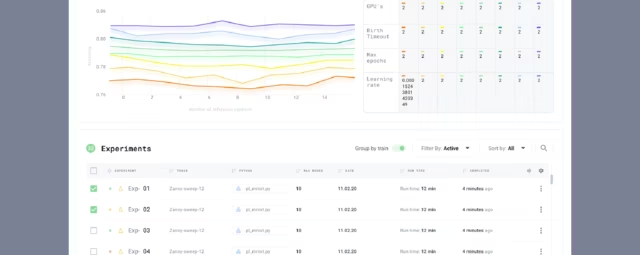
Read MoreMachine learning dashboard and interface design by Fuselab Creative

Bearn
Read MoreBearn digital health and wellness technology.

Blis
Read MoreAdvertising technology platform design by Fuselab Creative

Geotab
Read MoreOne platform for connected and sustainable fleet performance.

GeoTourist
Read MoreExperience your environment in a new and inspiring way.

ReferralMd
Read MoreHealthcare referral management and EHR platform design by Fuselab Creative

Handshake
Read MoreProfessional networking and career platform design by Fuselab Creative

Mozilla
Read MoreOpen-source voice data platform design by Fuselab Creative

EM Dental
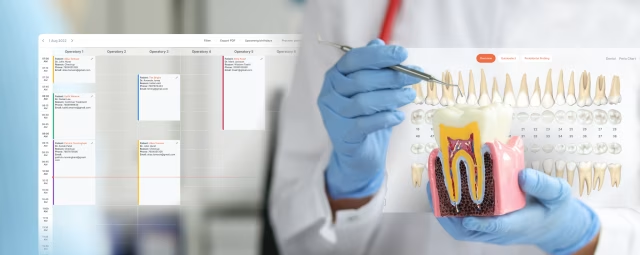
Read MoreDental practice management software design by Fuselab Creative

Nike
Read MoreCustom print and digital experience design by Fuselab Creative

POGO
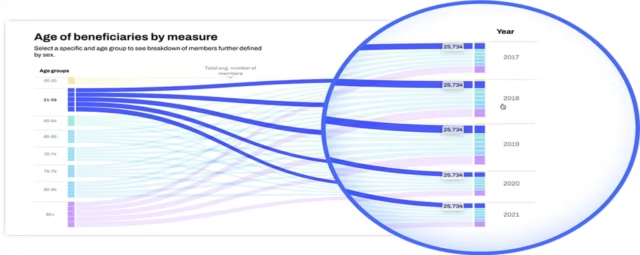
Read MoreGovernment spending transparency and data visualization platform by Fuselab Creative

Rybbon
Digital rewards and e-gift card platform design by Fuselab Creative
6 Projects
This service encompasses the creation and optimization of visual and interactive elements within a digital product or platform to facilitate seamless user interactions and an enhanced user experience.
Cases
ReferralMd
Read MoreHealthcare referral management and EHR platform design by Fuselab Creative
GeoTourist
Read MoreExperience your environment in a new and inspiring way.
Geotab
Read MoreOne platform for connected and sustainable fleet performance.
Mozilla
Read MoreOpen-source voice data platform design by Fuselab Creative
EM Dental
Read MoreDental practice management software design by Fuselab Creative
POGO
Read MoreGovernment spending transparency and data visualization platform by Fuselab Creative
5 Projects
This is a specialized service of providing our expert guidance, analysis, and recommendations to businesses or individuals seeking to improve the user experience of their digital products or services.
Cases
Blis
Read MoreAdvertising technology platform design by Fuselab Creative
Handshake
Read MoreProfessional networking and career platform design by Fuselab Creative
GeoTourist
Read MoreExperience your environment in a new and inspiring way.
Geotab
Read MoreOne platform for connected and sustainable fleet performance.
Grid AI
Read MoreMachine learning dashboard and interface design by Fuselab Creative
4 Projects
Our digital product design focuses on the holistic process of conceptualizing, designing, and crafting user-centric digital products that effectively meet user needs and achieve business goals.
Cases
Grid AI
Read MoreMachine learning dashboard and interface design by Fuselab Creative
Geotab
Read MoreOne platform for connected and sustainable fleet performance.
Bearn
Read MoreBearn digital health and wellness technology.
EM Dental
Read MoreDental practice management software design by Fuselab Creative
8 Projects
For Fuselab, data visualization design involves the art and science of representing complex data sets in a visually compelling and easily understandable manner to enable effective communication and expert-level insights.
Cases
Grid AI
Read MoreMachine learning dashboard and interface design by Fuselab Creative

DHCS
Read MoreHealthcare data visualization and dashboard design by Fuselab Creative
EM Dental
Read MoreDental practice management software design by Fuselab Creative
Blis
Read MoreAdvertising technology platform design by Fuselab Creative

NASA
Data visualization and user experience design for America's space agency by Fuselab Creative
Handshake
Read MoreProfessional networking and career platform design by Fuselab Creative
GeoTourist
Read MoreExperience your environment in a new and inspiring way.
POGO
Read MoreGovernment spending transparency and data visualization platform by Fuselab Creative
6 Projects
This service is primarily based on the process of creating visually appealing and information-rich graphical interfaces that consolidate and present key data and metrics in a concise and easily understandable format for efficient monitoring and decision-making.
Cases
EM Dental
Read MoreDental practice management software design by Fuselab Creative
GeoTourist
Read MoreExperience your environment in a new and inspiring way.
Grid AI
Read MoreMachine learning dashboard and interface design by Fuselab Creative
Geotab
Read MoreOne platform for connected and sustainable fleet performance.
Blis
Read MoreAdvertising technology platform design by Fuselab Creative
DHCS
Read MoreHealthcare data visualization and dashboard design by Fuselab Creative
Snapshot
Every project below shipped with a constraint that would never show up in a screenshot: an accessibility standard, a compliance review, or live production data that had to work on day one.




All design services

Design Systems

Web App Design

Mobile App Design

Dashboard System Design

Website Design

Design For Startups

Design For Enterprise

AI/ML Design and Development

Design Experimentation

UX Research

Map Visualization

Development

SaaS Design

Human Machine Interface Design

Healthcare Data Visualization Design

Business Dashboard Solutions

Voice User Interface

Simulation UI Design

AI Chat Interface Design

AI Workflow for UI Design & Automation

Interaction Design

Digital Twin
Industries we design for

Healthcare products come with design constraints most industries never see: HIPAA data handling, WCAG accessibility, and clinical users who abandon anything that adds clicks to a charting workflow. Interfaces that survive here are designed around the clinical workflow, not the feature list.

Booking and navigation flows have to work one-handed, offline, and in a hurry, because travel products are used almost entirely on mobile. The design work is mostly about removing steps between intent and confirmation.

Telematics runs on realtime dashboards: vehicle tracking, analytics, and dispatch communications that operators watch all shift long (As long as they aren’t sleeping). The design problem is density, meaning how much status one screen can carry before an operator stops seeing it.

Machine learning products fail in the interface more often than in the model. ML interfaces have a specific failure mode: showing users every metric instead of the one that needs a decision. Design systems for AI products exist to prevent exactly that.

Ecommerce design is conversion work: product discovery, checkout friction, and the trust signals that decide whether a first-time visitor buys. At retail traffic volumes, small interaction details move measurable revenue, and one hiccup can me a lightening fast downward trajectory.

Public-sector products are used by people with no alternative and often no training, which makes accessibility a contractual requirement rather than a checkbox. On these engagements, Section 508 documentation starts at kickoff, and continues through each and every stage of the project, instead of waiting for a final audit.

Financial products carry an emotional load that most software never has to manage; a confusing balance screen reads as a threat, not an inconvenience. We design finance tools that show people where they stand before asking them to act.

Manufacturing interfaces answer one question: what is the line doing right now? Robotics is rewriting every workflow it touches, and the screens that keep up follow one discipline: current state first, detail on demand.

Fintech interfaces have to make money movement feel safe and auditable at the same time: KYC onboarding, transaction states that never leave a user guessing, and compliance requirements that shape every screen. Trust here is a design output, not a brand promise.
A Washington DC design agency


Clients we've designed for

AI-driven product design and user experience services by Fuselab Creative

Uber
Read MoreMobile app design for transportation services by Fuselab Creative

EY
Enterprise digital twin design by Fuselab Creative
NASA
Data visualization and user experience design for America's space agency by Fuselab Creative

NIH
Healthcare interface design for the National Institutes of Health by Fuselab Creative

Avison Young
AI-canvas platform for commercial real estate by Fuselab Creative

Informa.com
interface design for a global knowledge and information company by Fuselab Creative
Mozilla
Read MoreOpen-source voice data platform design by Fuselab Creative
Grid AI
Read MoreMachine learning dashboard and interface design by Fuselab Creative
POGO
Read MoreGovernment spending transparency and data visualization platform by Fuselab Creative
Blis
Read MoreAdvertising technology platform design by Fuselab Creative
Nike
Read MoreCustom print and digital experience design by Fuselab Creative
Rybbon
Digital rewards and e-gift card platform design by Fuselab Creative
ReferralMd
Read MoreHealthcare referral management and EHR platform design by Fuselab Creative

Novadontics
Dental EHR, scheduling, and marketing platform design by Fuselab Creative

Aircraft Bluebook
Aircraft valuation data platform design by Fuselab Creative

George Mason University
AI-powered healthcare injury records platform design by Fuselab Creative

Aviation Week
Aviation industry information platform design by Fuselab Creative

Wärtsilä
Energy and maritime data visualization and platform design by Fuselab Creative

Corelight
Cybersecurity threat detection platform design by Fuselab Creative

Leadership Connect
Government intelligence and connections platform design by Fuselab Creative

RhythmX Al
Healthcare AI platform and data experience design by Fuselab Creative

Public Health Institute
Addiction support and treatment digital platform design by Fuselab Creative

Impac
Real-time oil and gas drilling analytics dashboard design by Fuselab Creative

Riderintel
AI threat intelligence platform design by Fuselab Creative
EM Dental
Read MoreDental practice management software design by Fuselab Creative

CYNGN
Autonomous vehicle technology platform design by Fuselab Creative

Hyperframe
Construction technology platform design by Fuselab Creative

ATB Banks
Financial services user experience design by Fuselab Creative

CRISP
Health information exchange platform design by Fuselab Creative
DHCS
Read MoreHealthcare data visualization and dashboard design by Fuselab Creative
Handshake
Read MoreProfessional networking and career platform design by Fuselab Creative
Digital design services FAQ
What do digital design services include?
Digital design services include user and product research, UX and UI design, dashboard and data visualization design, design systems, AI interface design, and sometimes a little magic, all services usually delivered as one engagement from discovery through developer handoff. Some agencies, Fuselab included, also cover front-end development and API integration so the design ships as specified.
Should we hire one agency for design and development, or separate vendors?
A single team carrying both design and development removes the most expensive failure point in digital projects: the handoff. Separate vendors work when your engineering team is strong and only design is missing. If neither capability exists in-house, splitting the work doubles your coordination load and blurs accountability for the final product.
Do you work with startups or only with enterprise teams?
Fuselab works with both, but the engagement shape differs: startups usually need an MVP designed fast enough to test the market, while enterprise and regulated-industry teams need design that survives compliance review and integrates with existing systems. The fit conversation happens in the discovery call, before any contract.
How do we know which design service we need?
Choosing a design service starts from the problem, not the service name. A product users abandon needs UX research first; a product that works but looks dated needs UI design; one drowning users in data needs dashboard and visualization work. A discovery call maps the problem to scope before any contract is written.
Can government agencies work with Fuselab directly?
Government agencies at the federal and state level can engage Fuselab directly under its GSA contract, without a competitive bidding process. Compliance experience and the engagement path are covered on the government design services page.