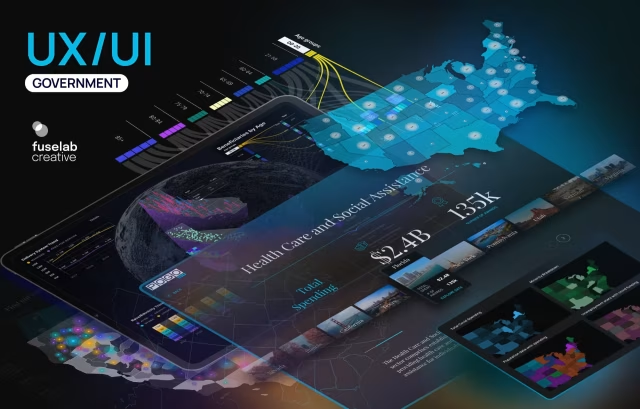
Fuselab is a government UX design agency based in the Washington DC metro area with a ten-year track record in public sector digital work. Clients include the National Institutes of Health, the California Department of Health Care Services, and CRISP, the state-designated Health Information Exchange for Maryland. Fuselab holds a GSA-MAS contract, and the DHCS engagement is now in its second two-year contract covering research, design, and full development of data visualization dashboards tracking long-term care data for residents across California.
Design Services for Government
Government digital products operate under constraints that private sector products do not. Section 508 compliance is a legal requirement for all federal digital interfaces, not an optional accessibility improvement. WCAG 2.1 standards govern how public-facing content must be structured for users with disabilities. Multi-stakeholder approval cycles mean design decisions require sign-off from program managers, legal teams, and agency leadership before implementation. Legacy system integration is the norm, not the exception. Fuselab's government design process is built around these constraints from the first sprint, not introduced at the compliance review stage.










UI UX Design
Process
Government UI/UX design starts with accessibility as a foundation, not a final check. Every interface Fuselab delivers for a government client is built to Section 508 standards and tested against WCAG 2.1 criteria before handoff. Government design systems serve the entire public, which means they must work across a wider range of user abilities, devices, and network conditions than any commercial product. Fuselab has delivered design systems and interfaces for local, state, and federal agencies with this foundation in place from the first wireframe. See how Fuselab approaches UX research for government platforms.

1. Research
- Use cases
- Site maps
- Low-fidelity wireframes
- Requirements gathering
- Agency goals

2. Creation
- User flows
- High-fidelity wireframes
- Clickable prototypes
- UI design
- User testing

3. Finalizing
- Design system delivery
- Handoff to development team
- Bug fixing support
- Final user testing
- Publication
Fuselab Creative
Work Examples
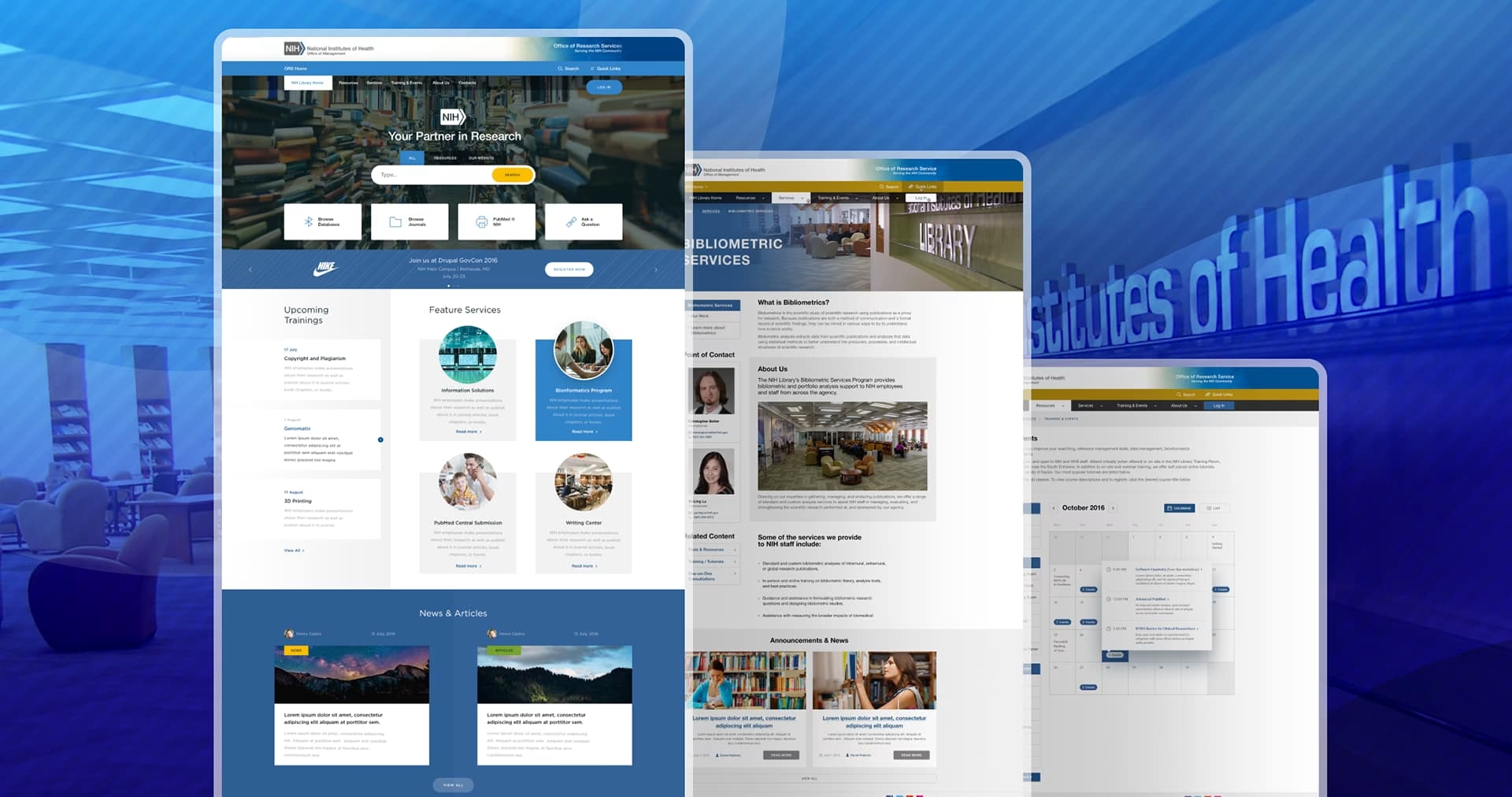
Fuselab holds a GSA-MAS contract certification, which means federal agencies can engage directly without a full open competition procurement process. The contract covers digital design and development services at the city, state, and federal level. Government clients have included the National Institutes of Health for interface design work, the California Department of Health Care Services for a multi-year data visualization and dashboard development engagement, CRISP for the Maryland state Health Information Exchange user guide, and ORIP for NIH research program interface work.
Why choose
Fuselab Creative for
Government &
Non-Profit Platforms?
Government design systems have unique needs, as they are designed with broad public use in mind, and need to be future-proof, no matter what the future may hold.

App Development
Government app development requires Section 508 compliance, accessibility testing across assistive technologies, and design that works for users across a wide range of digital literacy levels. Fuselab builds government applications that meet federal accessibility requirements and are tested with real users before deployment.

Standards for UX/UI Design
Government UI/UX work follows WCAG 2.1 accessibility standards, Section 508 compliance requirements, and federal plain language guidelines. Every deliverable is documented with implementation specifications that allow government development teams to build accurately without returning for clarification.

Stakeholder-Ready Design Documentation
Government projects involve multiple stakeholders across program management, legal, and technical teams who need to understand design decisions without design expertise. Fuselab documents every design decision in plain language that non-designers can review, approve, and act on without translation.

Structured Project Documentation
Government design projects involve long approval cycles and multiple revision rounds. Fuselab maintains structured project documentation throughout every engagement so stakeholders at any stage can understand the current design state, what has been approved, and what is pending without reviewing the full project history.
Government UI\UX Design
Government UI/UX design requires balancing the compliance requirements of the agency with the usability needs of a public audience spanning age groups, technical literacy levels, disability status, and language. Every design decision has to work for the widest possible range of users because the interface cannot choose its audience. Fuselab approaches government UI/UX design with accessibility as a starting constraint, not a finishing check.

Website Design Services For Government
Government website design follows federal plain language guidelines, Section 508 accessibility requirements, and WCAG 2.1 standards. The audience for a government website is the public in its full range of abilities, devices, and connection speeds. Design decisions that work for a desktop user on a fast connection may fail for a mobile user on a slow network accessing the site with a screen reader. Fuselab tests government websites across all of these conditions before delivery.
Data Visualization for Public Sector
Government data visualization serves audiences ranging from policy analysts to program administrators to members of the public with no data background. Each requires a different visualization approach. For the California Department of Health Care Services, Fuselab designed choropleth maps for county-level beneficiary distribution, Sankey diagrams for multi-year age group breakdowns, and bubble plots for ethnicity and language data spanning five years. Each chart type was chosen specifically because it matched how the target audience thinks about that particular data. See the full DHCS California healthcare data visualization case study and the complete range of healthcare data visualization design work.

Government App Design
Government apps serve the public across the full range of device types, operating systems, and connectivity conditions. An app that works on a current device may fail on an older one used by constituents with limited technology access. Fuselab designs government apps with progressive enhancement in mind, ensuring core functionality is accessible before advanced features are layered in. Accessibility testing with assistive technologies is part of every government app engagement before delivery.

Government Dashboard Design
Government dashboards serve non-technical users who need to reach conclusions from complex datasets without analytical training. The DHCS dashboard system is built on this principle: critical metrics surface on first load without any interaction, filters allow drill-down by county, ethnicity, language, and delivery system, and the interface requires no training to use. See how Fuselab approaches government dashboard design for public sector data platforms.

Our Design Services for Government Portfolio



Related Services and Solutions


Government Industries
we love to work with

The California Department of Health Care Services engagement covers research, UI/UX design, and full development of data visualization dashboards for the Business Intelligence division. Multiple dashboards covering LTSS beneficiary data across ethnicity, language, age group, county, and delivery system have been designed, developed, and deployed. Additional dashboards are currently in production.

Government transportation interfaces serve operators, administrators, and the public with different data needs at each level. Fuselab’s approach to transportation interface design draws on the same data visualization and dashboard principles applied across its government healthcare and public sector work.

AI integration in government digital products is growing, particularly in public health data analysis, benefits administration, and service delivery optimization. Government AI products face the same trust and transparency design requirements as commercial AI products, with the added constraint that outputs affect public services and must be explainable to program administrators, oversight bodies, and the public.
Government UX Design
Common Questions
What is government UX design and how does it differ from commercial UX design?
Government UX design is the practice of creating digital interfaces for public sector agencies and government-funded programs where the audience is the entire public rather than a defined customer segment. It differs from commercial UX design in three specific ways. Section 508 compliance and WCAG 2.1 accessibility standards are legal requirements for federal digital products, not optional improvements. The user population spans a far wider range of ages, digital literacy levels, disability status, and language backgrounds than most commercial products. Design decisions go through multi-stakeholder approval cycles involving program managers, legal teams, and agency leadership before implementation, which requires documentation that non-designers can review and approve without translation.
What is Section 508 compliance and why does it matter for government digital products?
Section 508 of the Rehabilitation Act requires that all federal agencies make their electronic and information technology accessible to people with disabilities. For digital products this means interfaces must work with screen readers, keyboard navigation, and other assistive technologies. It also means color contrast, text sizing, focus states, and form labels must meet specific technical standards. Section 508 compliance is a legal requirement for federal digital procurement, which means any design agency delivering federal work needs to build accessibility in from the first wireframe rather than testing for it at the end.
What is a GSA-MAS contract and how does it simplify government procurement?
A GSA Multiple Award Schedule contract allows federal agencies to purchase products and services from pre-vetted vendors without going through the full open competition procurement process. For agencies evaluating design vendors, it removes the requirement for a formal competitive solicitation and significantly reduces the procurement timeline. Fuselab holds a GSA-MAS contract certification covering digital design and development services. Federal agencies can engage directly through the GSA schedule, which means the contracting process is faster and simpler than a traditional RFP process while still meeting federal procurement requirements.
What government clients has Fuselab worked with?
Government clients include the National Institutes of Health for interface design work, the California Department of Health Care Services for an ongoing multi-year data visualization and dashboard development engagement, CRISP for the Maryland state-designated Health Information Exchange user guide design, and ORIP for NIH research program interface work. Multiple dashboards have been designed, developed, and deployed for DHCS covering LTSS beneficiary data across California’s counties, with additional dashboards currently in production.
What does government data visualization design involve?
Government data visualization design involves translating complex public sector datasets into interfaces that non-technical government stakeholders can use to reach policy and program decisions without analytical expertise. The design challenge is selecting visualization types that match how the target audience thinks about the data, not how the data is structured. For the California DHCS engagement, this meant choosing a choropleth map for county-level beneficiary distribution, a Sankey diagram for age group breakdowns across multiple years, and bubble plots for ethnicity and language data. Each choice was driven by user research with the actual government stakeholders who would use the dashboards.
How does an ongoing government design retainer work?
A government design retainer is a structured long-term engagement where new interfaces, dashboards, or features are researched, designed, developed, and deployed on a continuous basis as the agency’s data and reporting needs evolve. For DHCS, Fuselab’s retainer covers the complete project lifecycle including user research, UI/UX design, and full development and deployment of each dashboard. New dashboards follow the same research, design, test, and refine process as existing ones and use the same design language and interaction patterns so the platform grows consistently without introducing new learning curves for government stakeholders.
Does Fuselab handle both design and development for government projects?
or the DHCS engagement, Fuselab’s scope covers the complete project lifecycle including research, UI/UX design, and full development and deployment of every dashboard. This means a single agency point of contact manages the entire engagement without coordinating between a design firm and a separate development vendor. For government agencies that need design-only engagements, Fuselab also delivers complete handoff documentation that allows in-house or contracted development teams to build accurately. Both models are available through the GSA-MAS contract.
Contact Us
Fill out the form!
Read Our Blogs
UX/UI Design