What to look for, what to avoid, and how the process actually works.
Fuselab Creative is a website design company in the Washington, DC area, building marketing sites and the web applications behind them for federal, healthcare, and enterprise organizations. Every engagement runs on a research-led process with named project work, a documented design system, and a clear path from discovery to launch.









Why teams across DC choose Fuselab
Since 2017, this studio has shipped production digital products across regulated and enterprise sectors. Most web design firms in the District stop at the marketing site. The work here goes deeper, into the dashboards, portals, and applications behind it, where compliance, data accuracy, and security are non-negotiable.
Responsive marketing sites, brand sites, and content platforms built with the same research and design-system rigor as our product work. Clear information architecture, fast load times, and conversion paths designed around what visitors actually came to do.
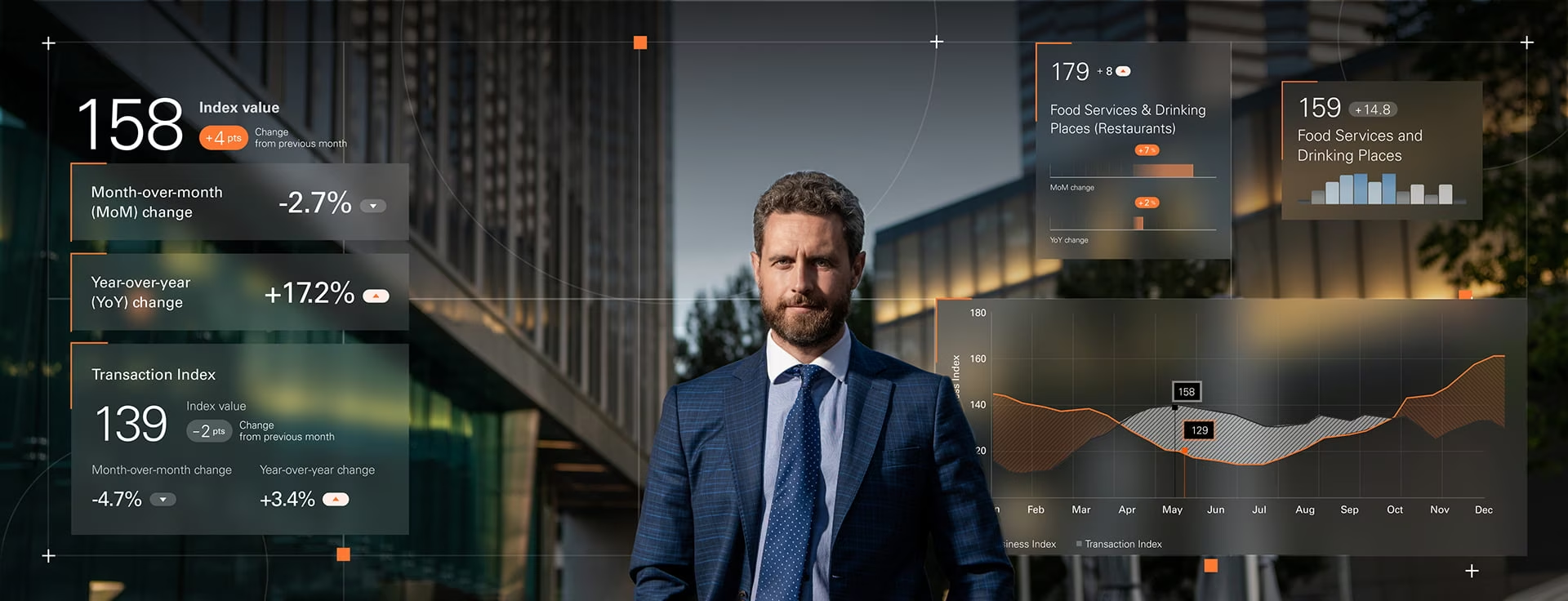
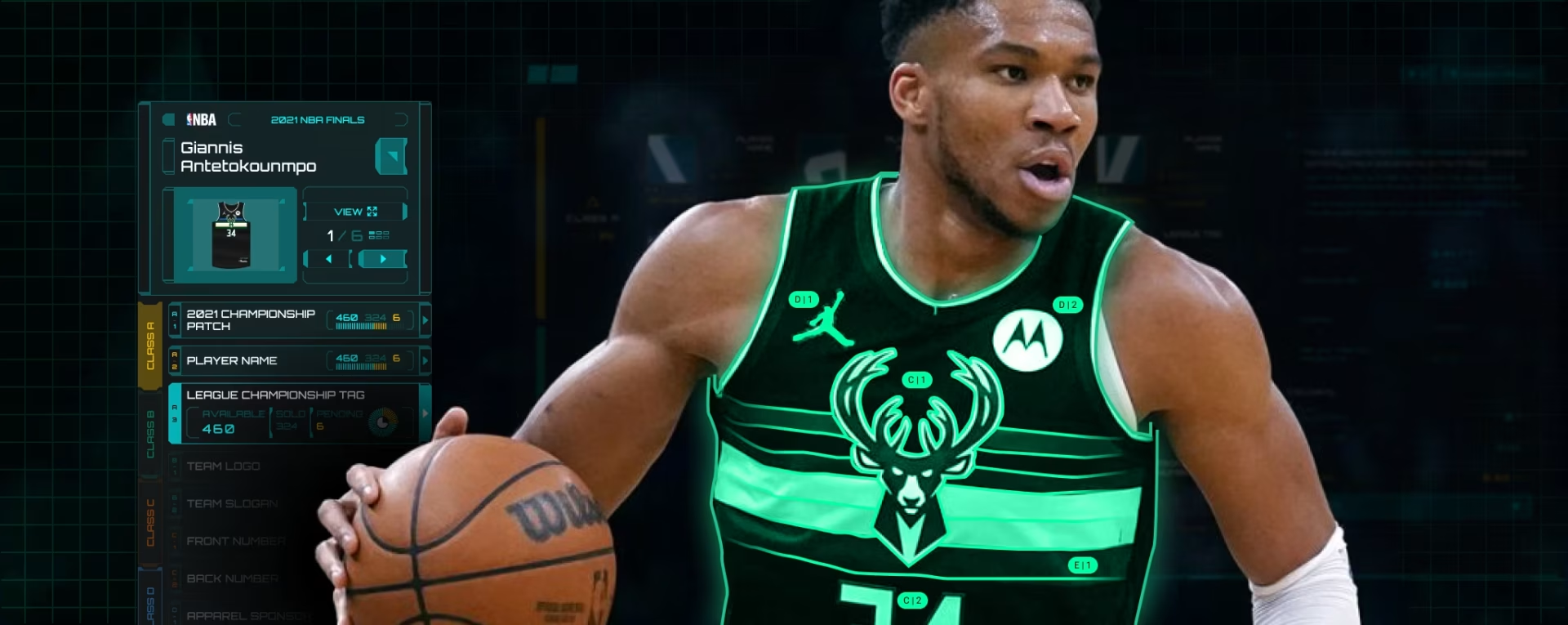
Built around production web applications with live data, filtered views, and multi-role permissions, not templated marketing pages. The Fiserv Small Business Index and Spectra Stadium analytics platform are examples of this depth.

Web design for healthcare and government clients requires more than visual skill. The interfaces shipped for DHCS Medi-Cal, ClyHealth, and Radiology Queue each had compliance and clinical workflow requirements built in from the first wireframe.

AI products fail at adoption when the interface cannot show users why the system gave a specific answer. Grid AI and Stardog Voicebox both needed confidence indicators, override controls, and clear fallback paths designed into the interface from the start.
A data-rich interface that works on desktop but collapses on mobile is half a product. The Uber mobile dashboard and GeoTourist travel app both required full functionality on smaller screens without hiding critical data behind extra taps or collapsible menus.
GSA contract holders can be engaged by federal agencies without a competitive bidding process, which shortens procurement from months to weeks. The POGO COVID-19 spending visualization shipped under government procurement structures where transparency and accessibility are requirements, not preferences.
The most expensive mistake on a large site is building screens without a system behind them, so every future feature starts from scratch. Mozilla and Handshake both received a documented design system their internal teams kept building on long after our engagement ended.
How our website design process works
Every website design project in the Washington, DC area follows three phases: research, design and testing, and launch. The timeline, depth, and deliverables scale to the project, but the sequence does not change. Skipping research to start designing faster is the most common reason projects require expensive rework six months after launch.

Every engagement starts by understanding the actual problem before proposing any visual direction. Stakeholder interviews, analytics audits from the existing site, and user flow mapping produce a research brief that the entire team works from. This step exists because what a team believes their users need and what those users actually do on the site are rarely the same thing.
Discovery is where the highest-cost mistakes get caught at the lowest cost. Requirements that nobody documented, conflicting assumptions between departments, and accessibility gaps that would have triggered a rework after launch all surface during research. Removing this phase from the timeline is the most reliable way to double a project’s total cost.

High-fidelity prototypes are built in Figma and tested against real scenarios before development begins. Every screen is designed as part of a system, not as an isolated layout, so future features can reuse existing components without starting over each time something new is added.
Testing happens before code, not after launch. Prototypes go through structured review with real users or subject matter experts while changes are still cheap. Navigation problems, confusing labels, and missing functionality cost hours to fix in a prototype. The same problems cost weeks to fix in a shipped product.

The deliverable is not a set of static mockups. Engineering teams receive a complete design system with components, spacing rules, interaction states, and accessibility specs. This is what separates a handoff that works from one that produces a three-month gap between “design approved” and “looks right in production.”
Every site ships with tracking, analytics, and performance metrics already configured. Decisions made after launch are based on what users actually do, not on what felt right in a planning meeting. A post-launch review identifies what is working and what needs adjustment before bad patterns become permanent habits.
Selected work across industries








What an engagement delivers
Every engagement produces a defined set of deliverables your team owns permanently and can keep building on independently, not a folder of screenshots in a PDF.

A research brief containing stakeholder interview findings, analytics baseline, user flow maps, and information architecture. This document becomes the single source of truth for every design decision and is referenced throughout the project when priorities conflict or scope questions arise.

A documented Figma library with every component, spacing rule, color token, typography scale, and interaction state used across the site. Engineering teams build directly from this system. New features added a year later follow the same visual language without requiring a designer to spec each one individually.

Clickable prototypes covering every key user flow, not flat page layouts. These are tested before a single line of code is written and serve as the definitive reference for how the site should behave, including responsive breakpoints, loading states, error handling, and empty states that flat mockups never show.

Annotated screen specs with exact measurements, asset exports, component inventory mapped to code requirements, and documentation of every interaction pattern. The goal is zero ambiguity between what was designed and what gets built.

Event tracking schemas, conversion funnel definitions, and dashboard templates ready to activate on launch day. The specific events tracked are defined during the design phase, not retrofitted after the site is live, so that measurement aligns with the actual user flows that were designed.
A structured report covering site performance against launch benchmarks, observed user behavior patterns, conversion data, and a prioritized list of recommendations for the next iteration. This document is what turns a launch from an endpoint into a starting point for continuous improvement.
Don't Listen to Us, Read What Our Clients Are Saying.
We know that trusting an outsider with your vision can be scary. This is why if you're not satisfied with us after the first two weeks, you can walk away owing us nothing.
"We went from prototype to usable software lightening fast, and our customer reviews have never been better."


"Their creativity and mastery of UX UI design has made our years of working together enjoyable and incredibly successful!"

"If you need to re-think your product and need some truly unique design talent , Fuselab Creative design team is your answer."

"We needed a nimble team of UI UX designers to work with our development team and they quickly became one of our most vital resources and far exceeded our expectations."


What does Fuselab's website design service include?
Fuselab’s website design service covers research and discovery, UX and visual design, a documented design system, interactive prototypes, developer-ready handoff, and post-launch analytics. Engagements scale from marketing sites to data-driven web applications. Each one ships as a production product, not a set of mockups.
What is the difference between a website and a web application?
A website presents information and is mostly read by visitors, such as a marketing or brand site. A web application is interactive and data-driven, with logins, filtered views, and actions users perform, such as a dashboard or portal. The two need different design and engineering approaches, which changes both timeline and cost.
How long does a website design project take?
Website design projects typically run from a few weeks for a focused marketing site to several months for a data-driven web application with multiple user roles. Timeline depends on the number of screens, integrations, and review cycles involved. A clear scope set during research is what keeps the schedule predictable.
Can Fuselab both design and build the website?
Fuselab designs and delivers developer-ready specifications, and also offers development and API integration, so the same team can carry a project from research through launch. Engineering builds directly from the design system, which removes the gap between approved designs and production. Teams that already have developers receive a complete handoff package instead.
How do I know if my website needs a redesign or a full rebuild?
A redesign updates the visual layer when the underlying structure and content still work. A full rebuild is warranted when the site cannot support new features, fails on mobile, or carries technical debt that makes every change slow. A short audit of analytics, performance, and the content model usually makes the answer clear.
What is a design system and why does it matter for website design?
A design system is a documented library of components, spacing rules, color tokens, and interaction states that a site is built from. It matters because new features reuse existing components instead of being designed from scratch, which keeps the site consistent and lowers the cost of every future change. Engineering teams build directly from it.
What does a GSA Schedule contract mean when hiring a website design company?
A GSA Schedule contract means a federal agency can engage the company directly without a competitive bidding process, which shortens procurement from months to weeks. It also signals the firm has met federal contracting and compliance requirements. Fuselab Creative holds GSA contract 47QTCA22D00CV.
Contact Us
Fill out the form!