Industry-specific UX design adapts research methods, interface patterns, and compliance work to the sector a product serves: a clinical dashboard, a payment flow, and a government portal each come with their own rules and their own users.
Fuselab Creative has shipped products across these sectors since 2017, and each industry page below covers the compliance standards, interface patterns, and project work that sector demands.
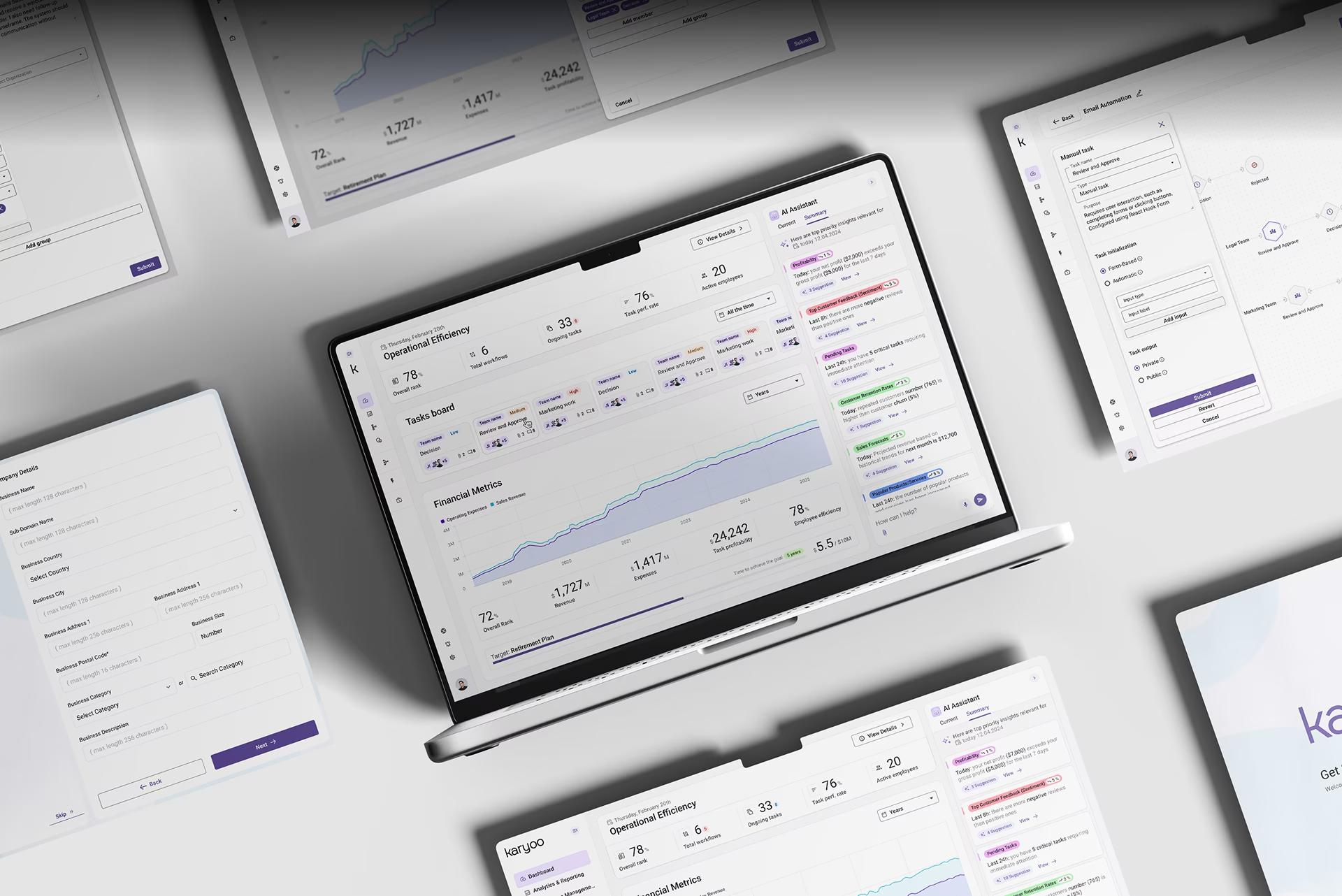
What industry-specific UX discovery covers
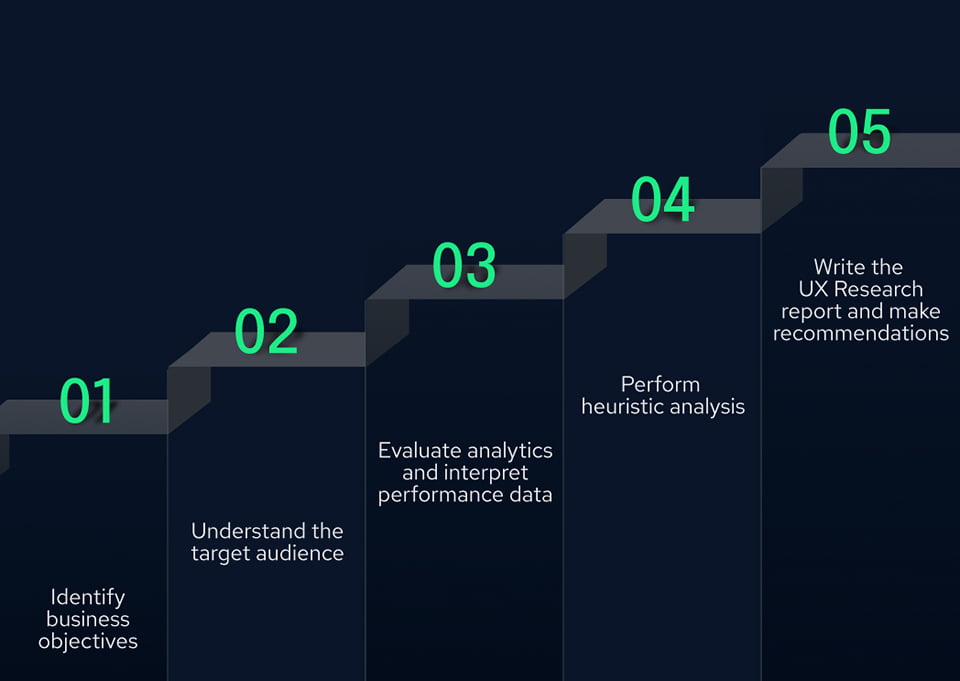
Industry discovery starts with business objectives, then the target audience’s goals, vocabulary, and working conditions. Analytics and performance data from the existing product come next, then heuristic analysis, which matters more here than in general product work because every industry employs distinct roles with distinct workflows. The phase ends with a documented UX research report: findings, expert recommendations, and the design priorities the research supports.
How UX design differs by industry
Each industry pairs its own user base with its own constraints, and an interface has to carry both the client’s brand and the sector’s conventions at once. Sounds simple, right? The sections below lead with the design problem each industry presents. In-depth UX research and iterative user testing is how those differences surface before launch instead of after.

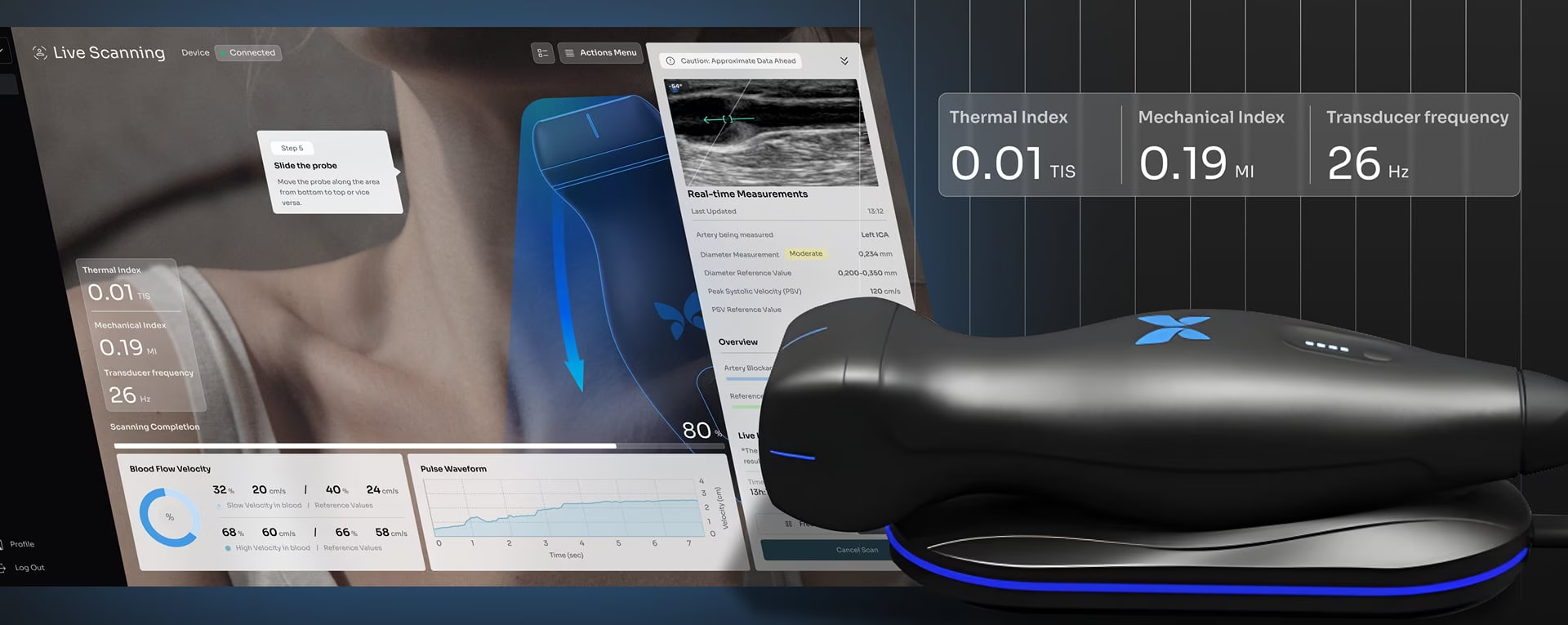
Patient portals, clinical interfaces, and EHR design dominate healthcare UX work today. The design goal underneath all three is the same: fewer steps between a clinician and the information a decision needs, inside HIPAA and accessibility constraints.

Search, comparison, and booking are the three flows travel products live on, and all three now happen on one mobile screen. Personalization matters most after the booking: creating, changing, and retrieving plans without re-entering anything.

Supply chain dashboards carry the operational load in transportation and logistics. Fleet managers work from real-time GPS maps with drill-down detail, calculating margin per route while vehicles are still moving, which makes latency and map legibility design requirements rather than nice-to-haves.

The AI and ML industry moves faster than any design pattern library can. But you already knew that! Two UX areas stay constant through the churn: data visualization design that makes model output legible, and conversational interface design that keeps users in control of what the system does next.

Product page optimization and checkout simplification decide ecommerce performance more than anything else on the roadmap. Inside those two flows the work is concrete: fewer form fields, prominent calls to action, and reassurance placed where hesitation actually happens.

Designing for digital payment platforms, lending apps, and investment products means every interface decision carries both regulatory and behavioral consequences. Verification flows, transaction confirmations, and consent screens must satisfy KYC, AML, and PCI DSS requirements while maintaining onboarding conversion and daily usage. That balance is what separates fintech UX design from general product work. It’s also what makes this work super interesting and challenging.
Banking institutions, insurance companies, and established financial organizations serve users with widely varying levels of financial literacy, all handling sensitive financial data under real pressure. Designing dashboards, mobile banking interfaces, and financial data visualizations for this audience requires financial services UX design that prioritizes trust and data accuracy above all else on screen.

Biotech
LIMS interfaces decide how efficiently a biotech lab actually runs: sample tracking, inventory, experiment planning, and reporting in one system. Well-designed LIMS screens reduce input errors and hold up under the regulatory documentation burden this industry cannot avoid.

Inventory management and tracking systems make manufacturing and warehousing software work: stock levels, item locations, and warehouse space in one view. The interface work is specific: RFID scanning screens, search and filter for fast item location, and data entry forms built for real-time stock updates.

Government and non-profit products serve the widest audience range in UX work, which makes user research a non-negotiable rather than merely useful. Accessibility is contractual: WCAG standards, screen reader behavior, and full keyboard navigation are review requirement criteria, and not considered enhancements.

Virtual tours are now a baseline in real estate products: 360-degree self-guided walkthroughs, load times that survive image-heavy pages, and responsive design across every screen size. Speed and image quality decide who competes in this market and who is left behind in the world of static images.
Industrial UX services
Manufacturing, transportation, energy, and warehouse products draw on the same core disciplines: dashboard design, data visualization, UX research, and interface design. The full scope of each, including engineering and AI interface work, is on the digital design services page. What stays constant across sectors is the regulatory frame: the standards below shape the work before any screen is drawn.

Patient data stays protected
Healthcare interfaces decide who sees patient information, how it is hidden in shared views, and what gets recorded. The rules come from HIPAA; the design work is making them invisible to the people doing their jobs in the most efficient format possible, as time in this space is a healthcare provider's most precious commodity.

AI output people can act on
AI products earn daily use when the interface shows one clear recommendation, signals how confident the system is, and makes it obvious how to question a result. That interaction layer, not the model, decides whether teams keep using the product or cast it aside with all the other money-wasting apps they have purchased.

Usable by everyone
Public products serve people with every level of ability and tech comfort, so accessibility is built in: readable contrast, full keyboard control, and screen reader support. Government buyers know this as Section 508 and WCAG compliance.

Financial data that reads right
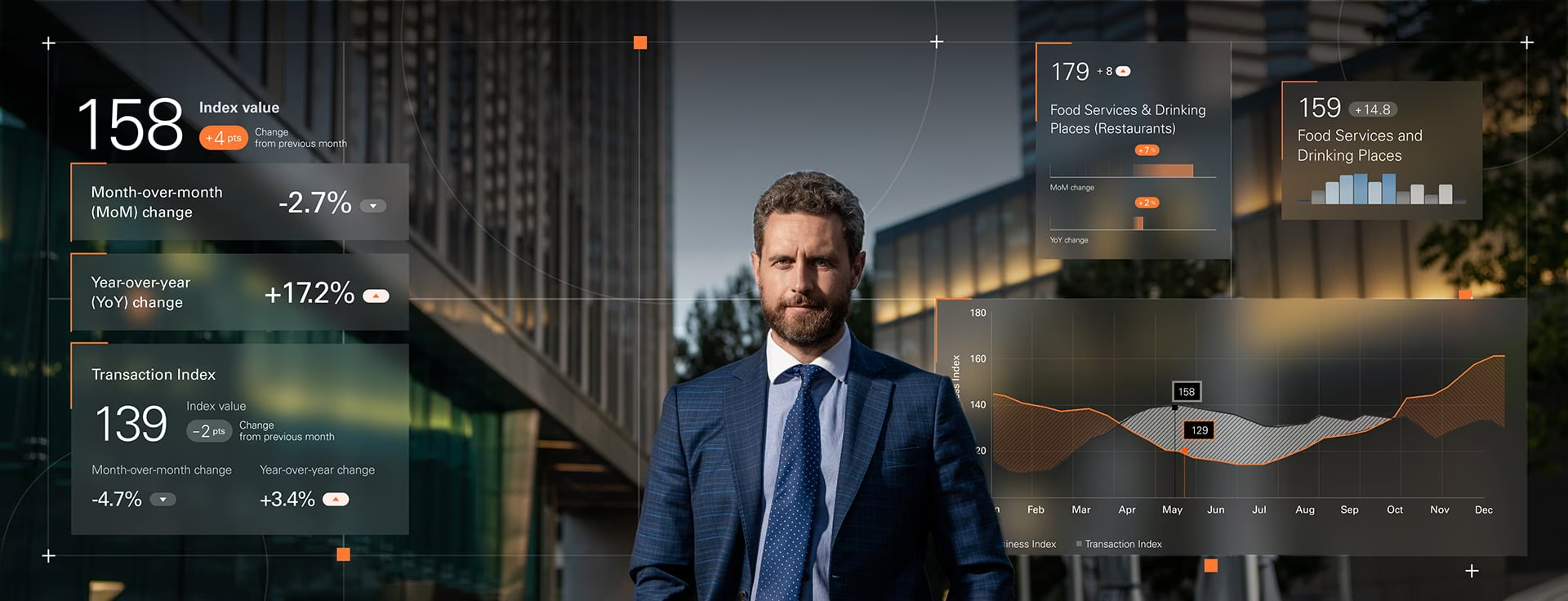
Financial dashboards compress volatile numbers into decisions: balances, cash flow, and market indexes. The design work needs to represent precision over density, right-sized charts, unambiguous units, and numbers that align for comparison, because a misread digit in finance may amount to a few bucks lost, or millions, regardless, mistakes are not an option.

Screens built for real working conditions
Machine interfaces are used standing, at a distance, sometimes in gloves, and a tap can have physical consequences. HMI design works within those realities: bigger touch targets, distance-readable type, and confirmation steps in front of every irreversible action.

Compliance that survives redesigns
Rules built into a design system stay enforced long after a project ends: accessible colors, validated forms, documented interaction patterns. Products in regulated industries stay compliant through every future release.
Design Examples
and Portfolio







All design services


Industry UX design FAQ
What is industry-specific UX design?
Industry-specific UX design adapts research methods, interface patterns, and compliance requirements to one sector’s users and regulations, rather than applying generic best practices everywhere. The differences are concrete: a HIPAA-bound clinical tool, a PCI-DSS payment flow, and a Section 508 government site each answer to different audits and different users.
Should we hire an industry specialist or a generalist design agency?
An industry specialist knows your compliance constraints on day one; a generalist brings patterns from other sectors your competitors have not seen. Agencies working across several regulated industries offer both: sector experience where it exists, and cross-industry pattern transfer where it helps.
Which industries does Fuselab Creative design for?
Fuselab Creative designs for healthcare, government, fintech and financial services, AI and machine learning, transportation and logistics, manufacturing, ecommerce, biotech, real estate, and travel. The deepest work is in regulated sectors: healthcare, government, and finance, where compliance shapes the interface.
How does industry experience change a design engagement?
Industry experience shortens discovery, because the agency arrives knowing the regulations, user roles, and working patterns of the sector instead of learning them on your budget. It also changes design review: work is checked against sector-specific compliance criteria before it reaches your team.
Can Fuselab work in an industry not listed here?
Fuselab Creative takes on new industries when the underlying design problem matches its core work: complex data, regulated environments, or operational dashboards. The discovery phase runs deeper in a new sector, with more stakeholder and user interviews before any design starts.
Contact Us
Filling out the form!