SaaS UI/UX design is the practice of building interfaces for subscription-based software products where users return daily to complete workflows across multiple roles, data permissions, and device contexts. Projects typically span 3 to 12 months because SaaS interfaces must support onboarding sequences, role-based dashboards, notification hierarchies, and feature discovery patterns that static websites and one-time-use applications never require.
How SaaS design differs from standard product design
SaaS UI/UX design requires solving for continuous use across months or years, not a single transaction or download. A standard web product succeeds when a visitor completes one action. A SaaS product fails the moment a subscriber decides the daily friction of using it exceeds the cost of switching to a competitor, which means every interaction pattern must account for repetition, role variation, and growing data complexity over time.
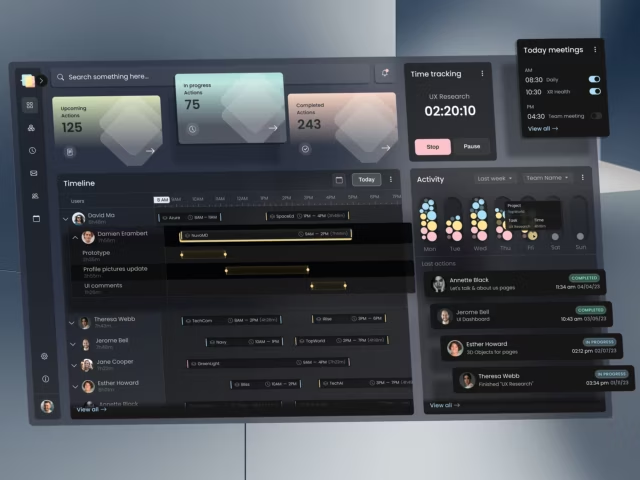
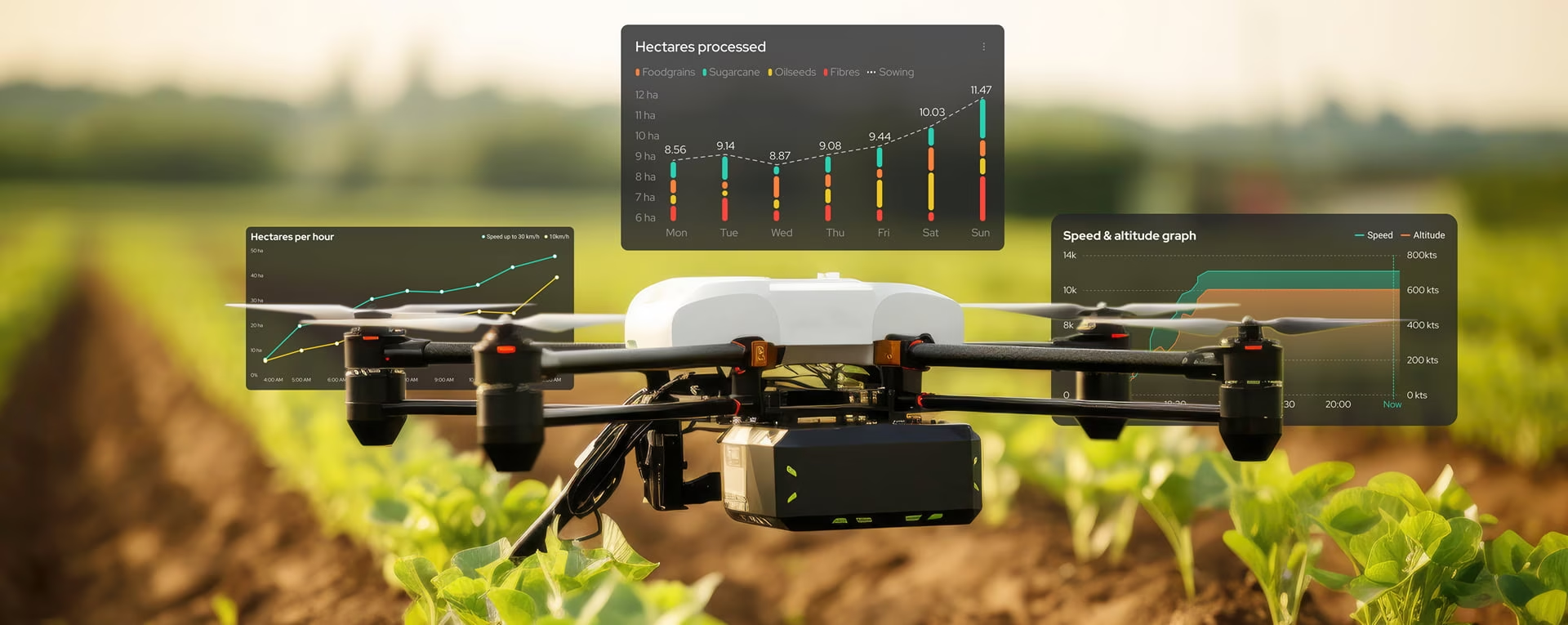
The most visible difference is multi-role architecture. In the AG.Drone fleet scheduling project, Fuselab designed a timeline interface where drone operators, fleet managers, and field supervisors each needed different data views from the same underlying dataset. Operators needed real-time flight status. Managers needed scheduling conflicts. Supervisors needed compliance logs. One dashboard, three roles, three conflicting data priorities.

Fuselab's SaaS UI/UX Design Process
Fuselab’s SaaS design process begins with mapping every user role, their data access permissions, and their daily workflow sequences before opening a design tool. Discovery takes longer for SaaS than for a marketing site because the number of interaction states multiplies with every role and permission level in the product.

Discovery
Discovery for SaaS maps every user role, their goals, their data access permissions, and their primary workflows before any design work begins. The ClyHealth project required mapping three distinct clinical roles with conflicting data priorities, and the discovery phase alone ran six weeks before wireframing started.

Scalability
SaaS interfaces must handle growing data volumes and expanding user bases without degrading performance. The architecture must support personalization from day one, because subscribers who use the product daily expect saved views, custom filters, and role-specific defaults that static layouts cannot provide.

Security
Encryption, multi-factor authentication, and a documented vulnerability response plan are non-negotiable for any SaaS product handling user data. When a SaaS platform operates in healthcare or government, the access control requirements shape every screen layout from the first sprint, not just the settings panel.

Accessibility
Every SaaS interface Fuselab delivers meets Section 508 and WCAG 2.1 compliance requirements, including screen reader compatibility, keyboard navigation, and contrast ratios across all interactive elements. Fuselab runs accessibility testing with assistive technology users during each design review cycle, not as a final audit after the interface is built.

Flexibility
SaaS products evolve continuously after launch as user feedback reveals new workflow requirements and edge cases appear in production. Fuselab builds design systems with modular component architecture so development teams can add features and adapt layouts without breaking existing patterns or requiring a full redesign every time the product grows.

Human-centered Design
Fuselab tests SaaS interfaces with real users performing real tasks in their actual work environments, not with synthetic scenarios in a conference room. Test sessions run with production-realistic data volumes and time pressure because cognitive load problems only surface when the test environment matches what users actually face on a busy day.
Why choose Fuselab Creative for SaaS UI/UX design?
Fuselab has shipped SaaS interfaces for NASA, Fiserv, DHCS, and NIH since 2017. Most of those projects involved three or more user roles with conflicting data access requirements, which is where SaaS design gets difficult and where general agencies tend to underestimate the work.

Research
SaaS research means watching real users do real work in their actual environment. Surveys tell you what people say they want. Observation tells you where they struggle, where they create workarounds, and what they stopped trying to do altogether. That gap between what users report and what they actually do is where most SaaS design decisions go wrong.

Documentation
SaaS products outlive the design engagement by years. If the development team cannot build new screens without calling the designer, the design system failed. Fuselab delivers component libraries with role-variant states, onboarding specs, and empty-state patterns documented to the level where a developer can ship a new feature without guessing at layout intent.

Experimentation
Multi-role SaaS products rarely land on the right layout in the first attempt. What works for an admin overwhelms a viewer. What works for a daily user frustrates a quarterly reviewer. Fuselab builds rough prototypes fast, tests them with each role separately, and throws away what does not work before investing in high-fidelity design that is expensive to change.

Test, and Re-test
Fuselab tests SaaS interfaces with production-realistic data volumes, not clean demo datasets with five records in them. Cognitive load problems, slow filter responses, and confusing empty states only surface when the test environment matches what users actually face. One day watching an ER doctor fight an EHR taught us more than six months of analytics ever could.
SaaS UI UX Design
SaaS UI/UX design covers the core product experience: the dashboards, workflow screens, settings panels, and data views that subscribers open every day. This is the layer that determines whether users renew or churn. Fuselab structures this work around the specific data relationships and permission hierarchies of each product rather than applying a template grid and populating it with content.

SaaS Website UI UX Design
SaaS website design is the marketing and conversion layer that sits in front of the product: pricing pages, feature comparisons, trial signup flows, and documentation portals. A SaaS website fails when it is designed as a brochure instead of a conversion path. If the pricing page requires a buyer to contact sales for a quote while three competitor tabs show transparent pricing, that buyer is already gone.

SaaS Web App UI/UX Design
SaaS web app design addresses the browser-based product that must perform reliably across Chrome, Safari, Firefox, and Edge without native installation. The real constraint is not device compatibility. It is concurrent multi-user state: what happens when two team members edit the same record in two browser tabs simultaneously. Most single-user web agencies have never designed for that problem.

SaaS Mobile App UI UX Design
SaaS mobile design translates the core product to constrained screens and intermittent connectivity. The goal is functional equivalence with thoughtful adaptation, not a stripped-down version that forces users back to the desktop for anything that matters. Fuselab designs mobile alongside desktop from the first sprint because retrofitting mobile after launch produces an interface that mirrors the wrong layouts on a smaller screen.

Our SaaS Design Portfolio
SaaS Design Agency


Related Services and Solutions


Industries Where Fuselab Designs SaaS Products

SaaS UI/UX design in regulated clinical environments operates under HIPAA, Section 508, and workflow constraints that general agencies do not encounter until they are already behind schedule. An extra click in a clinical interface is not a minor annoyance. It is a delay in patient care, and the compliance requirements around data access add permission layers that most SaaS products never deal with.

Dynamic pricing, multi-leg itineraries, and real-time inventory across airlines, hotels, and ground transport create a SaaS design problem where the booking state is constantly shifting underneath the user. Every hidden fee discovered late in a checkout flow is a trust failure that subscription retention depends on avoiding entirely.

Map visualization, real-time vehicle tracking, and scheduling converge in interfaces that dispatchers monitor for eight or more hours per day. SaaS UI/UX design for this industry must solve for fatigue-resistant layouts, alert hierarchies that distinguish urgent from routine, and shift-handoff continuity that shorter-session products never require.

Spatial computing and immersive platforms introduce interaction patterns that do not exist in traditional screen-based SaaS. Navigation, data presentation, and collaboration all require rethinking when the interface surrounds the user instead of sitting on a monitor. The design constraints here are fundamentally different from anything a flat dashboard presents.

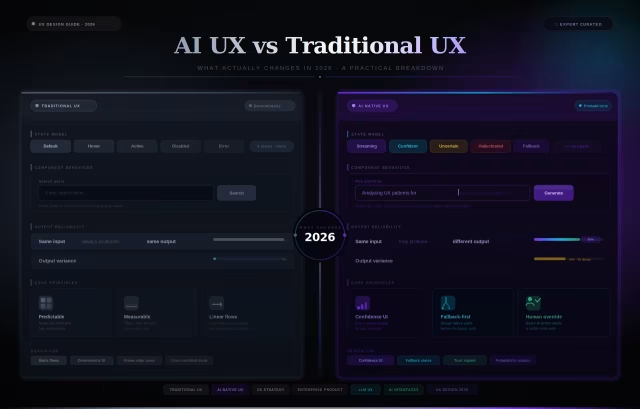
Probabilistic outputs create a SaaS design problem most traditional software never faces: users need to know when to trust the model and when to override it. Confidence signals, fallback paths, and clear explanations of what the system does not know are interface requirements, not optional features to add after the algorithm ships.

Regulatory audit requirements mean every screen must account for security, permission levels, and compliance logging from the first wireframe. SaaS UI/UX design for financial products treats multi-level approval workflows and audit trail visibility as layout architecture, not settings-panel features bolted on after launch.
Frequently Asked
Questions
What is SaaS UI/UX design?
SaaS UI/UX design covers the research, architecture, and interface design of subscription-based software products where users perform recurring workflows across multiple roles and devices. It differs from standard web design because it must solve for daily retention, multi-role data access, progressive feature discovery, and onboarding flows that demonstrate value before the trial period ends.
What should a SaaS design agency deliver at the end of an engagement?
A complete SaaS design engagement should produce a Figma component library with role-variant tokens, developer-ready documentation mapping every component to its permitted states, onboarding flow specifications, and empty-state patterns for all data containers. If the agency delivers only static mockups without a documented system, the development team will make layout decisions on their own and visual consistency will break within months.
How is hiring a SaaS design agency different from hiring a general web design agency?
A general web design agency typically delivers a marketing site or a single-purpose application with one user type and one conversion goal. SaaS design agencies must account for multi-role permission systems, subscription retention mechanics, onboarding flows that prove value before the trial ends, and design systems that survive years of post-launch development. Asking a general agency to do SaaS work usually produces a product that looks finished but loses subscribers within the first quarter.
What is the difference between SaaS UX design and SaaS UI design?
SaaS UX design determines the workflow structure, onboarding sequence, information architecture, and task-completion efficiency of the product. SaaS UI design applies the visual system, component consistency, typography, and interaction feedback that make the UX architecture usable across every screen. Both are required, and separating them into different agencies or project phases produces interfaces where the visual layer and the structural layer contradict each other.
How much does SaaS UI/UX design cost?
SaaS UI/UX design with a US-based specialist agency typically runs $100 to $300 per hour depending on team size, location, and the complexity of the role-permission architecture in the product. A focused SaaS application with one or two user roles starts around $25,000. Enterprise platforms with multiple roles, compliance requirements, and design system documentation run significantly higher. Hourly rates and minimum project sizes for any agency can be verified on Clutch.
How long does a SaaS design project take?
SaaS design projects typically run 3 to 6 months for focused applications with one or two user roles and a defined feature set. Enterprise SaaS platforms with three or more user roles, complex data integrations, and compliance requirements typically require 8 to 12 months. Timeline factors include the depth of user research required, the number of distinct workflow paths, and whether the engagement includes design system documentation for post-launch development.
What industries does Fuselab have SaaS design experience in?
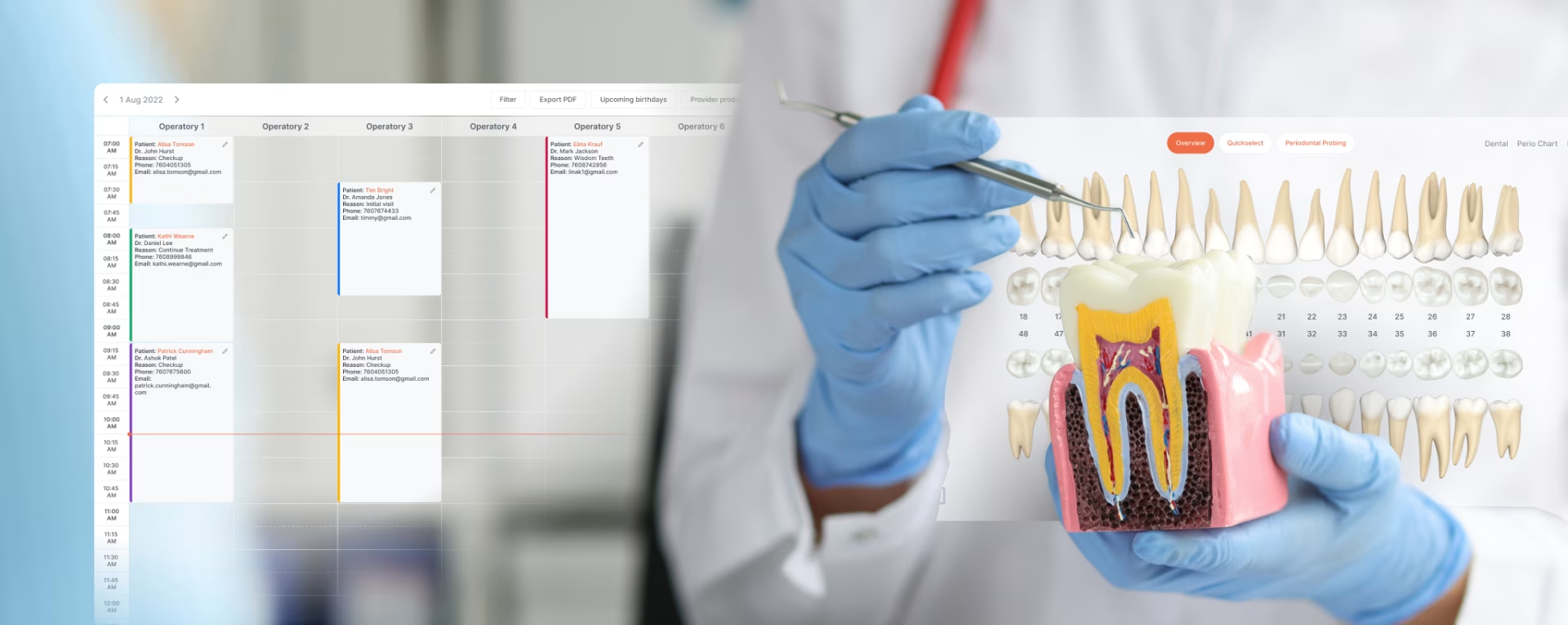
Fuselab has shipped SaaS products in healthcare (Radiology Queue, EM Dental), government (DHCS Medi-Cal), financial services (Fiserv), drone technology (AG.Drone), and AI and ML (ClyHealth, Grid AI). Each industry adds specific compliance, data, and workflow constraints that shape the design from the first sprint. Fuselab also holds a GSA contract, which allows government procurement teams to engage directly without competitive bidding.
Contact Us
Fill out the form!
Related SaaS Design Articles
UI UX Design for SaaS Product Design and Development