Fuselab is working with several client’s exploring how our team can help bring intelligent design and data visualization to the digital twin space for real estate and transportation agencies.
A Digital Twin is Not as Strange as it Sounds
With real-time and historical data in hand and a system of alerts and indicators for every possible situation, digital twin technology can help reduce your heating and cooling costs, help transportation agencies avoid accidents, help security agencies detect an issue before it becomes to big to handle. The potential applications span countless industries including manufacturing, healthcare, energy, transportation, and urban planning.


A Digital Twin is a dynamic, data-driven digital model of a physical object (building, city block, highway etc.), process, or system. Take a minute to think about this, it’s quite amazing. You can think of it as a live simulation that evolves based on real-time data from sensors, IoT devices, and user interactions. It’s not just a static model — it thinks, predicts, and evolves. Benefits of Digital Twins:
- Monitor performance in real-time
- Predict failures and reduce downtime
- Run project simulations and test scenarios
- Optimize operations as conditions change

How Digital Twins Help Everyone

Imagine you are the CEO of a hospital. digital twin technology creates virtual representations of patients, medical devices, and hospital facilities to transform treatment approaches and operational efficiency. Patient-specific digital twins can simulate responses to different treatments by integrating medical history, genetic information, and real-time biometric data, allowing physicians to personalize therapies and predict outcomes with greater accuracy. For medical facilities, digital twins optimize patient flow, resource allocation, and emergency response protocols by modeling different scenarios and identifying improvement opportunities.


When selecting a design partner in the digital twin space you will want one that is adept in designing chat interfaces along with very sophisticated data dashboards and functionality-rich control panels. Additionally, you will need a UI design team that can seamlessly integrate 3-D models and virtual animation for a full real-world experience as required.


Prototyping predictive features allows for user testing to take place, saving our clients time and budget before any forma AI integration is ever attempted. Learning models take so much time to perfect, and if in the end you are learning that your original design cannot support the incoming data effectively, starting the design over can be the end of what might have been a terrific digital twin platform.


Modern data visualization is how millions of rows of data can be communicated in a few seconds with one graphic. Complex manufacturing systems monitoring can pull in terabytes of data in a short period of time. By creating virtual replicas of entire production lines, we are enabling real-time monitoring and optimization of equipment performance, predictive maintenance scheduling, and process improvement without disrupting operations. Manufacturers can simulate changes to production workflows before physical implementation, identify bottlenecks, and test new configurations.


Grid operators use this technology to balance supply and demand, identify vulnerabilities in distribution networks, improve resilience against weather events, and integrate new energy sources more effectively while maintaining system stability. Digital replicas of power plants allow operators to monitor performance metrics in real time, simulate operational scenarios, and predict equipment failures before they occur, sometimes via a simple chat interface message in the middle of the night.

Our Digital Twin Product
Design for DMF
Our digital interaction design samples below are just a small group of projects, as this is one of our primary services and if you are interested please visit our primary website to see an extensive case history of our work in this growing space.

Full Digital Twin Builder with DMF

How we Built DMF

DMF for Multiple Industries

Enables precise navigation through historical video footage, enhancing security with advanced event tracking and analysis.


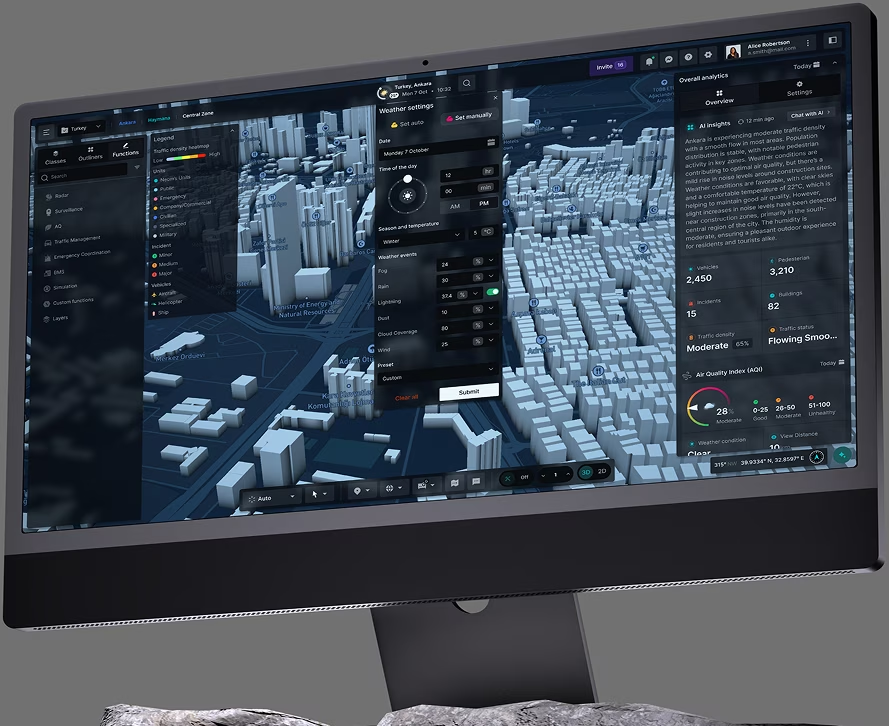
Digital twin technology revolutionizes urban planning and management by creating comprehensive virtual models of cities that integrate data from countless sensors, systems, and services. City planners use these dynamic models to simulate traffic patterns, test infrastructure improvements, and visualize development impact before breaking ground on physical projects. Emergency response teams leverage digital twins to optimize evacuation routes, predict flooding or fire spread, and coordinate multi-agency responses during crisis situations. Utility companies use this technology to monitor and optimize water, power, and waste management systems in real time, while transportation departments adjust traffic signals, public transit schedules, and parking availability based on current demand patterns.
Industrial Monitoring
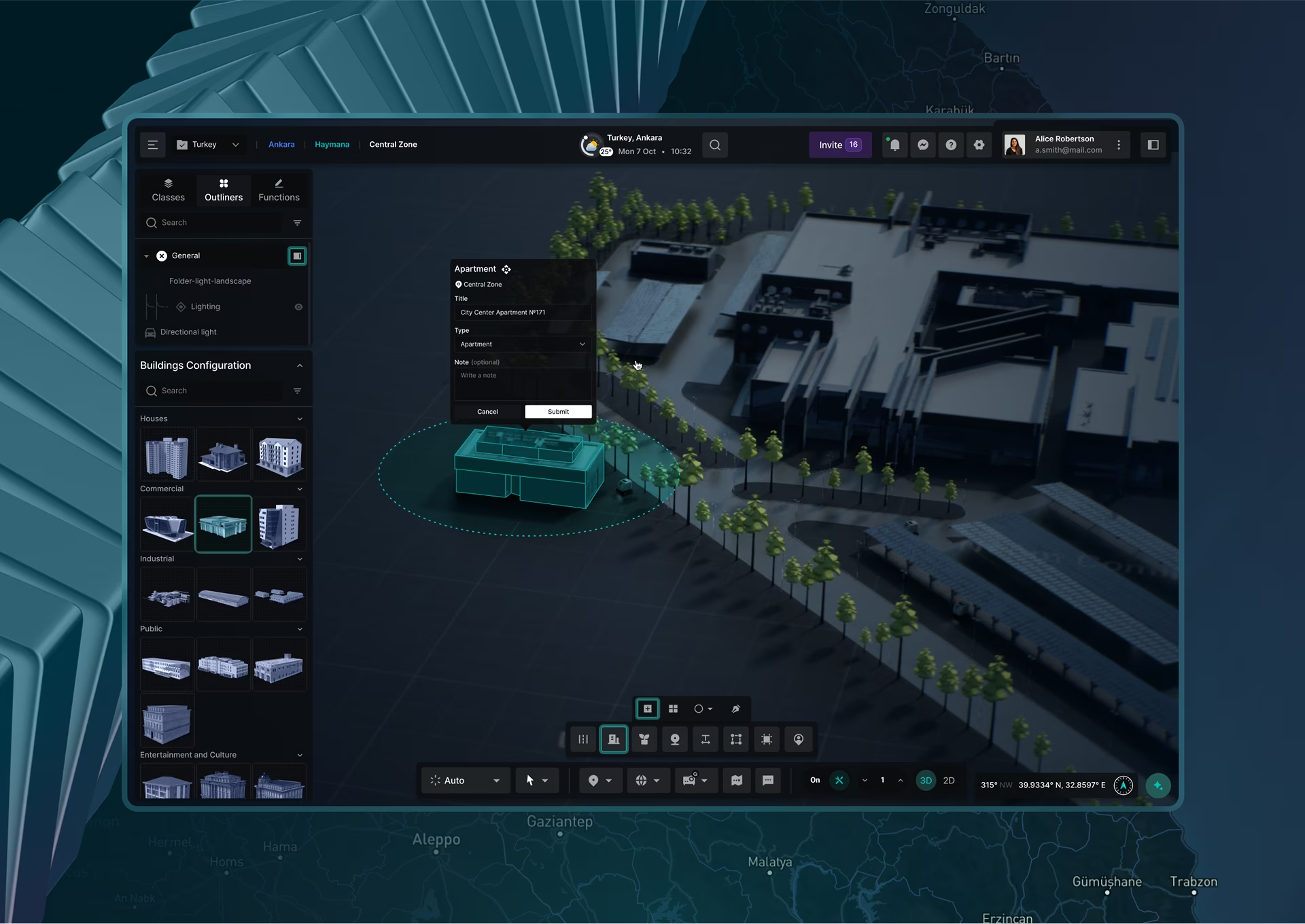
Digital twin technology revolutionizes construction and real estate by creating comprehensive virtual models of buildings and infrastructure. During construction phases, digital twins enable collaborative visualization, clash detection, and simulation of different design options to optimize environmental impact.
Smart Cities: - DMF
The core of every smart city endeavor is to create the most efficient and sustainable environment possible. This includes water usage, clean air, public transit availability, and emergency planning.
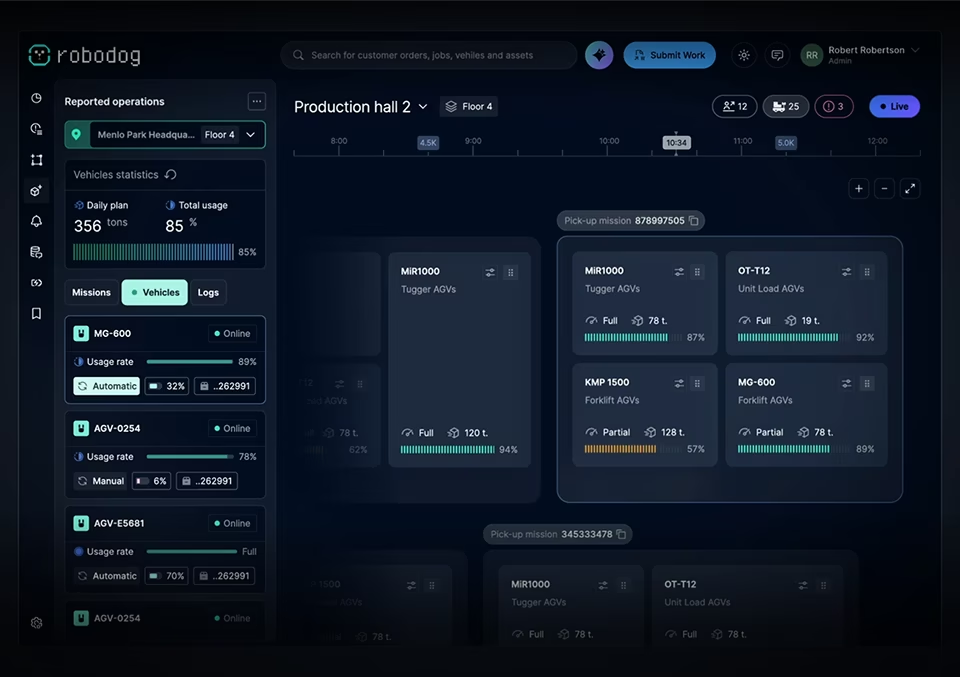
Manufacturing & Logistics: DMF and Automatize

Construction & Architecture: with DMF

AI chat in Digital Twin world

Oli and Gas
Building AI tools for the medical provider community, such as our work for RhythmX AI connects doctor’s with the world for better diagnosises.

Healthcare
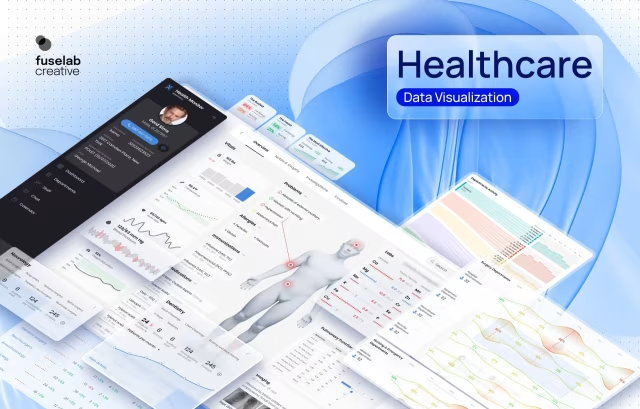
Our experimental Health Monitor design seeks to envision the future of medical records examination and usage.

Perplexity
This focus on contextual clarity while minimizing cognitive overhead is essential when designing multi-dimensional data screens in healthcare.
Contact Us
Filling out the form!

In healthcare, digital twin technology is helpful in countless ways, of which many aim to help provide better outcomes for patients. This technology can create virtual models of patients, medical devices, and healthcare facilities to transform treatment approaches and operational efficiency. Patient-specific digital twins can simulate how individuals might respond to medications, which opens the door to the kind of personalized medicine we’ve been hearing about for decades. Medical device manufacturers can use digital twins to test new equipment designs virtually, accelerating innovation while ensuring safety. The technology also supports preventive maintenance for critical medical equipment, reducing unexpected failures during crucial procedures and ultimately improving patient outcomes while controlling costs.

Digital twin technology transforms supply chain management by creating virtual replicas of entire logistical networks, from raw material sourcing to last-mile delivery. Our platform we design for Automatize, with all of it’s sensors and monitoring system could be considered a significant first step toward what digital twin systems are offering in this space. The current systems include comprehensive models that integrate real-time data from warehouses, transportation systems, and retail locations to provide unprecedented visibility across operations. Companies leverage this capability to simulate potential disruptions—such as weather events, demand spikes, accidents, traffic jams, airport delays, or supplier failures—and develop resilient contingency plans.

In the energy sector, digital twin technology creates virtual replicas of power plants, wind farms, solar installations, and grid infrastructure to optimize performance and reliability. Utility companies deploy these twins to simulate how their assets respond to varying weather conditions, demand fluctuations, and potential equipment failures. This capability enables predictive maintenance strategies that address issues before they cause outages, significantly improving grid reliability. For renewable energy installations, digital twins optimize positioning and operations of wind turbines or solar panels based on real-time environmental data. The technology also facilitates scenario planning for grid modernization, helping energy companies transition to cleaner energy.

The construction industry leverages digital twin technology to transform project planning, execution, and building maintenance throughout the entire lifecycle of structures. During design and planning phases, architects and engineers create comprehensive virtual models that simulate how buildings will perform under various environmental conditions before breaking ground. During construction, real-time data from site sensors updates these digital twins, allowing project managers to track progress accurately, identify potential issues proactively, and make data-driven decisions. Once buildings are complete, facility managers continue using digital twins for predictive maintenance, energy optimization, and space utilization analysis, extending the operational lifespan of structures while reducing maintenance costs and environmental impact.

The automotive industry employs digital twin technology throughout vehicle development, manufacturing, and after-sales service to enhance efficiency and innovation. During design and engineering phases, manufacturers create comprehensive virtual vehicle models to test thousands of parameters and scenarios without building physical prototypes, accelerating development while reducing costs. On production lines, digital twins of assembly processes identify inefficiencies and quality issues in real-time. Once vehicles are sold, manufacturers maintain digital twins of individual cars that collect operational data throughout their lifecycle, enabling predictive maintenance, over-the-air software updates, and continuous improvement of future designs. This connected approach results in safer vehicles, more personalized customer experiences, and valuable data insights that drive competitive advantage.

Digital twin technology revolutionizes manufacturing by creating virtual replicas of entire production lines, including bottlenecks and human interaction or response times, allowing for real-time monitoring and optimization. By integrating IoT sensors throughout the factory floor, manufacturers can track equipment performance, predict maintenance needs, and identify bottlenecks before they impact production. This technology enables companies to simulate process changes virtually before implementing them physically, reducing downtime and improving efficiency. Digital twins also facilitate remote monitoring, often through some of the best AI chat interfaces found in this space, allowing experts to act and diagnose critical issues from anywhere in the world, ultimately leading to increased productivity, reduced operational costs, and improved product quality.
Related Services and Solutions


AI is changing our world right before our eyes
Fuselab Creative Insights