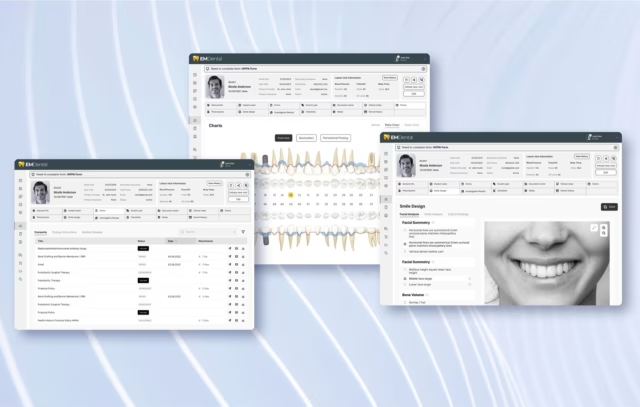
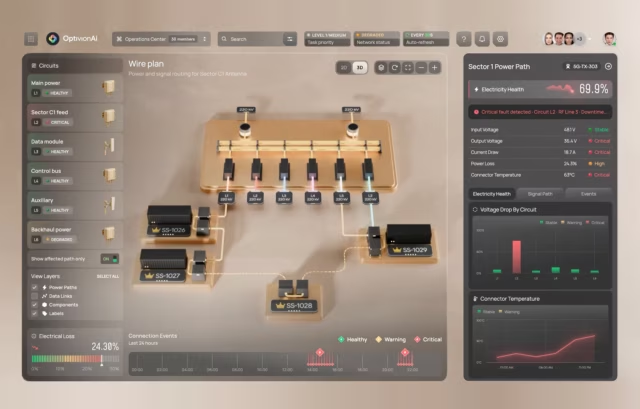
Fuselab Creative is a UX and UI design agency based in McLean, Virginia, with a production portfolio of user interface design work spanning federal operations, clinical healthcare, and enterprise SaaS across the Washington DC region since 2017. Named projects include a financial data platform for Fiserv, driver-facing systems for Uber, a Medi-Cal interface for DHCS, and a clinical AI platform for ClyHealth, alongside federal work for NASA and NIH.
Each of those products required interface decisions that went beyond layout: multi-role data access, compliance constraints, and edge cases that only surface when real users work with live data at volume. The projects section below shows how those decisions were made, not only what they produced.
What user interface design actually involves
User interface design is the practice of deciding what appears on a screen, where it goes, how it responds to input, and what state it shows when conditions change. It is not visual design, though visual decisions are part of it. The deliverable of a serious interface design engagement is a complete working specification, not a set of image files.

Discovery is where the project gets its foundation. Before any wireframe or design tool opens, the team documents user roles, data sources, system constraints, and measurable success criteria with the client. Skipping or rushing this phase is the single most common reason an interface needs to be rebuilt mid-project, when changing the structure costs ten times more than getting it right at the start.

Research at Fuselab covers two tracks simultaneously: understanding the people who will use the product and understanding the competitive landscape they exist in.User research informs how the interface should behave.NNGroup’s enterprise UX research consistently shows that the gap between stated user requirements and actual user behavior closes only through direct observation, not stakeholder interviews alone. Competitive analysis reveals what conventions users already expect and where there is room to do something meaningfully better. Both inform every structural decision before visual work begins.

Planning translates research findings into an information architecture and a defined scope. At this stage the team maps user flows, establishes the component hierarchy, and agrees on the interaction model before any screen is drawn. Changes made at the planning stage cost an hour. The same changes made after visual design is complete cost days.

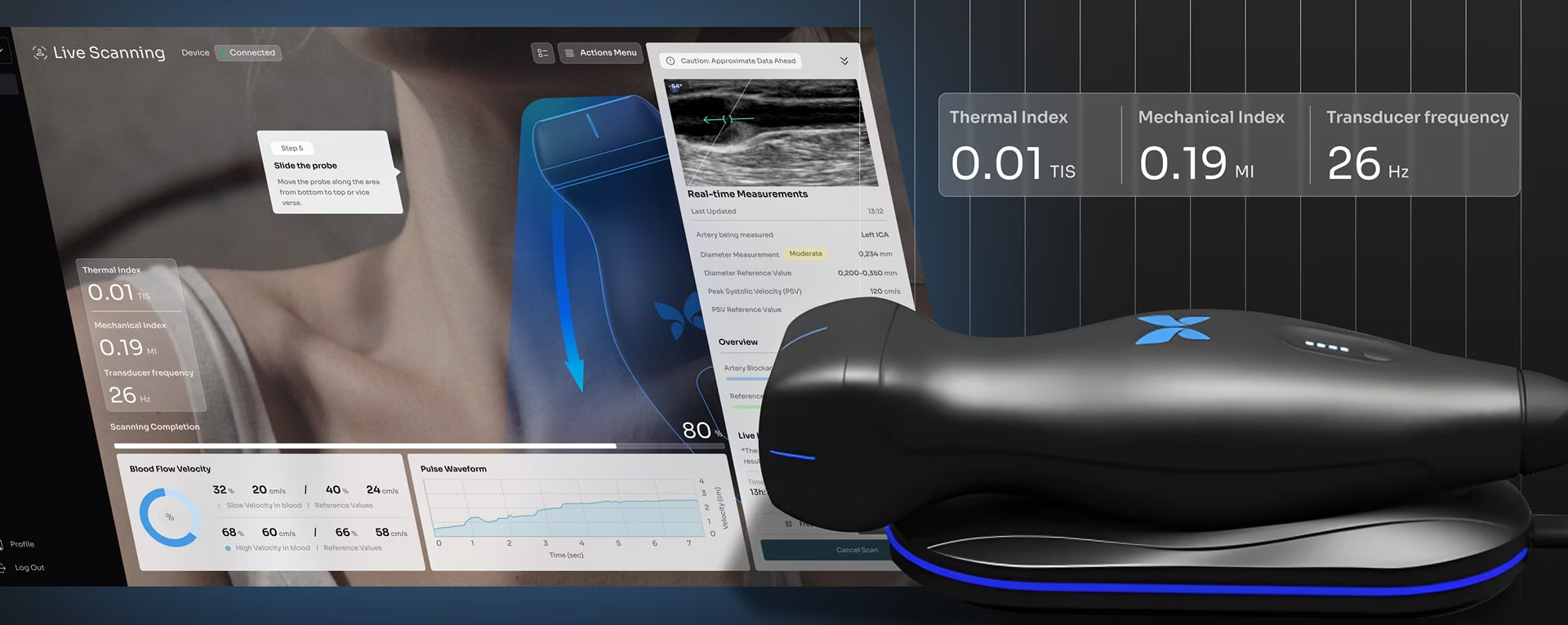
Creation is where the interface takes visual form, built on the architecture the planning phase produced. Components are designed with all their states: default, hover, active, disabled, error, empty, and loading. On the Grid AI machine learning platform and the Vasolabs artery imaging interface, this state-complete approach meant development could build directly from the specification without interpretation gaps.

Testing runs at two stages, not one. Fuselab conducts usability sessions at the wireframe stage before any visual design investment is made, then again with high-fidelity prototypes before developer handoff. Delivery is a structured package: annotated component specifications, interaction documentation, design tokens, and a developer review session. The measure of a complete handoff is whether a developer can build from it without a daily design call.
User interface design work
projects shipped
The projects below represent Fuselab's user interface design work across federal operations, clinical healthcare, financial services, and AI platforms, all shipped to real users in production environments. Each case study documents the problem brief, the constraints the team worked within, and the decisions made, not only the final screens.






Where user interface design meets data complexity
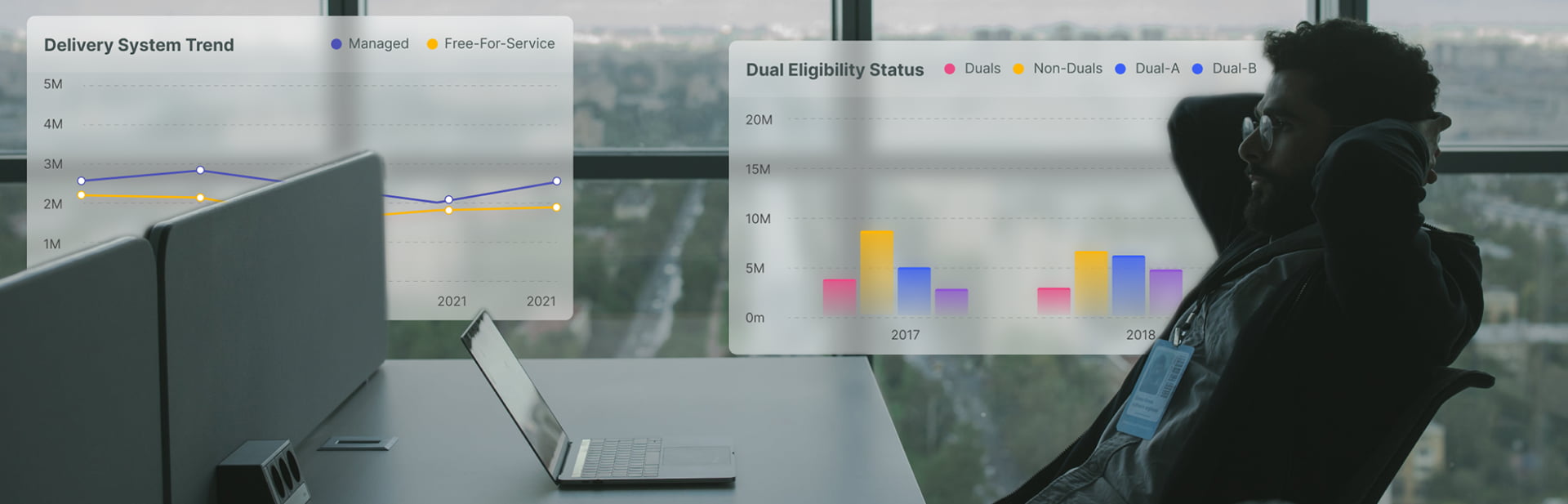
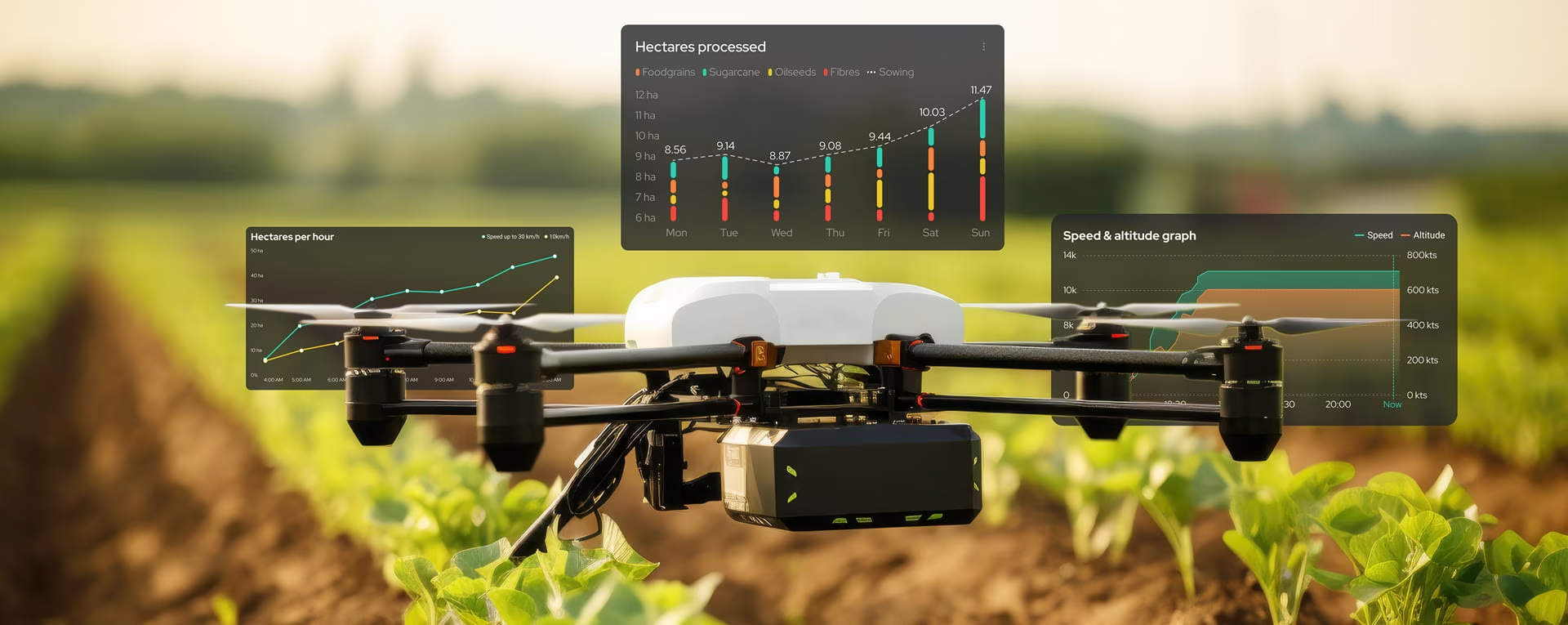
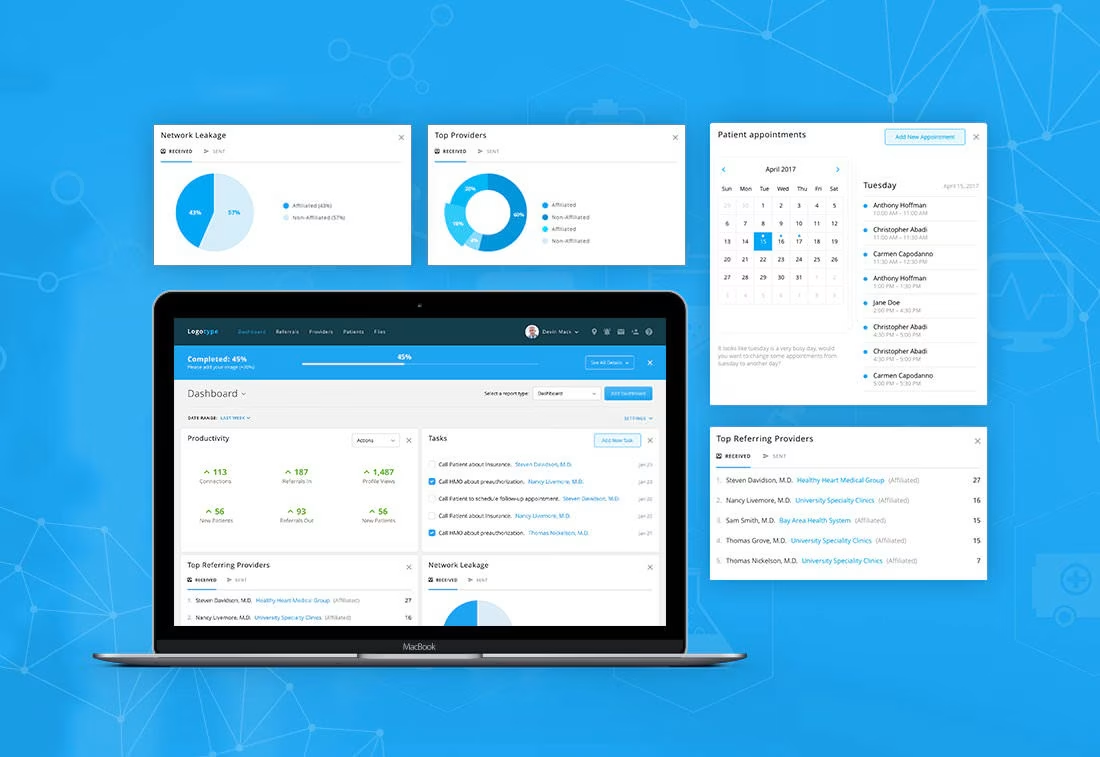
Dashboard and data platform design is the most technically demanding category of interface work. The designer is not only arranging screen elements but making decisions about data hierarchy, filter logic, drill-down behavior, empty states for missing data, and how the interface responds when an underlying data source changes or fails. Most of those decisions are invisible in a finished mockup but felt immediately in production.
The most common failure in data interface design is treating a dashboard as a static report with interactive elements added. A report presents data. A dashboard gives users the ability to act on data, which means every design decision has to account for what action the user takes next and whether the interface makes that action faster or slower than the alternative.
Dashboard interface design makes up a significant share of Fuselab's Washington DC user interface design project work, covering operational monitoring tools, financial reporting platforms, and clinical data systems. The full methodology and project examples are documented on the dashboard design service page.
App User Interface Design Agency
Fuselab also designs mobile interfaces for iOS and Android, with shipped work including Uber driver tools and the ClyHealth patient-facing mobile product. For teams looking at Fuselab specifically for mobile work, the mobile app design portfolio covers that scope in full.

Our UI Agency Related Services and Solutions


Industries where user interface design decisions carry the most weight
User interface design requirements differ meaningfully by industry, not just by product type. Clinical healthcare platforms, federal government systems, financial services tools, and AI products each impose distinct constraints on how data is presented, how errors are communicated, and how much cognitive load the interface can reasonably place on a user operating under real working conditions.

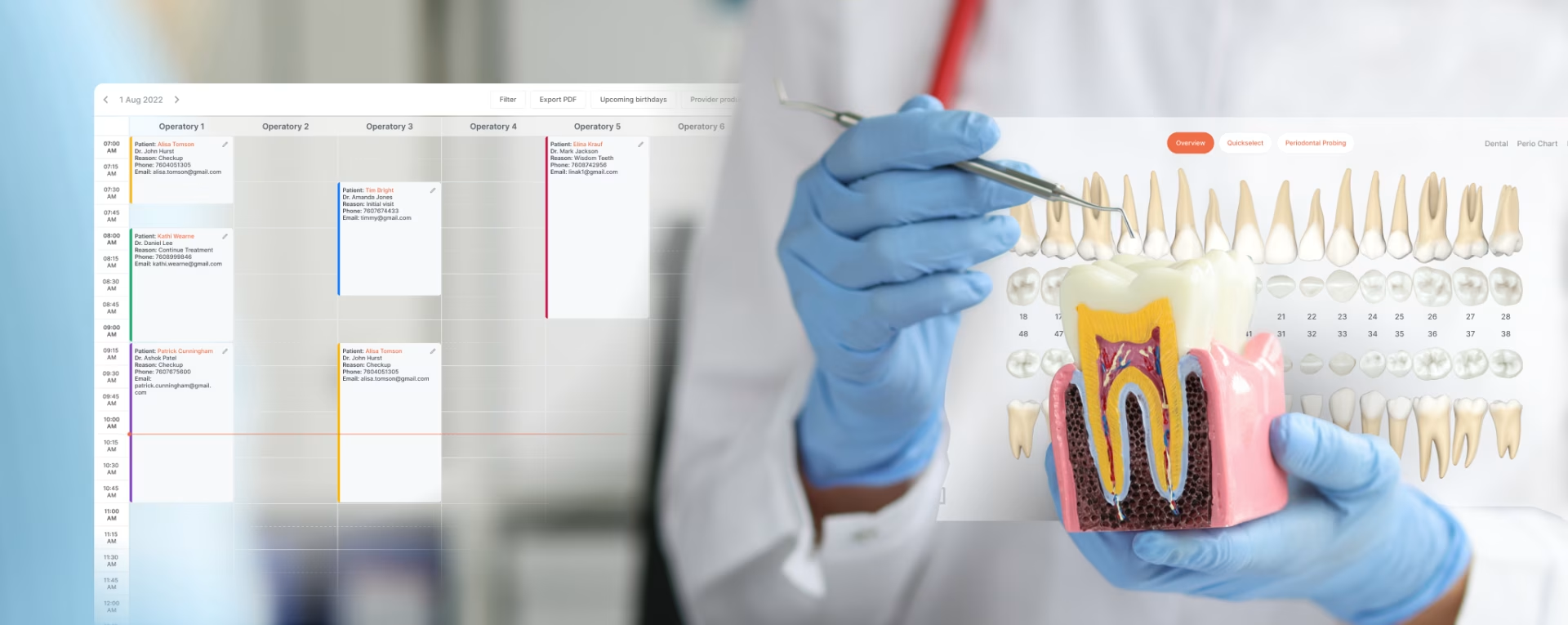
Clinicians work under time pressure with incomplete data, and the interfaces they rely on carry real consequences when something is unclear or misplaced. Compliance requirements shape every interaction state before visual design begins. Fuselab has shipped healthcare interfaces for ClyHealth, Vasolabs, and Datamonitor Healthcare across these exact conditions.

Booking, navigating, and changing plans in transit means users are operating with divided attention and often poor connectivity. The interface has to handle itinerary changes, real-time status updates, and last-minute rebooking without requiring full focus to complete a time-sensitive action. Friction at that moment loses the user permanently.

Real-time data feeds, GIS mapping systems, and multi-role user access have to resolve into a single coherent view. The core challenge is deciding what a dispatcher, a driver, and an operations manager each need from the same underlying data without overloading any one of them. Role-based interface logic solves this where visual design alone cannot.

Two audiences with opposing needs share the same product: agents who use it repeatedly as a professional tool and buyers who arrive occasionally with high emotional investment. Interfaces that optimize for one typically frustrate the other. Separating the two workflows structurally rather than visually is what resolves the conflict.

Probabilistic output creates an interface problem that deterministic software never faces. Users need to calibrate how much to trust what they are seeing, and an interface that presents AI-generated recommendations with the same visual weight as verified facts trains users to over-trust the system. That confidence communication layer is where most AI interfaces fail.

Conversion rate, cart abandonment, and return visit rate make this one of the few design disciplines where performance is immediately quantifiable. The decisions that move those numbers are rarely the visual ones. They are the checkout flow structure, the error recovery path, and the trust signals placed at the exact point of commitment.
Frequently asked questions about user interface design
What is user interface design?
User interface design is the discipline of specifying what appears on a screen, how it responds to input, and what state every component shows under every possible condition. It differs from visual design in that its primary deliverable is a complete behavioral specification, not a set of finished images. A product built from a thorough user interface design specification behaves as intended in production, not only in the presentation mockup.
What is the difference between UI design and UX design?
UX design determines how a product should work by mapping user flows, information architecture, and the interaction model users need to operate the product correctly. UI design implements those decisions visually and interactively, specifying the component system, states, and behavior of every screen element. Treating them as the same discipline causes teams to build visually finished products on structurally flawed foundations, which only becomes visible once real users interact with the shipped product.
How much does a user interface design project cost?
A focused interface design scope covering a defined set of screens typically costs between $15,000 and $40,000 with a US-based specialist agency. A full product interface including a component library, design system, and structured developer handoff package runs between $60,000 and $150,000 depending on screen count, data complexity, and the number of distinct user roles. Projects with compliance requirements such as Section 508 or WCAG 2.1 AA add scope at the documentation and testing stage rather than the visual design stage.
What should I look for when hiring a user interface design agency in Washington DC?
The most relevant qualifications for a Washington DC interface design engagement are production work in your specific technical context, experience with the compliance standards that govern your product, and a documented process that separates discovery from visual design. An agency that presents visual mockups in the first week has skipped the phase most responsible for expensive structural rework later in the project. For federal and federal-adjacent work, familiarity with USWDS standards and Section 508 requirements reduces onboarding time significantly.
How long does a user interface design project take?
A properly scoped user interface design engagement runs eight to sixteen weeks from discovery to completed developer handoff. The largest variable is not the design work itself but the client review and approval cycle, which on government and enterprise projects can involve multiple departments with sequential sign-off requirements. Building review gate time into the project schedule from day one produces more accurate delivery timelines than assuming smooth approval throughout.
What is the difference between a user interface design agency and a full-service digital agency?
A specialist interface design agency focuses on component design, interaction specification, design systems, and developer handoff documentation that production digital products require. A full-service agency covers brand strategy, marketing, and web design alongside interface work, which means interface design is one of several services rather than the core discipline. The difference matters most when a product team needs an agency that has shipped complex, data-heavy interfaces in regulated environments before, rather than one applying website design experience to product work.
Does Fuselab Creative work with federal agencies in the Washington DC region?
Fuselab Creative holds a GSA Schedule contract, which allows federal agencies in the Washington DC region and across the United States to engage the agency directly without a competitive bidding process. The agency has delivered interface design for federal and federal-adjacent clients including NASA, NIH, and DHCS, with experience in Section 508 compliance, USWDS standards, and multi-department stakeholder review processes. Federal procurement contacts can reference GSA Schedule number 47QTCA22D00CV.
Author

Contact Our UI Experts
Fill out the form!
Blogs From Our UI Experts
Unlike any other UI design agency in DC region.