
Fuselab · Enterprise Visual Agent Design
Visual agent design makes AI proposals reviewable before action
Fuselab designs how your team sees and approves what an AI agent does before it acts. Fixed-scope engagements take one workflow from opportunity map to production. The practice is visual agent design.
30 minutes, and you leave knowing whether to start with a Strategy engagement or move straight to a Pilot.

Systems That Turn Intelligence Into Action
From Signal to Action
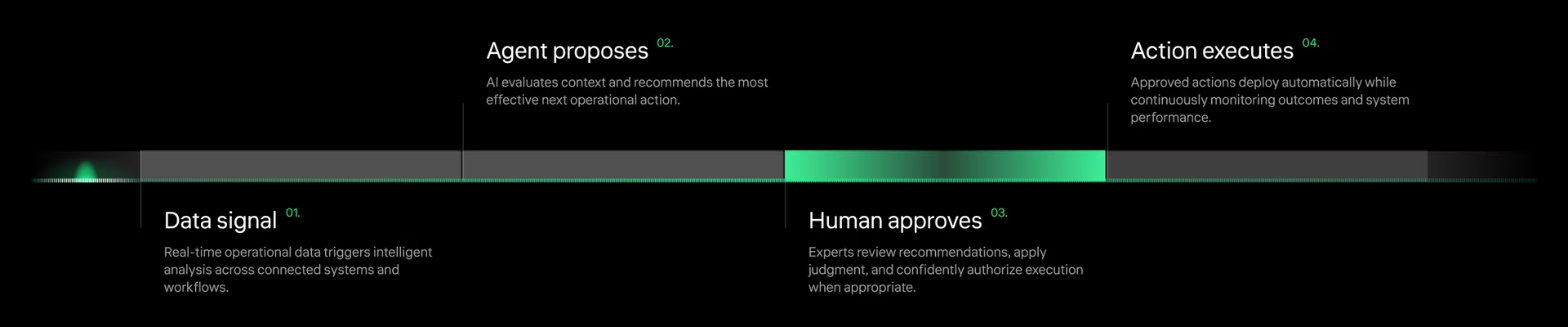
Built for regulated, high-stakes operations in
- Cybersecurity
- Healthcare operations
- Real estate & financial services
- Critical infrastructure


Definitions
What is a visual agent?
Visual agents are not the “vision agents” that read camera and video input. They make a system’s thinking visible to the person who has to act on it.
Each rendered view is a working surface, not a picture of the output. A person can change it before approving it, so reviewing a proposal means editing it.
Why it matters
What visual agent design changes for your organization
Most agent programs start with the model and add the interface at the end. Fuselab designs the approval layer first. Models often get swapped mid-project; and trust is lost at this point, which makes it much harder to replace, and an operations team that watched an unsupervised agent make its first mistake rarely gives it a second chance. Would you?

Governed by design
A person verifies each proposal before it runs. That is where AI agent trust starts.

People actually use it
People use interfaces they understand after the first week. Chat-only agents quietly stop getting opened.

Faster decisions
Cross-referencing three systems by hand becomes one view built around the decision, not the data sources.

Audit-ready from day one
Every view and every approval is a structured record, not a transcript someone reconstructs later.
The problem
Everyone agrees agents are coming. Almost no one has a credible way to start.
Use cases
Visual agent design in practice: five workflows

Attack-path investigation
The agent builds attack-path graphs, ranks vulnerabilities, and drafts a remediation plan; an analyst approves before anything runs.
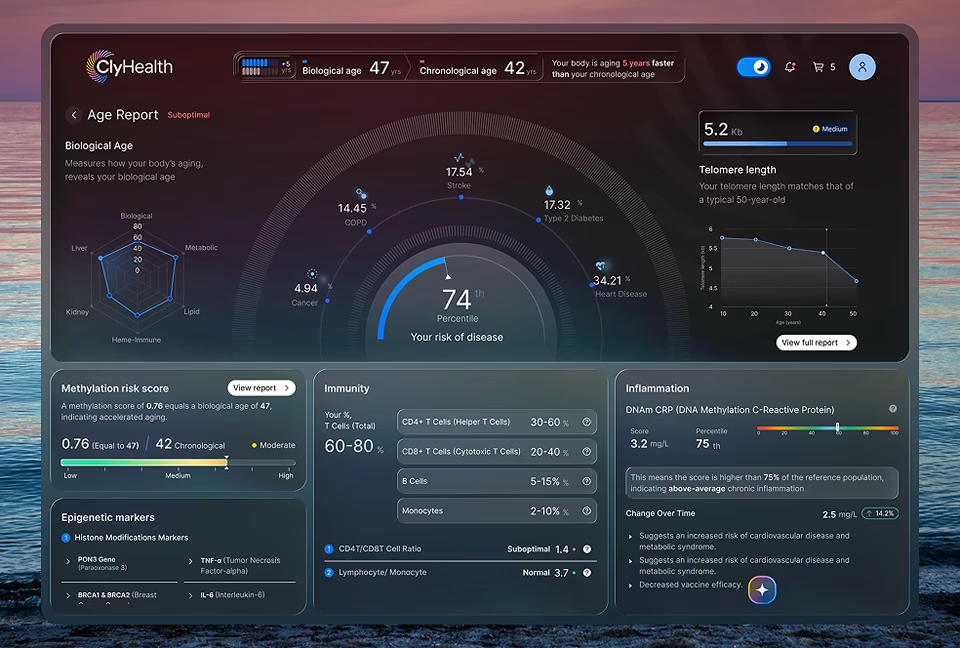
Patient and population timelines
Labs, devices, and clinical records merge into one timeline. Care options are proposed, never executed without clinical sign-off.
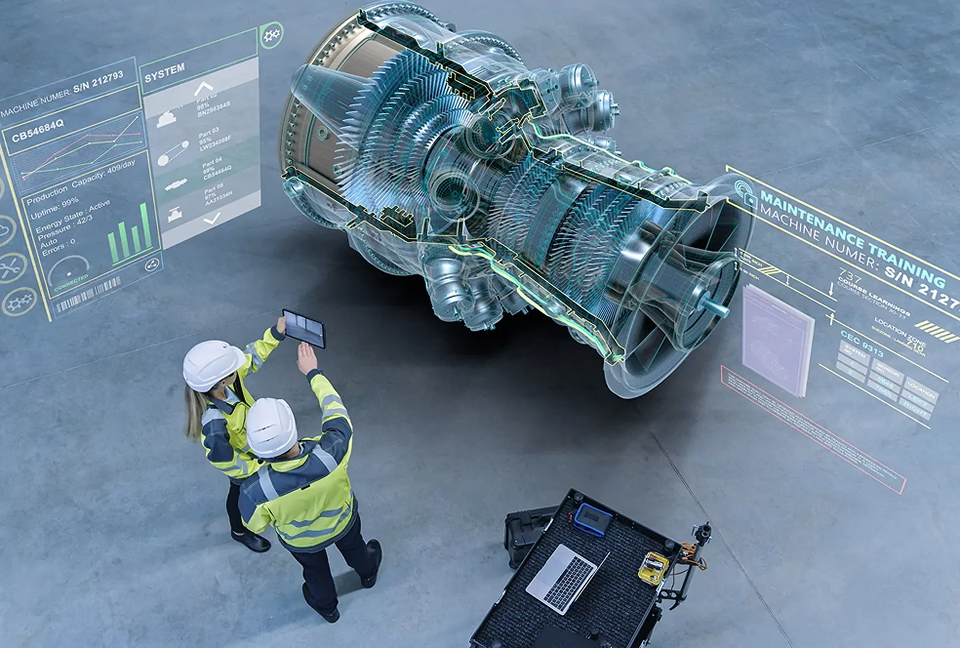
Digital twin and scenario simulation
Sensor data feeds a live simulation that compares interventions and scenarios by cost and risk before an approved change executes.

Transaction intelligence
Property maps, comparisons, and financing scenarios stay in one view while the agent coordinates inspections, financing, and closing.

Fleet supervision
Every robot's position and telemetry on one map. The agent proposes a reroute or a pause; nothing moves until an operator approves it.
Design strategy
Widgets that adapt to the data, not the other way around
Fuselab designs the opposite way. Each engagement is built around a registry of interface components, from charts and maps to timelines and the approval control, and the shape of the data decides which one renders.
One pairing matters more than the rest. Any proposed action renders with its approval control attached, so the checkpoint arrives as part of the proposal, not on a separate screen.
The offer
Three fixed-scope packages. Start where your organization is today.
Deliverables
What you actually receive

Opportunity map
Ranked workflows, scored on feasibility and impact

Approval model
What the agent does alone, and what needs sign-off

Architecture map
The data and systems the agent reads and acts on

Working prototype
A demoable interface on real or representative data

Component system
Reusable components that carry into production
How it progresses
Each package is a complete engagement
From clients
What it's like to work with us
Reviews from the product, security, and design leaders Fuselab has shipped with.
"We were impressed with Fuselab Creative's work product and deliverables."


"The team delivered a balanced, effective solution and got to the customer's objective with a high degree of efficacy."

"If you need to re-think your product and need some truly unique design talent , Fuselab Creative design team is your answer."

"Their dedication and positive attitude made every project enjoyable and successful!"

Questions
Frequently asked
What is a visual agent?
Visual agent design is the practice of building the interface layer through which an AI agent shows its reasoning and proposed actions, with a human-approval checkpoint in place before anything executes. Fuselab delivers this work within three fixed-scope packages, from opportunity map to production.
What is a human-approval model?
A human-approval model is the documented decision framework for what an agent may do on its own, what needs a person’s sign-off, and who that person is. Without one, an agent’s first mistake becomes the reason it gets shut off, and most programs never recover from that first mistake.
How much does visual agent design cost?
Visual agent design costs $12,000 to $25,000 for a Strategy engagement, $35,000 to $75,000 for an Interactive Pilot, and $100,000 to $300,000 and up for a phased Production Implementation. Every package is fixed-scope, so the range quoted at the start is the range billed at the end.
How long does a visual agent project take?
A visual agent project takes three-to-four weeks for Strategy, six-to-ten weeks for an Interactive Pilot, and three-to-nine months, phased, for Production Implementation. Pilot work carries straight into production, so the production build starts as an expansion rather than a rebuild.
Do we need to know which workflow to automate before we start?
Workflow selection is the first deliverable, not a prerequisite. The Strategy engagement scores your candidate workflows on data readiness, decision value, and approval complexity, then delivers a ranked opportunity map with a go/no-go recommendation for a pilot on the top candidate.
Which workflows are a good fit for a visual agent?
A visual agent fits workflows with real operational data, actions that carry a cost when they’re wrong, and a named person who would approve them. A chat assistant over your documents or a copilot inside an existing SaaS product needs a lighter engagement than this one, and a smaller budget.
Can this work with the AI models and infrastructure we already have?
Fuselab’s work is model-agnostic and sits on top of the AI stack you already run. Infrastructure vendors supply the models, orchestration, and plumbing; this engagement designs the layer they don’t touch, which is what your team sees and who approves an action before it executes.