Fuselab Creative is a US-based healthcare design agency. Healthcare and biotech are most of what we build: clinical software, medical device interfaces, biotech research platforms, and selected federal projects.
Trusted by medical device makers, biotech innovators, clinical software teams, and federal health agencies
Healthcare UX Design Practice
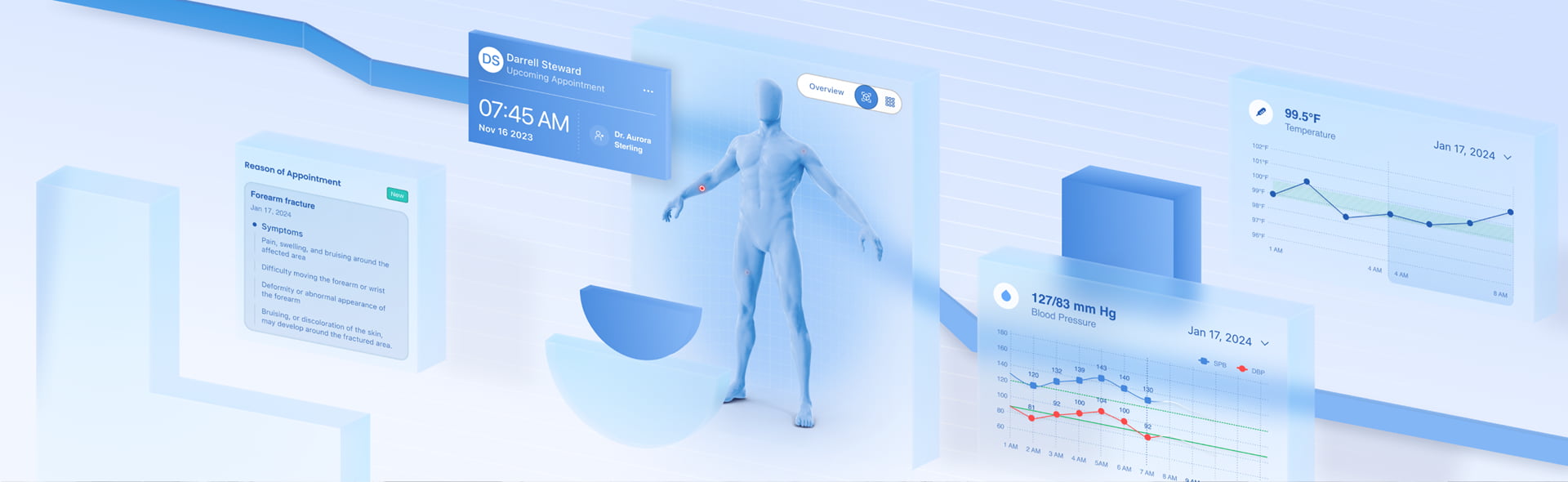









Healthcare UX Design by the Numbers
Fuselab's healthcare and biotech practice in four figures. All from work shipped since 2017.

Of Fuselab's portfolio is healthcare and biotech work

Building a healthcare design specialist practice

Healthcare verticals covered, from EHR systems to biotech research

Californians using Medi-Cal interfaces Fuselab designed
Step 1: Discovery & Research
Discovery starts inside the clinical environment, with stakeholder time across clinical, administrative, and patient-facing roles. What gets decided in this phase has the longest tail: scope boundaries, regulatory and interoperability constraints, and the specific clinical workflows the product will need to support. Every later stage is bounded by what discovery resolves.

Step 2: Strategy & Information Architecture
The information architecture stage translates discovery into structure. A persona at this stage includes the role and the state the role works in. Stress, interruptions, and limited reading time all change how a screen is used, and the user flows and IA that follow have to organize information for the working state rather than the ideal one.
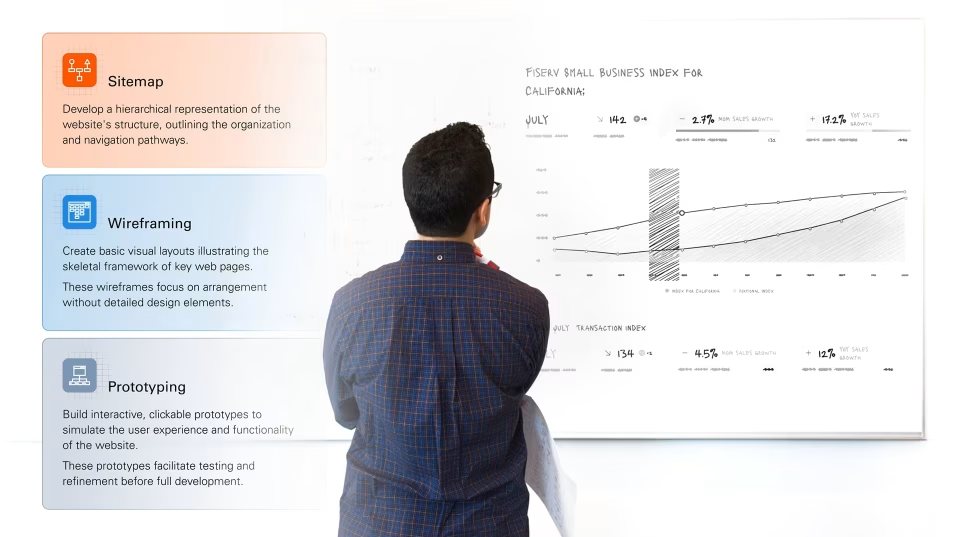
Step 3: UX Design & Wireframing
Low-fidelity wireframes pressure-test workflow decisions before any visual investment locks them in. The work at this stage models the task path a clinician actually takes, which is rarely the path a feature spec implies. That includes the primary task screens, the reference lookups that need to stay one click away, and the elements that have to stay out of the way during a critical state. The wireframe resolves those structural questions before visual design closes them off.
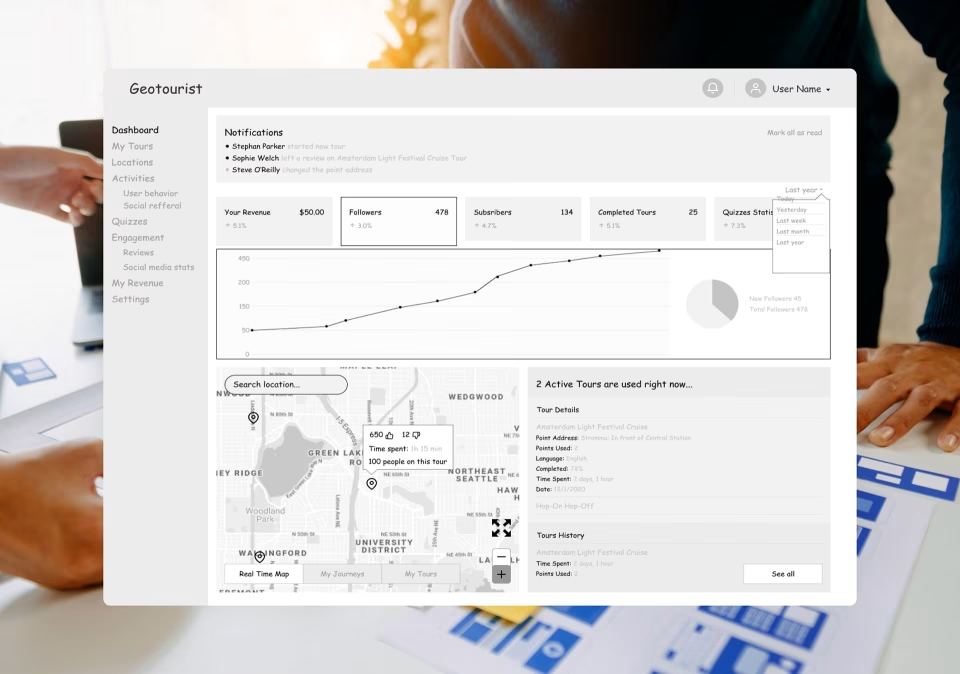
Step 4: UI Design & Prototyping
High-fidelity design and interactive prototypes give users a working version of the product to react to, which surfaces problems that abstract descriptions cannot. The design system is built alongside the visual design, so component rules are in place from the first screen. Those rules include accessibility behavior, clinical color use, alert hierarchy, and conventions for error and warning states. The same patterns then scale across modules and platforms as the product grows.

Step 5: Usability Testing & Validation
Validation testing happens with the people who will actually use the product: physicians, nurses, administrators, and patients. Tests are designed to reproduce the environment the product will operate in, including the interruptions and parallel demands that change how an interface performs in clinical settings. The product is refined against those test results until it performs reliably under the demands of real clinical work.

Step 6: Handoff & Support
Handoff covers developer specifications, design documentation, and the design system files the build team needs to keep patterns consistent through implementation. The relationship usually continues past launch. Healthcare products evolve in ways the original specification does not anticipate, and the team that built the system is the most efficient one to keep extending it as new workflows, features, or regulatory requirements come into scope.

Our Healthcare UI UX Design Work Examples






Do you want to create something similar?
Get a free estimation for your project requirements and start it within 24 hours.
EHR & EMR Systems
Electronic health record interfaces are the most used, and most complained about, software in clinical medicine. Fuselab designs EHR and EMR interfaces around the clinical workflows clinicians already rely on, so the right patient data surfaces without adding cognitive load.

Patient Portals & Patient Engagement
Patient portals fail when they are designed for average digital literacy in a population that spans first-time smartphone users to clinical professionals. Fuselab designs around the full spread, treating users on the edges of the literacy curve as primary in the design brief.

Medical Device Interfaces (SaMD)
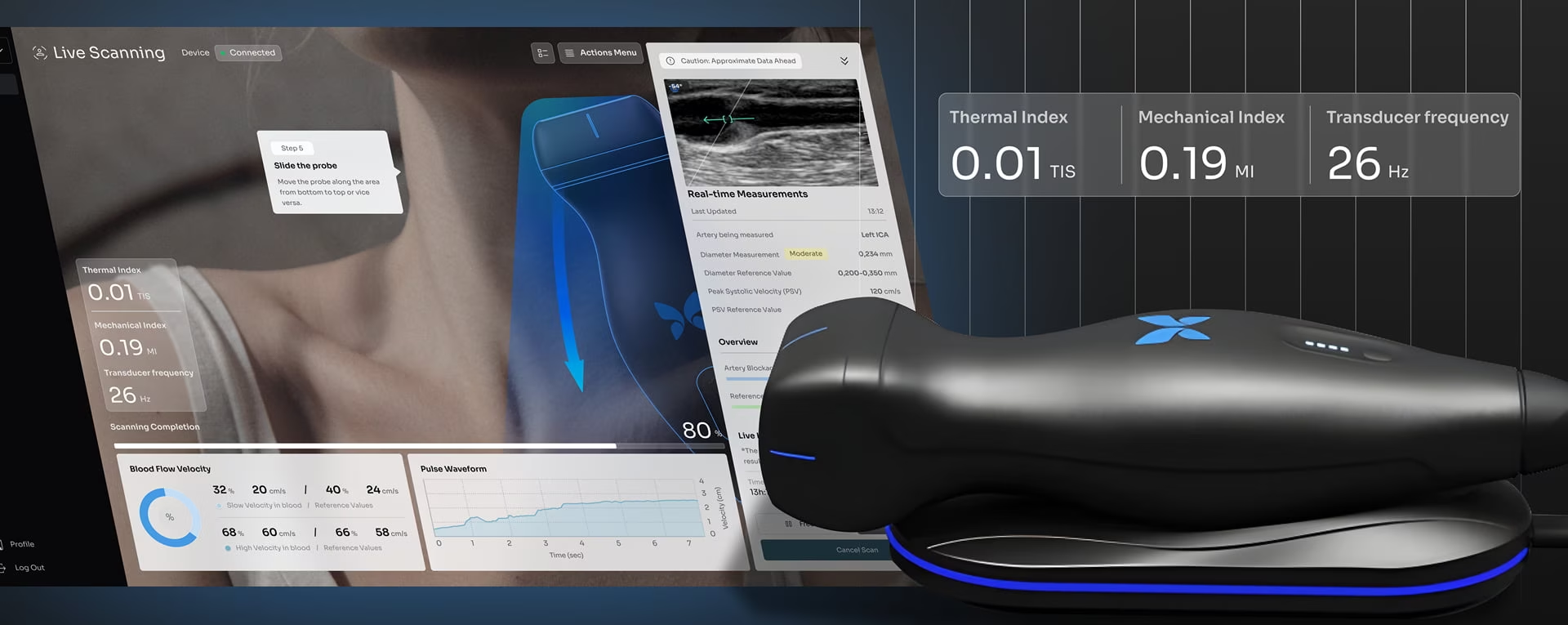
Software as a Medical Device carries FDA regulatory obligations that start at the design stage. Fuselab designs SaMD interfaces that meet IEC 62366 human factors and FDA usability validation requirements while remaining usable in real clinical conditions. The Vasolabs artery scan platform is one example.

Health & Wellness Apps (mHealth)
Consumer mHealth apps compete for attention against every other app on a patient’s phone. Fuselab designs health and wellness apps with the engagement patterns that keep patients returning and the clinical accuracy standards general consumer apps can skip. Bearn is one example.

Healthcare Dashboards & Analytics
Clinical dashboards and healthcare analytics products must transform dense datasets into decisions. Fuselab has designed for California DHCS, where the dashboard scaled across multiple state departments, and for Datamonitor Healthcare, where the work was visualizing pharmaceutical competitive intelligence at the level of individual drug pipelines.

Health Insurance & Payer Platforms
Payer platforms have to serve members, providers, and administrators across workflows that share almost nothing. Fuselab designs health insurance UX products that treat each user type as a separate primary workflow inside one platform, which is what makes payer UX harder than most multi-user products.

Mental & Behavioral Health
Mental and behavioral health platforms carry a responsibility that goes beyond standard healthcare UX. Every interface decision, from how a symptom check-in is phrased to how a care escalation is triggered, affects a user who may be in genuine distress. Fuselab designs behavioral health products around the assumption that the user is not at their best moment when they open the app.

Pharma & Life Sciences
Pharmaceutical and life sciences products combine the data complexity of research environments with the regulatory requirements of healthcare. Fuselab has designed for NIH and Vasolabs, where the work involved research-grade data interfaces with the validation discipline that life sciences products require.

Clinical Decision Support & AI
AI recommendations in clinical settings carry a trust burden that no other software category faces. Fuselab designed the ClyHealth clinical AI platform with interfaces that expose confidence levels, source data, and override paths so clinicians can act on recommendations they can also defend.

EHR Data in Motion
Related Services and Solutions


Medical UX/UI Design Services we deliver
Healthcare UX design services at Fuselab cover medical product design from research through usability testing. The work has to account for what a patient portal looks like to someone managing a chronic condition and what a clinical dashboard looks like at hour ten of a physician's shift.
Healthcare UX research and strategy starts before any wireframe is drawn. Fuselab covers user interviews, contextual inquiry, patient journey mapping, and clinical workflow analysis across clinicians, administrators, and patients. Competitive research on healthcare products maps where existing solutions miss their users.
Medical UI/UX design at Fuselab is a healthcare-only practice. Wireframes and prototypes get shaped around how information is used under clinical pressure. EHR interfaces, patient portals, and medical device software are designed to the regulatory and accessibility constraints these products require.
Healthcare website design is often where a patient or prospective client first encounters the organization. Fuselab designs medical practice websites, health tech company sites, and patient-facing web portals built for credibility and conversion, with accessibility from the start.
Design systems and usability testing are what keep a healthcare product consistent across releases. Fuselab builds healthcare-specific design systems paired with usability testing under real clinical conditions, plus accessibility audits and WCAG compliance reviews.
Medical dashboard and data visualization work turns dense clinical data into the decisions a user actually has to make. Fuselab has designed for California DHCS and Datamonitor Healthcare, with population health dashboards, clinical analytics interfaces, and real-time patient data visualization tools shaped around the decision each user faces.
Healthcare app and mobile UX has its own design discipline. Clinical and patient-facing apps face shorter attention windows, interrupted use patterns, and data security requirements that general consumer apps do not have to satisfy. Fuselab designs healthcare apps for patient self-management, clinician workflows, and care team coordination, with the engagement patterns and clinical accuracy that medical mobile products require.
Contact Us
Fill out the form!
Frequently Asked
Questions
Healthcare, Medical and Biotech UX Design: Common Questions
What is healthcare UX design?
Healthcare UX design is the practice of designing digital interfaces for clinical software, patient-facing products, and medical devices, with the regulatory, accessibility, and clinical workflow constraints those products have to satisfy. The discipline operates in regulated environments where usability problems can affect patient safety.
What does a healthcare UX design agency do?
Agencies that specialize in healthcare UX design build digital interfaces for healthcare organisations, including EHR systems, patient portals, medical device software, clinical dashboards, and healthcare apps. The work covers research with clinicians and patients, regulatory and accessibility planning, interface design, usability testing in clinical conditions, and design system delivery.
How is healthcare UX different from general UX design?
Two characteristics separate healthcare UX from general UX practice. Regulatory requirements like HIPAA and FDA usability validation shape what can be built, often before the design phase begins. And usability failures can affect patient safety, raising the consequence bar above most product categories.
What is the difference between healthcare UX and medical device UX?
Medical device UX is a sub-category of healthcare UX with additional FDA regulatory obligations. As Software as a Medical Device (SaMD), medical device interfaces must satisfy IEC 62366 human factors engineering and FDA usability validation requirements that start at the design stage. Healthcare UX broadly covers clinical software, patient products, and administrative platforms, while SaMD work is held to a separate regulatory standard.
How much does a healthcare UX design project cost?
US-based specialist agencies typically charge $100 to $300 per hour for healthcare UX design work, with project budgets running from $25,000 for a focused engagement to $250,000 or more for a multi-platform design system. Offshore generalist agencies charge $25 to $80 per hour but rarely have the clinical workflow and regulatory background healthcare products require.
How long does a healthcare UX design engagement take?
Discovery through design system handoff typically takes 12 to 24 weeks for a healthcare UX design engagement, depending on scope and regulatory requirements. Discovery and research alone usually take 3 to 6 weeks because clinical workflow observation, stakeholder interviews across user types, and regulatory mapping cannot be compressed without losing the depth they require.
What should I look for in a healthcare UX design agency?
Three signals matter when evaluating a healthcare UX design agency. The portfolio should name specific clinical clients, the shipped products should include regulated categories like EHR or medical device software, and the research process should include documented time inside the clinical environment. Agencies missing any of the three are general design agencies claiming healthcare experience.
What does HIPAA-compliant healthcare UX design require?
HIPAA-compliant healthcare UX design requires that protected health information (PHI) is handled correctly in every interface decision, including how data is displayed, who sees what under which permissions, how sessions time out, and how the audit trail surfaces in the UI. The compliance work starts in discovery, where the team scopes which data flows the product will touch, and runs through to usability testing and design system delivery.
Further reading on healthcare UX design
Practitioner perspectives from Fuselab engagements