11 top MVP development companies in the USA for 2026
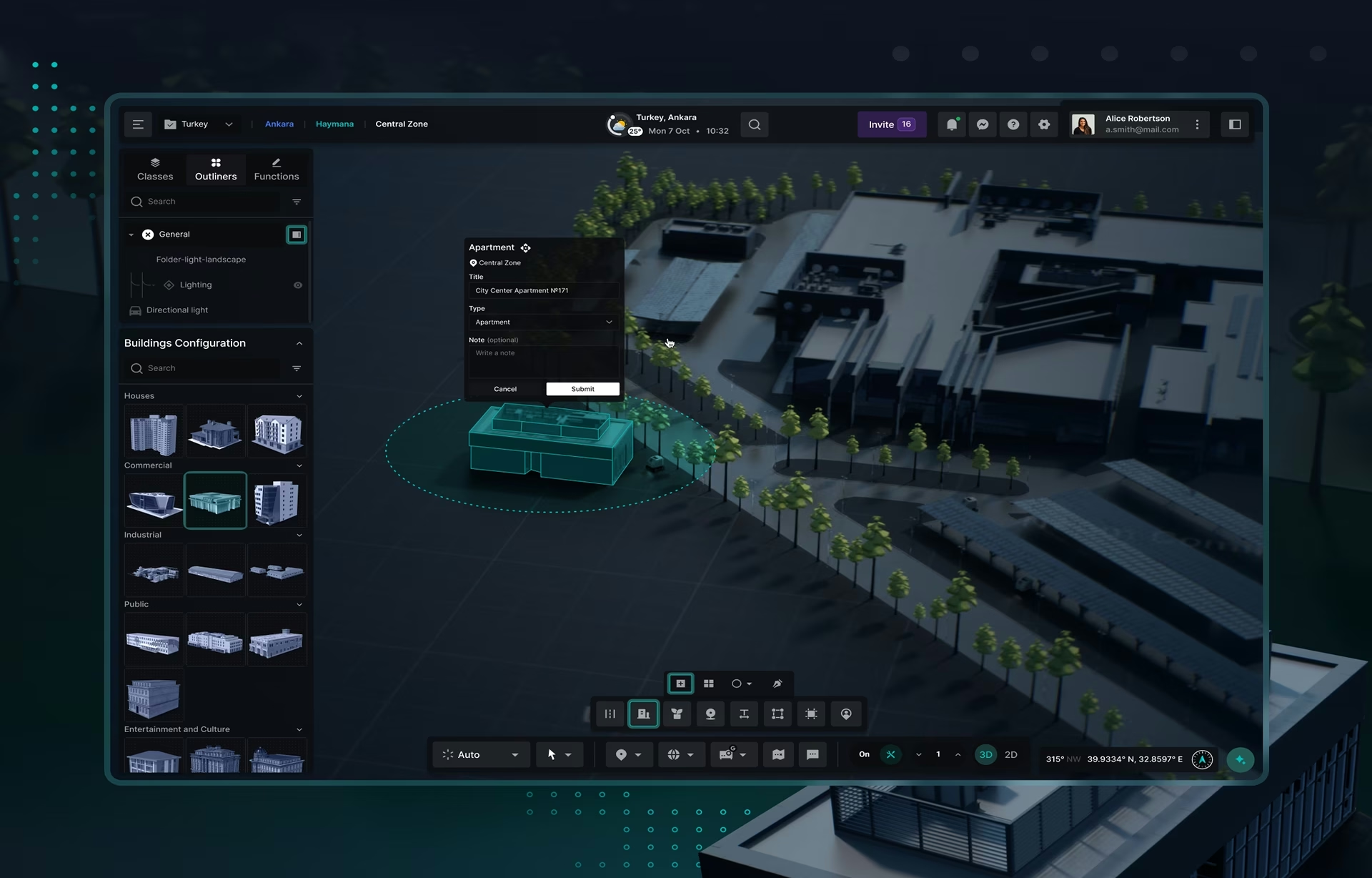
MVP development companies take a product idea to its first working release, covering discovery, feature scoping, design, engineering, and launch instrumentation, and they differ far more in how they decide what to leave out than in how they write code.
Choosing a build partner commits most of a first budget to work nobody can inspect until it exists, on evidence that rarely amounts to more than sales pages. This comparison of 11 US MVP development companies sticks to what can be checked. That means Clutch rates, minimums, and ratings verified on September 24, 2026, plus what each firm publishes about price, timing, and code ownership.
What to look for in MVP development companies
Strong MVP development companies can name what they cut from the last release they shipped and explain the reasoning, employ designers and engineers in the same organization, publish products that are live rather than concept work, and state what happens to the codebase after launch. A firm that cannot describe its feature-cut method is selling capacity, not product judgment.
The feature-cut question is the fastest filter available. Ask a shortlisted firm what it removed from its most recent first release and what that decision rested on. Teams that scope by technical effort answer in hours and story points. Teams that scope by risk answer with the assumption the release was built to test, which is a different kind of answer entirely.
Where design sits is the second filter. Design-only firms hand over a prototype and stop, which works when the client’s own engineers watched the UX research sessions and fails badly when they did not. We have picked up first releases where the build team quietly reinterpreted flows it had never watched a user attempt, and the rewrite cost more than the research would have.
The third filter is what the release produces once it is live. CB Insights analyzed 431 venture-backed shutdowns since 2023 and found poor product-market fit cited in 43 percent of them. That is a scoping failure more than an engineering one. Ask what instrumentation ships with the release, because a first version that produces no evidence has not done its job.
Top MVP development companies in the USA
The top MVP development companies in the USA for 2026 are Fuselab Creative, Glorium Technologies, Sidebench, ScienceSoft, Intellectsoft, Vention, Rootstrap, BairesDev, thoughtbot, JetRockets, and Simform. Each one is matched below to the constraint it suits best, from a fixed-price first release to MedTech quality systems or a budget-first build.
Selection ran on public evidence only. Rates, minimums, locations, and ratings come from Clutch profiles rather than company websites, because agency sites often list a registered-agent address as a US office, and scope came from each firm’s own published pages. Inclusion required a US headquarters, a Clutch rating of 4.8 or above, and shipped products rather than concepts.
The list is grouped by scenario, not ranked. Fuselab Creative appears first because it publishes this comparison, and the other 10 run in three groups. The first group suits products facing a regulatory or review constraint, the second suits technical constraints such as integration, scale, and AI, and the third covers product definition, technology stack, and budget. Delivery location varies widely and is stated in every entry.
Fuselab Creative: best suited to MVPs with a fixed price and date

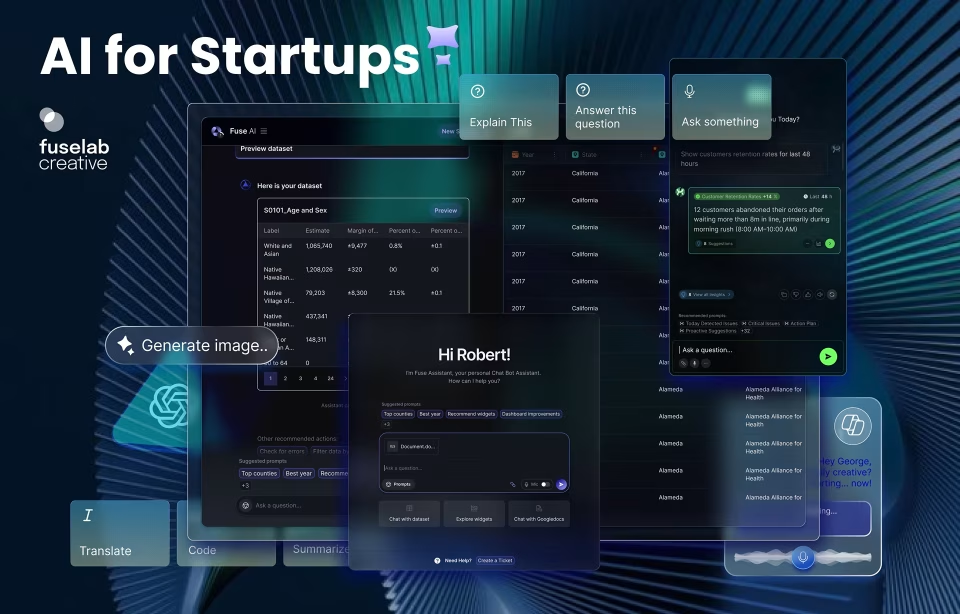
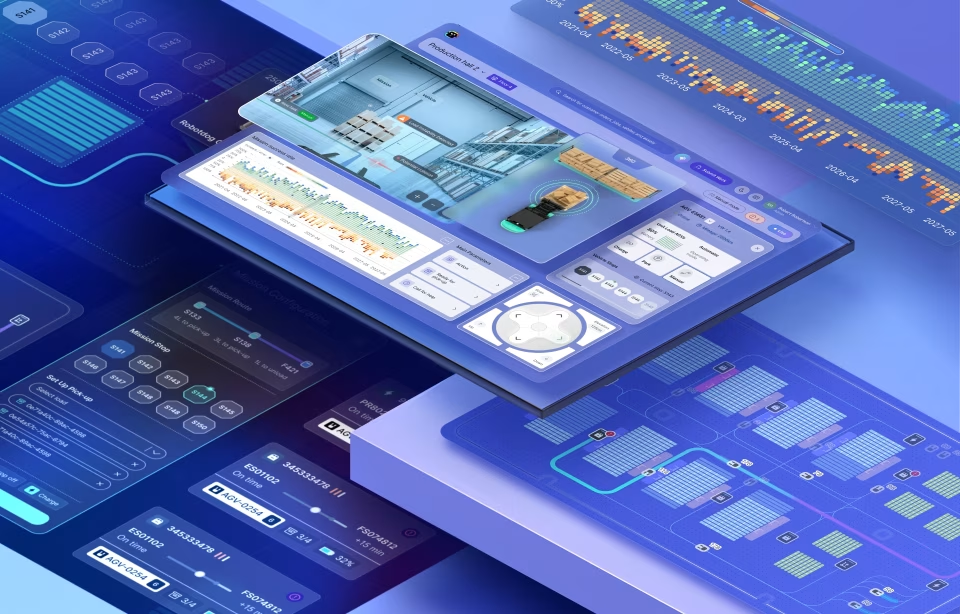
Fuselab Creative is a McLean, Virginia team with research, design, and engineering in-house, so the people who cut the feature list also write the code. Its MVP development tiers carry a price and date fixed up front. A clickable prototype is $14,999 in two weeks, a working product $30,000 in four, and a pilot with real users from $60,000 in six to eight. Clients since 2017 include Uber, Fiserv, Grid AI, NASA, and NIH.
Where it wins: founders who need a real product fast and want full ownership of the code from day one.
Watch out for: US rates sit above the nearshore firms here, so a thin budget fits the four-week working product better than the pilot.
Glorium Technologies: best suited to MedTech under quality-system requirements

Glorium builds healthcare and medical-device software and positions on ISO 13485, the quality management standard for medical devices, alongside HIPAA, GDPR, and HL7 or FHIR integration work. Telehealth platforms, patient engagement products, and healthcare IT systems make up most of the published portfolio.
Where it wins: products with a regulatory pathway that exists before the product does.
Watch out for: ask which legal entity holds the ISO 13485 certificate and whether its scope covers your project, because that answer decides how much of the quality work transfers.
Sidebench: best suited to integration-heavy healthcare products
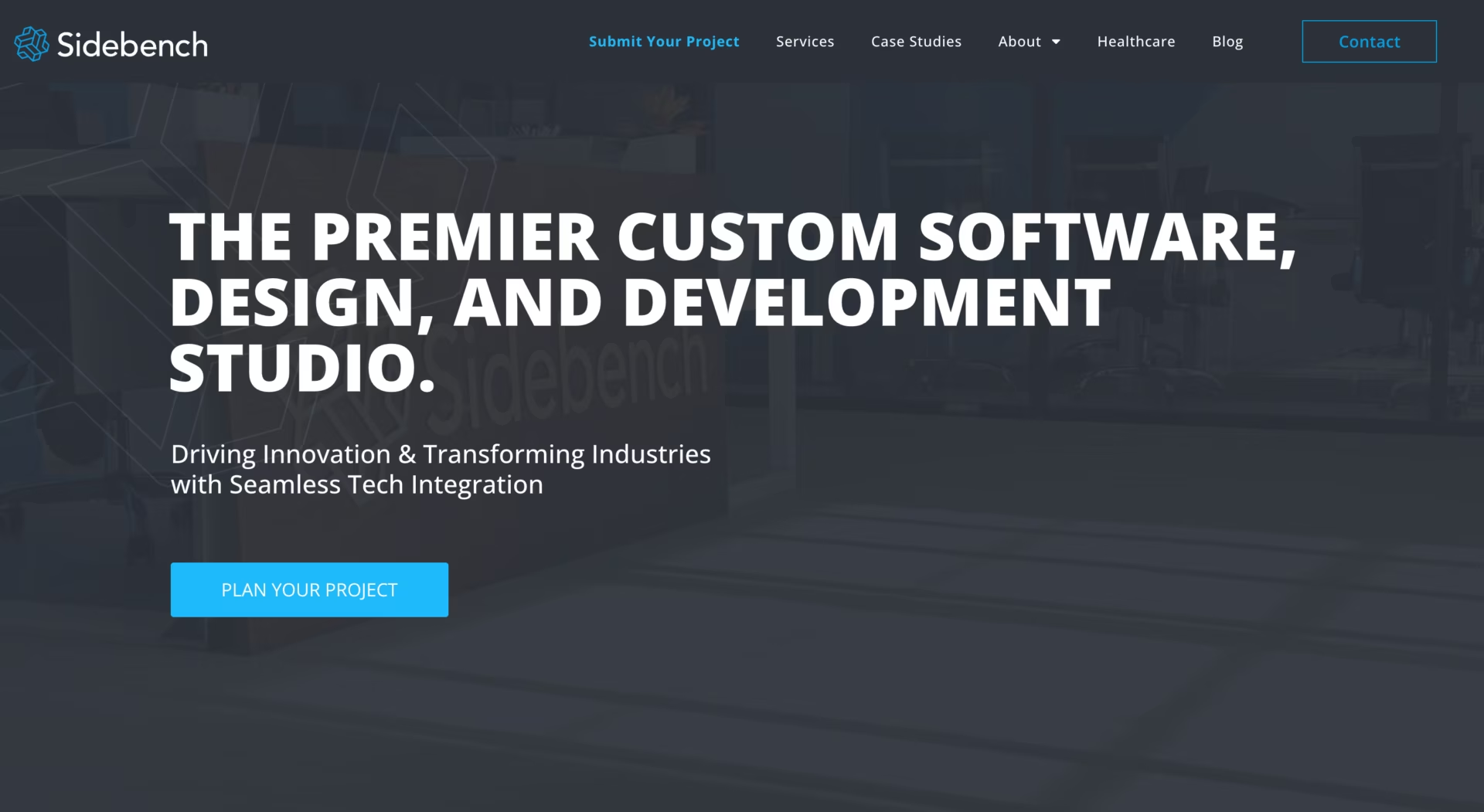
Sidebench builds where clinical systems have to talk to each other, and its engineering scope covers EHR and FHIR APIs, healthcare interoperability, and cybersecurity alongside standard product work. The Los Angeles team of roughly 50 runs strategy, research, design, and build in one organization, which suits products whose hardest problem is a workflow rather than a screen.
Where it wins: health products whose hardest requirement is getting two clinical systems to exchange data correctly.
Watch out for: the healthcare depth is overhead a general consumer or SaaS product pays for without using.
ScienceSoft: best suited to a release facing a cybersecurity review
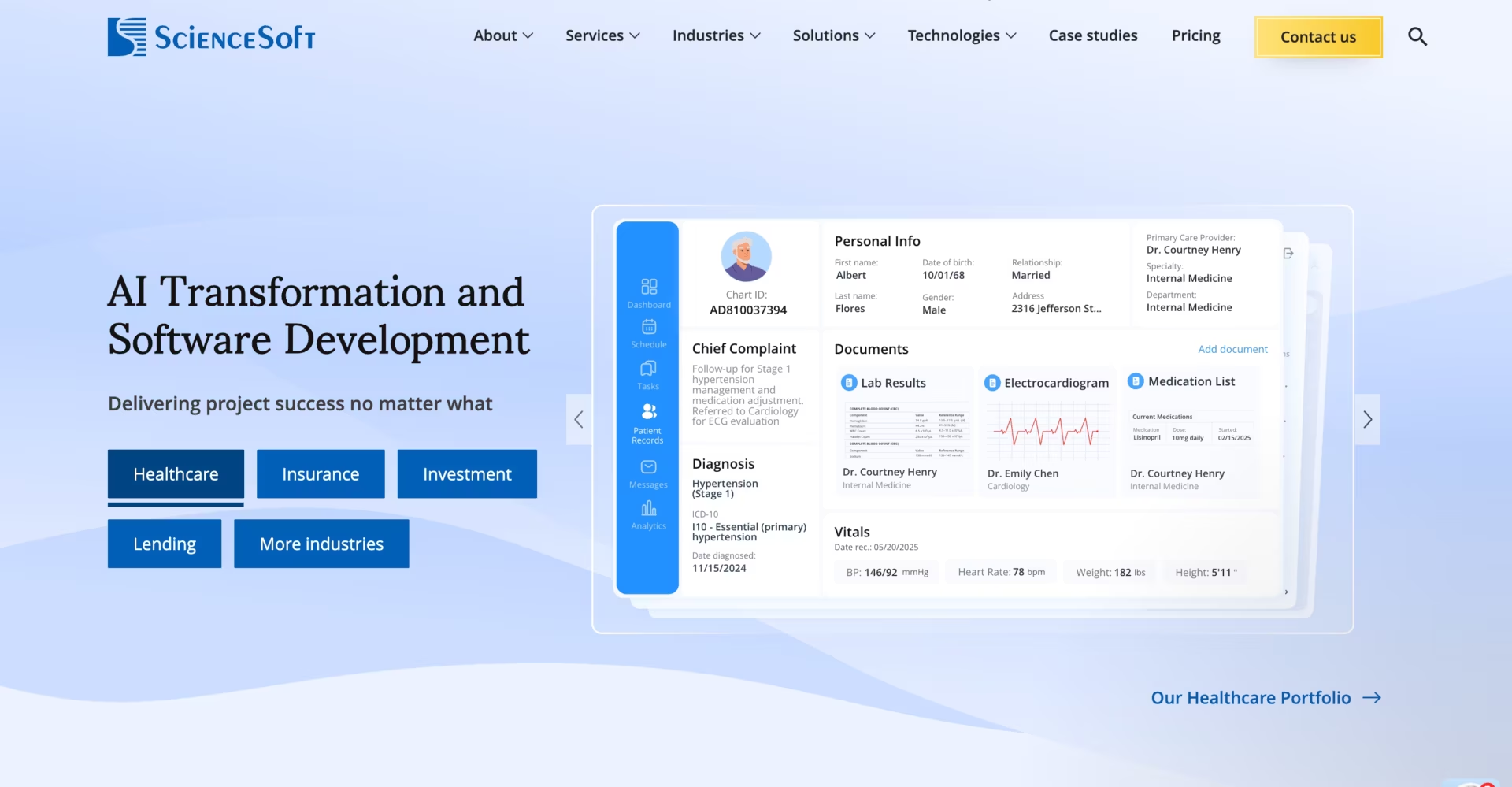
ScienceSoft has operated since 1989 and runs first-release work through planning, prototyping, architecture, design, engineering, QA, security configuration, and deployment, with a stated range of one to four months depending on scope. The McKinney, Texas company keeps cybersecurity in the same organization as product engineering.
Where it wins: organizations that need a documented cybersecurity posture at launch rather than after it.
Watch out for: the $5,000 Clutch minimum describes a far smaller engagement than a full release, so ask what the lean version of the process contains.
The next four MVP builders suit products whose hardest problem is technical rather than regulatory. That means connecting to systems already running, holding up under load after launch, or proving that an AI feature behaves the way the pitch says it does.
Intellectsoft: best suited to first releases with heavy system integration
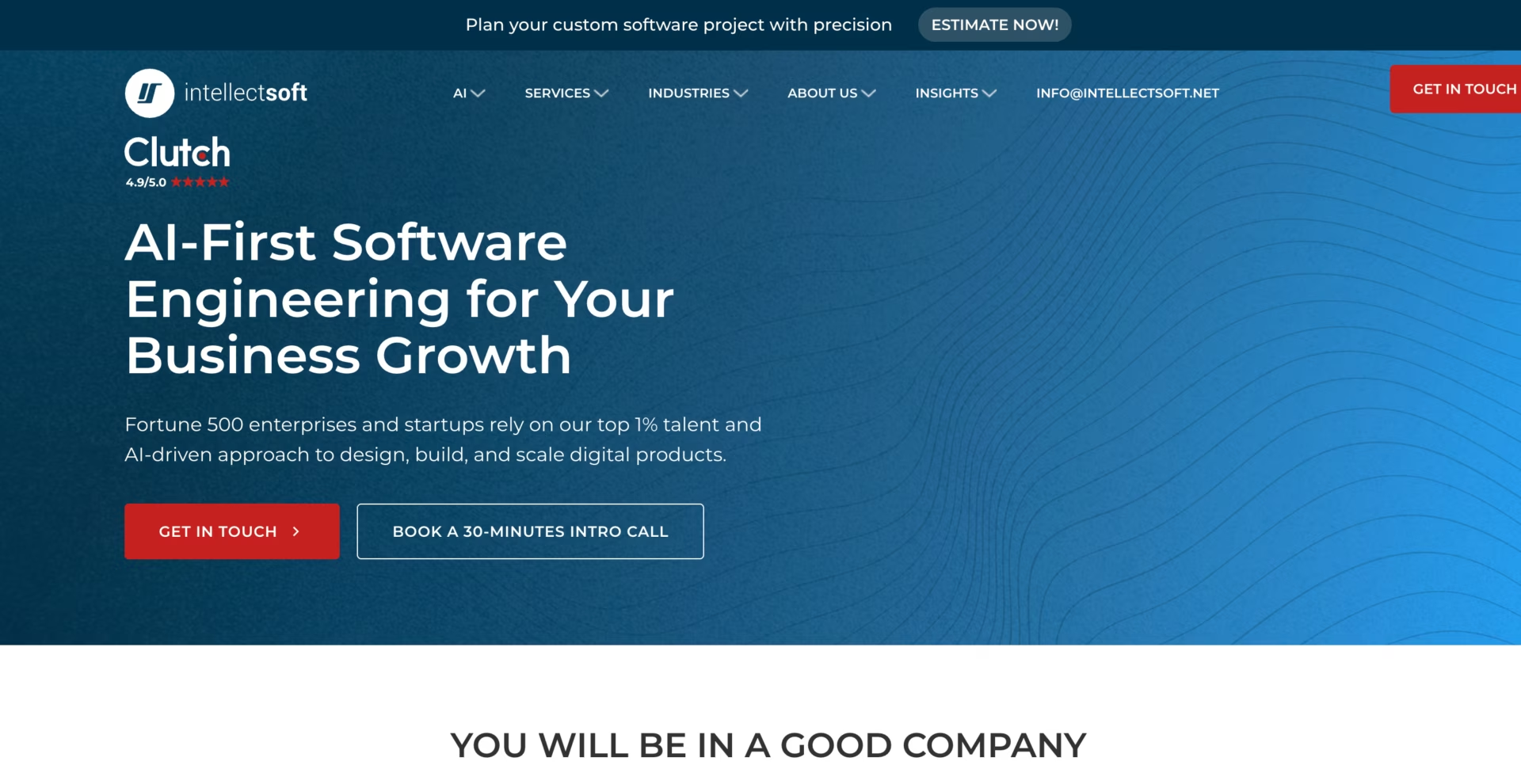
Intellectsoft works at the enterprise end, combining machine learning, blockchain, IoT, cloud infrastructure, and data engineering with product design. Founded in 2007 with a Miami presence and international engineering offices, it positions around production-grade software and enterprise modernization rather than lean validation of a startup idea.
Where it wins: technically complex builds that have to connect to systems already running.
Watch out for: enterprise process is heavier than a simple first release needs, and the well-known client logos in its materials are company-reported.
Vention: best suited to a release expected to scale straight into production
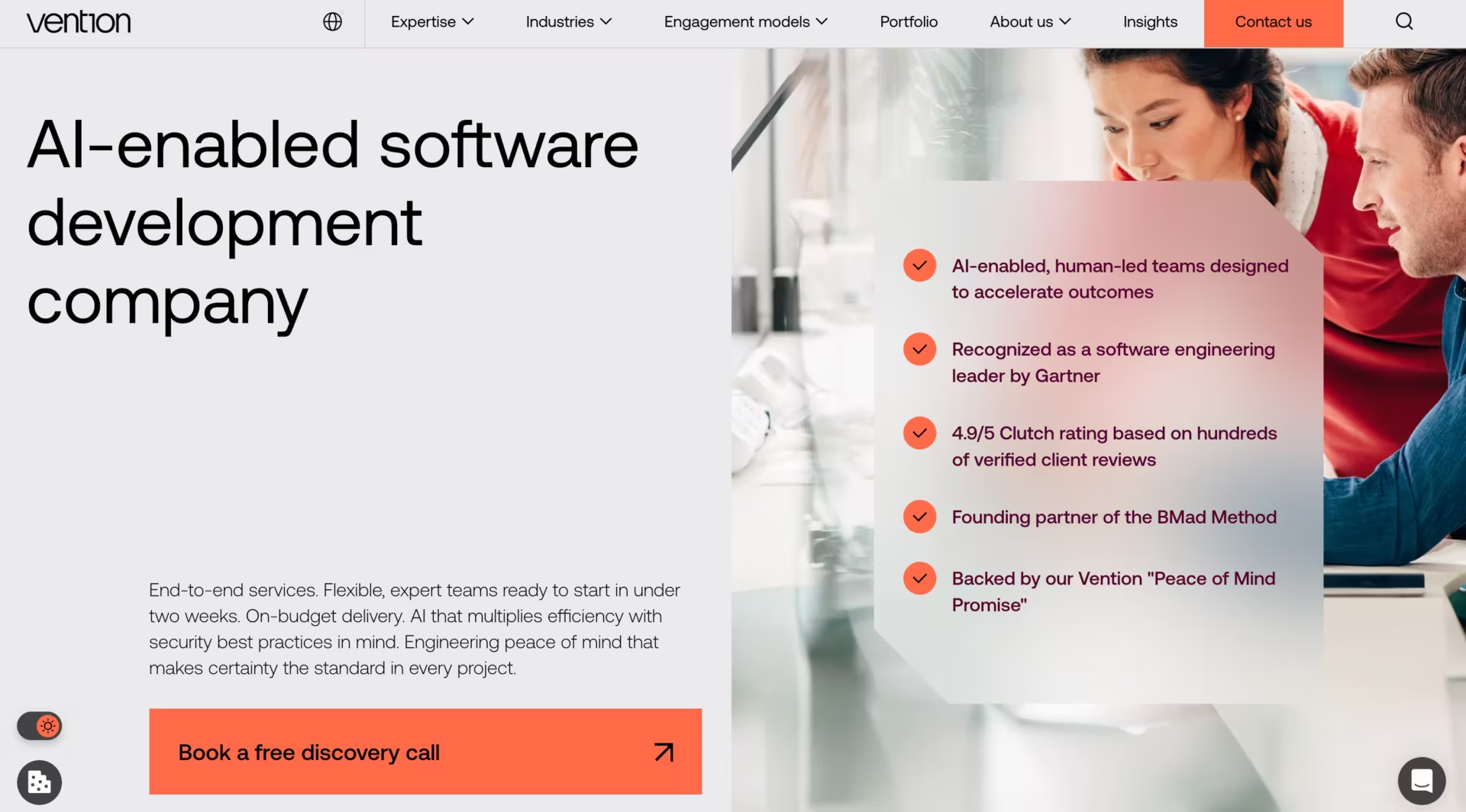
Vention runs planning, design, engineering, QA, and post-launch work as one pipeline from a New York base, with delivery offices in Canada, Poland, and Ukraine. Its published product work covers fintech, insurance, education, and AI-enabled platforms, and its engineering coverage extends well past a first version.
Where it wins: funded teams that want the same vendor still standing after product-market fit arrives.
Watch out for: the Clutch entity lists a far smaller team than the wider organization presents publicly, so establish which one signs the contract and which one staffs the work.
Rootstrap: best suited to AI-native first releases

Rootstrap pairs product strategy and interface design with AI engineering, covering large language model applications, retrieval-augmented generation, agentic systems, and data platforms. The Beverly Hills company delivers through senior nearshore pods across Latin America and operates inside a SOC 2 certified environment.
Where it wins: products whose central risk is whether an AI feature behaves credibly in front of a real user.
Watch out for: the headline claims about products shipped and client funding raised are company-reported and worth testing against live references.
BairesDev: best suited to products that need engineering capacity quickly
BairesDev is a nearshore engineering organization headquartered in San Francisco, with timezone-aligned teams across Latin America covering front-end, back-end, mobile, cloud, DevOps, and data science. Engagements run as dedicated teams, staff augmentation, or full outsourcing, and which model is proposed changes how much product ownership the vendor takes.
Where it wins: teams that already know what to build and need it built at volume.
Watch out for: establish the delivery model in writing, because staff augmentation and product ownership are not the same purchase at the same price.
thoughtbot: best suited to early products that still need their definition fixed
thoughtbot treats a first release as a research problem, identifying the assumptions the product has to test before anything is scoped, then building with test-driven Ruby and React engineering. The consultancy is unusual in openly aiming to leave a client’s own engineers more capable than it found them, which suits a team that intends to take the product in-house later.
Where it wins: founders who need the product definition improved rather than executed as written.
Watch out for: $150 to $199 per hour is the highest band in this comparison, so the model pays off when definition work, not build volume, is the bottleneck.
JetRockets: best suited to Rails products with a long support horizon
JetRockets is a women-owned, founder-led Brooklyn agency built around Ruby on Rails, with React, React Native, Elixir, and PostgreSQL alongside it. Founder involvement runs from product definition through design, build, and the maintenance work that follows, which suits non-technical founders who want one accountable contact rather than three.
Where it wins: products where Rails is genuinely the right architecture and continuity after launch matters.
Watch out for: single-stack specialization becomes a constraint the moment the product argues for something other than Rails.
Simform: best suited to builds where budget is the binding constraint
Simform is a digital engineering company with an Orlando presence and primary delivery from India, covering cloud platforms, data engineering, machine learning, mobile applications, and enterprise modernization. It is the only firm here publishing a rate below $50 an hour.
Where it wins: broad cloud, data, and engineering coverage on the smallest budget in this comparison.
Watch out for: establish the seniority of the assigned team and how much discovery sits inside the quote, because a low hourly rate and a thin discovery phase often travel together.
How we evaluated these MVP development companies
We evaluated these MVP development companies on five checks a buyer can repeat, all run on September 24, 2026. They are the Clutch rate, minimum, and rating, the headquarters Clutch lists, and whether design and engineering sit in one organization. The last two are whether the firm publishes MVP prices and dates, and what its own pages say about code ownership after launch.
What this comparison did not do is verify client outcomes. Case studies, headcounts, and named logos on company sites are self-reported, and are treated here as claims rather than established facts. Any figure that could not be traced to a Clutch profile or a firm’s own published page was left out.
Published MVP pricing varies widely across the 11. Glorium and ScienceSoft publish cost ranges, JetRockets publishes an hourly rate and a minimum engagement, and Fuselab Creative publishes a price and date for each tier. The other seven publish no MVP price, so for most of this list a real number arrives only after a scoping call.
This list is built for founders and product leaders choosing a partner for a first release, and for enterprise teams standing up a product outside their existing platform. It is not built for buyers hunting the lowest hourly rate, and it is not useful to a team with a fully specified product that needs engineering capacity alone.
One finding from the research behind this list is worth stating plainly. Across 19 MVP service pages reviewed, none mentioned Section 508 or the WCAG accessibility guidelines, the standards a US public sector or health system buyer will test a product against. That does not establish that none of them can do the work.
What it does establish is that a buyer whose product faces an accessibility review will not learn anything about it from the sales page and will have to ask directly. For a consumer application the question barely matters. For a product headed toward a government agency, a health system, or a large enterprise procurement process, it surfaces during a review nobody scoped, and it surfaces late.
MVP development company comparison table
The table below carries the same six data points for all 11 MVP development companies: what each is best suited to, the Clutch hourly band and minimum project size, headquarters, industry focus, and rating. Rates and minimums are the published Clutch figures, not quotes, and a real quote will vary with scope, integration count, and compliance requirements.
Two patterns show up once the rates sit side by side. Every firm delivering from Latin America or Eastern Europe lands in the same $50 to $99 band, and only Simform, delivering from India, prices below it. US delivery runs from that same band up to $199, so among US teams the rate varies with the firm far more than with the country.
How to choose the right MVP development company
The right choice follows from what the first release has to prove. A product whose risk is demand needs research and hard feature cutting more than engineering depth, and the reverse holds when the risk is whether the thing can be built at all. Regulated products are the exception: there the deciding question is whether the firm has cleared a review before.
Rate bands mislead when they are read alone. Three rounds of rework at $40 an hour still cost less than one clean round at $130, so the invoice rarely settles it. What rework spends is calendar, and on a runway the extra months usually cost more than the rate gap. Ask each shortlisted firm who pays for a missed date, because the answer shows where the rework risk sits.
The regulated first releases we have scoped have consistently carried at least one requirement that arrived from outside the product team, usually from a security reviewer or a procurement officer reading a conformance report, neither of whom sat in the kickoff. Ask any shortlisted firm to describe the last time that happened to them. The answer separates teams that have shipped into these environments from teams that have read about them.
Finally, settle ownership with any MVP development company before signing rather than after the build. Full assignment of code, design files, research artifacts, and documentation belongs in the agreement, with a handoff another team can use. A first release nobody else can maintain is a liability wearing the costume of an asset.
Conclusion
The right partner for a first release is the one whose experience matches the risk the release exists to settle. Match the entries above to your own risk, then shortlist three, ask each what it cut last time, and compare the answers before comparing the rates.
Frequently asked questions
What do MVP development companies actually do?
MVP development companies take a product idea to its first working release, covering discovery, feature prioritization, interface design, engineering, QA, and launch instrumentation. Some cover all of that in-house, while others handle only design or only engineering and coordinate the rest, which is among the first things to establish before signing.
What counts as an MVP rather than a prototype?
MVPs are live products that real users can use, built to produce evidence about demand or behavior. A prototype is a simulation used to test a flow or pitch an idea, and it carries no production code, no data, and no analytics. Confusing the two is a common cause of a blown timeline.
What is the difference between an MVP development company and a design agency?
An MVP development company designs and ships working software, while a design agency delivers research, flows, and a tested prototype and stops at the file. Design agencies work well when the client already has engineers who sat through the research sessions. Without those engineers, the handoff becomes the riskiest step in the project.
Are US-based MVP development companies worth the higher rate?
US-delivered MVP development teams on this list charge $50 to $199 an hour, against $50 to $99 for nearshore teams and $25 to $49 for delivery from India. The premium buys overlapping working hours and faster decisions, which pays off when scope shifts weekly or a reviewer outside the team can block a launch.
How much does it cost to build an MVP?
An MVP with a US-headquartered firm typically runs $30,000 to $250,000, driven by integration count, user role complexity, and whether compliance review sits inside scope. Published minimums here, $5,000 to $50,000, are the smallest engagement a firm accepts, not the price of a release. With rates from $25 to $199, one brief can return quotes an order of magnitude apart.
How long does an MVP take to build?
Most first releases take 8 to 16 weeks from kickoff to launch, with 2 to 3 of those weeks spent on discovery and feature cutting before anything is designed. Builds that lock the feature list during discovery run shorter, with a pilot reaching real users in 6 to 8 weeks. Regulated products add 4 to 8 weeks for accessibility conformance testing, security review, and any documentation a procurement process requires.
What should you check before signing with an MVP development company?
Before signing, confirm four things in writing: the named individuals on the project and where they work, what the firm removed from its last first release and why, full assignment of code and design files at completion, and who maintains the codebase after launch. A team that cannot explain its last feature cut has not run a real MVP process.