How to choose a US UX agency vs remote design agency in 2026
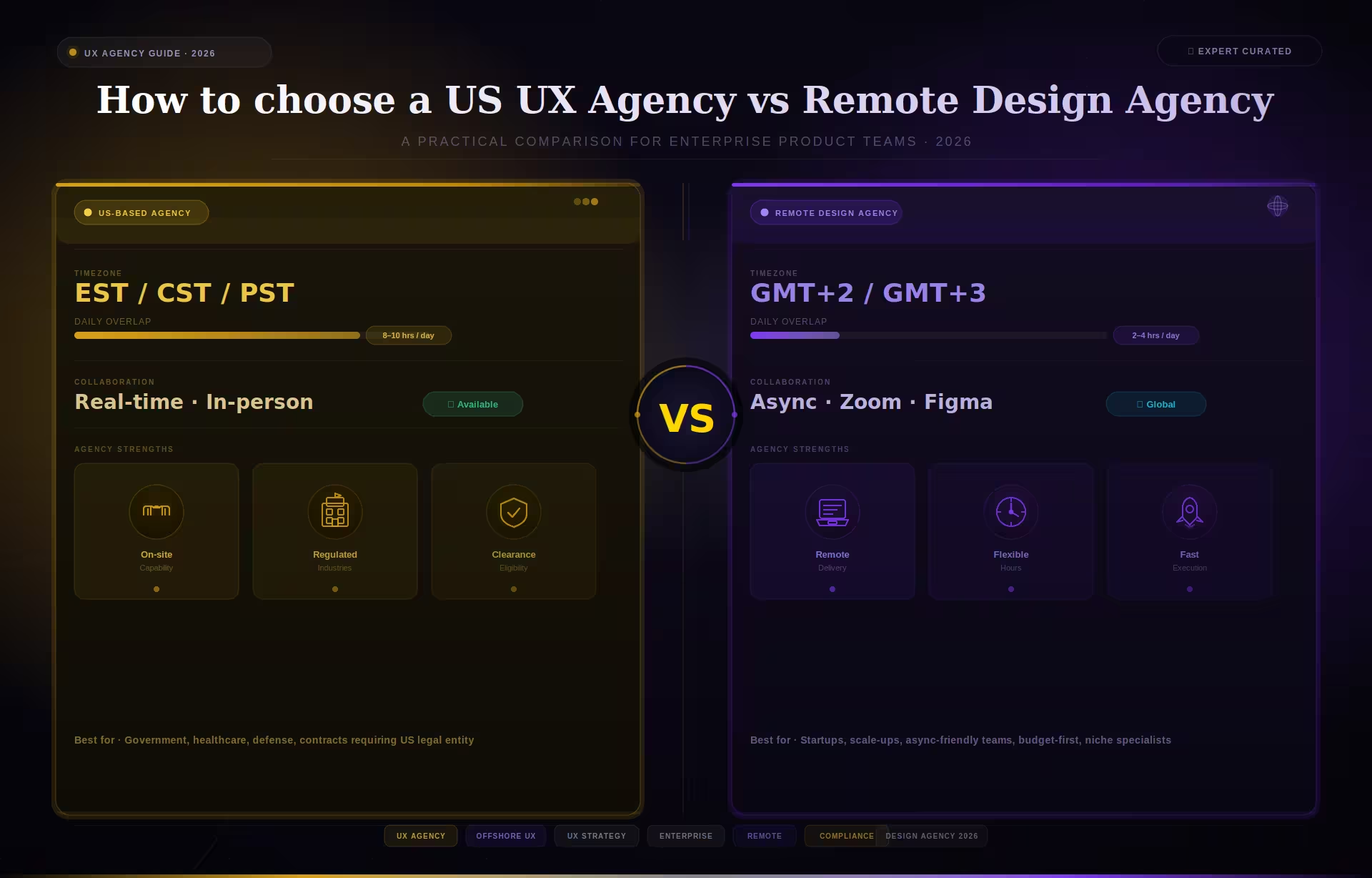
The US UX agency vs remote design agency decision is a practical choice about where work happens physically, which industry-specific rules govern the product, and whether the project scope is defined enough for asynchronous execution across time zones. For projects involving complex organizational environments, regulated industries, or scope that requires deep in-person discovery, the choice is not a preference between two models but a filter that narrows the field before the evaluation begins.
When is a remote design agency the right choice?
A remote design agency is the right choice when the product direction is already defined, the project carries no specialized industry requirements, and the team has internal product leadership to manage asynchronous handoffs across a seven-to-ten-hour timezone gap without losing momentum.
For many SaaS teams, a remote agency is not a compromise. It is an efficient model that matches how distributed product organizations already operate. If your roadmap is set, your engineering team is in place, and the scope is execution-focused rather than discovery-heavy, a remote agency can start work within days and iterate faster than most US-based firms on a comparable budget.
Remote agencies tend to perform best on clearly scoped deliverables: dashboard UI, design system buildouts, feature-level UX improvements, and MVP interfaces where the core product decisions have already been made. Where they tend to struggle is on projects that require cross-team facilitation, face-to-face workshops, or domain-specific knowledge that only comes from operating inside a particular industry for years.
NNGroup’s research on remote design work, based on a survey of 306 UX practitioners, found that 43% identified communication as their biggest challenge when working remotely. The three most cited concerns were receiving timely feedback on design decisions, replicating the informal conversations that drive alignment in co-located teams, and maintaining clear project direction across distributed contributors.
Two remote agencies illustrate the model’s strengths and limitations clearly. Both are headquartered in Ukraine, operate on different engagement models, and represent the range of pricing, process, and specialization that a remote-first evaluation typically includes when a buyer is comparing options.
Eleken
Kyiv, Ukraine (US-registered LLC in Delaware, full design team in Eastern Europe, GMT+2) Hourly rate: $25 to $49. Minimum project size: $10,000. Clutch rating: 4.9 (119+ reviews).
Strongest for: SaaS startups and product-led companies needing ongoing UI/UX execution with fast turnaround and predictable monthly costs.
Eleken specializes exclusively in SaaS product design, using a subscription model that removes procurement friction and lets teams start within days. Clients work directly with a dedicated designer rather than through a project management layer, and a free trial lets teams assess fit before committing. The portfolio is deep in dashboards, admin panels, and B2B tools, though teams needing upfront research or complex discovery may find the subscription model limiting.
Lazarev.agency
Kyiv, Ukraine (listed presence in San Francisco, delivery team in Eastern Europe, GMT+2/3) Hourly rate: $100 to $149. Minimum project size: $50,000. Clutch rating: 4.8 (19 reviews).
Strongest for: startups and growth-stage tech companies investing in MVP development or full product redesigns that require high visual quality and a structured project approach.
Founded in 2015, Lazarev.agency operates as a project-based design partner across fintech, edtech, SaaS, and Web3. The agency’s strength lies in visual quality, product storytelling, and launch readiness for high-investment engagements. Compared to Eleken’s subscription model, Lazarev is better suited to defined-scope projects like MVP builds or complete product redesigns where the deliverable is a finished product, not ongoing iteration.
The advantages of the remote model are real: lower cost, fast onboarding, flexible engagement options, and access to strong design talent in markets like Kyiv and Warsaw. The limitations are equally real. Remote agencies based outside the US cannot hold government contracts, cannot obtain security clearances, and have limited overlap with US business hours, which affects fast-moving projects that require daily synchronous collaboration among design, product, and engineering teams.
When is a US-based UX agency non-negotiable?
A US-based UX agency becomes non-negotiable when the project operates under regulations like HIPAA or FISMA, requires compliance processes that affect how the interface is built, demands on-site facilitation for complex multi-system environments, or must meet criteria that remote teams cannot satisfy.
When the defining feature of the product is risk rather than speed, a US UX agency vs remote design agency comparison stops being about cost and starts being about who can actually do the work. Healthcare platforms handling patient data, defense systems, and public-sector contracts all operate under security and procurement rules that remote agencies cannot meet. This is not a quality judgment. It is an operational constraint.
We have seen this pattern repeatedly in our own work. On the DHCS Medi-Cal platform redesign, the review process required three rounds of in-person alignment that could not have been conducted asynchronously across a nine-hour timezone gap. Our NASA and NIH engagements involved clearance requirements that made offshore participation impossible. These are not edge cases. They are the standard operating conditions for complex, high-stakes product work.
Development teams consistently underestimate how much of complex product work happens outside of design files. Cross-team workshops, review cycles, iteration sessions, and organizational alignment all require the kind of real-time, high-trust collaboration that a local presence enables. Most remote agencies price their services as design execution, not strategic partnership, and the engagement model reflects that distinction.
Fuselab Creative
McLean, VA (Washington, DC area) Hourly rate: $100 to $149. Minimum project size: $25,000. Clutch rating: 4.9.
Strongest for: enterprise data visualization, healthcare platforms, and complex data environments where HIPAA, FISMA, or Section 508 are project requirements.
Fuselab Creative is a Washington, DC-area UI/UX design agency specializing in enterprise and government UX design, founded in 2017. As a GSA contract holder (47QTCA22D00CV), the agency has delivered projects for NASA, NIH, DHCS, Fiserv, and Uber. The McLean, Virginia location puts the team within the DC corridor for on-site client work, and the team follows Section 508 accessibility standards and WCAG processes from the start of every engagement.
This does not mean US agencies are better at UX design than offshore firms. It means they are aligned with certain types of work where location, access, and domain fluency are functional requirements rather than preferences. If your project does not involve sensitive data, specialized eligibility, or complex discovery that requires physical presence, the US premium may not be justified. That distinction matters more than any agency’s marketing claims.
The registered LLC question: What it means and what it doesn’t
Many remote agencies register a US LLC. This is a standard and legitimate legal arrangement, not a physical presence. The relevant question is not where the company is incorporated, but where the designers work, what time zone they operate in, and whether they can meet the operational requirements of your specific project.
A US-registered remote entity simplifies contracts, billing, and legal processes for American clients, and many SaaS companies and tech firms working with globally distributed teams see no issue with this arrangement. The distinction becomes meaningful only when the project requires physical presence for face-to-face workshops, security-cleared staff, or review cycles that cannot run asynchronously. For commercial SaaS or startup environments, the LLC works well and introduces no operational friction.
For healthcare, defense, or public-sector projects, buyers place greater weight on where the actual team sits and what qualification frameworks it can participate in. A Delaware LLC does not qualify a remote team for government schedule access, does not grant security access, and does not change the timezone the designers work in. The legal entity and the operational reality are separate questions, and experienced buyers evaluate both.
Comparison table: US UX agency vs remote design agency
How to choose the right US UX agency vs remote design agency for your project
The right choice between a US UX agency vs remote design agency depends less on which firm has the better portfolio and more on whether your project’s operational requirements match the agency’s capabilities. Three categories of questions separate the productive evaluations from the ones that waste both sides’ time.
The first category covers scope and specialization. Ask what types of projects the agency handles most often and look for patterns rather than range. An agency that repeatedly ships SaaS dashboards operates differently from one that builds complex, high-stakes platforms, and the distinction shows in process depth, not just portfolio visuals. Ask about specific constraints they faced and how the team worked through them.
The second category is team composition and location. Ask where the actual design team sits and what timezone they operate in. A US-registered company may still have a fully offshore team, which affects meeting schedules and response times. Clarify whether you will work with a dedicated designer, a rotating team, or a layered arrangement with project managers between you and the people doing the work.
The third category covers industry requirements and engagement model. If your product operates in healthcare, finance, or the public sector, ask about relevant experience and whether the agency has worked within the frameworks your project requires. Ask how the engagement works, whether subscription, fixed project, or retainer. Subscriptions prioritize speed, project models prioritize deliverables, and retainers support ongoing partnership. The wrong model creates friction even when design quality is strong.
Conclusion
The US UX agency vs remote design agency decision is structural, not qualitative. Match the agency model to your project’s compliance requirements, collaboration needs, and scope definition. Start with the constraints, not the portfolio, and the right fit will be clear before the first call. Learn more about Fuselab Creative’s approach to enterprise and government UX.
Frequently asked questions
Is a remote design agency reliable for enterprise projects?
Remote design agencies reliably support enterprise projects in SaaS, fintech, and digital product categories where the scope is execution-focused and industry-specific constraints are minimal. For enterprise projects requiring on-site team coordination, sensitive data handling, or security access, a remote agency’s practical limitations may create friction that offsets cost savings.
When do I need a US-based UX agency?
US-based UX agencies become necessary when a project involves sensitive data subject to US regulations, requires security clearances, or depends on face-to-face workshops and real-time team alignment that a nine-hour timezone gap makes impractical. Certain procurement mandates and “Onshore Only” labor requirements also make a US-based partner a practical requirement rather than a preference.
Q: What is the cost difference between a US UX agency vs remote design agency?
US-based UX agencies typically charge $100 to $200 per hour, reflecting domestic overhead and specialized industry experience. Remote agencies in Eastern Europe charge $25 to $100 per hour, with many providing subscription or project-based models that make costs predictable. The difference in hourly rate does not always translate to proportional project cost savings once timezone coordination and rework cycles are factored in.
Can a remote agency work with US government clients?
Remote agencies cannot serve as primary contractors for US government work because they lack government vendor schedules and cannot meet “Onshore Only” labor requirements. Security standards for these contracts are tied to team location and jurisdiction. Remote teams can occasionally be subcontracted for non-sensitive design tasks, but they are generally ineligible for projects requiring clearances or data sovereignty.
What timezone challenges should I expect with a remote design agency?
Remote agencies in Eastern Europe typically operate seven to ten hours ahead of US time zones, limiting real-time collaboration to a narrow daily window. Asynchronous workflows mitigate this for clearly scoped execution work, but the gap becomes more pronounced on fast-moving projects that require daily synchronous collaboration among design, product, and engineering teams.
What is a GSA MAS contract?
GSA MAS refers to the General Services Administration Multiple Award Schedule, a framework that allows government buyers to purchase services from pre-approved vendors. Agencies listed under GSA MAS have already met specific pricing and performance requirements, making it faster and safer for buyers to select them without a full competitive bidding process.
Should I hire a local or remote design agency for an MVP?
MVP projects with a defined product direction and a focus on speed and cost benefit from remote agencies that can onboard quickly and iterate on execution. MVPs that still require significant product thinking, user validation, or team alignment benefit from a US UX agency vs remote design agency model where the local partner can facilitate discovery workshops and real-time decision-making alongside the product and engineering teams.