A dashboard design agency builds the data interfaces an enterprise team relies on daily to monitor performance and act on it. The best ones compete on data competence over visual polish, reading a schema, handling role-based access, and deciding what the screen shows when data is incomplete.
Last updated June 2026. Written by Marc Caposino, CEO and Founder at Fuselab Creative. Marc has spent 20 years building dashboard and data visualization products for regulated and enterprise clients, including NASA, Fiserv, DHCS, and Uber.
Dashboard design agencies compared
A side-by-side view of twelve top agencies on hourly rate, minimum project size, location, and Clutch rating, so you can shortlist on budget and fit before reading the full write-ups.
Hourly rates vary widely across this list, driven mostly by location and engagement model. The rate alone is a weak basis for comparison. Look at total project cost, minimum scope, and how the agency works, then weigh that against the fit you need.

Washington, D.C. Area
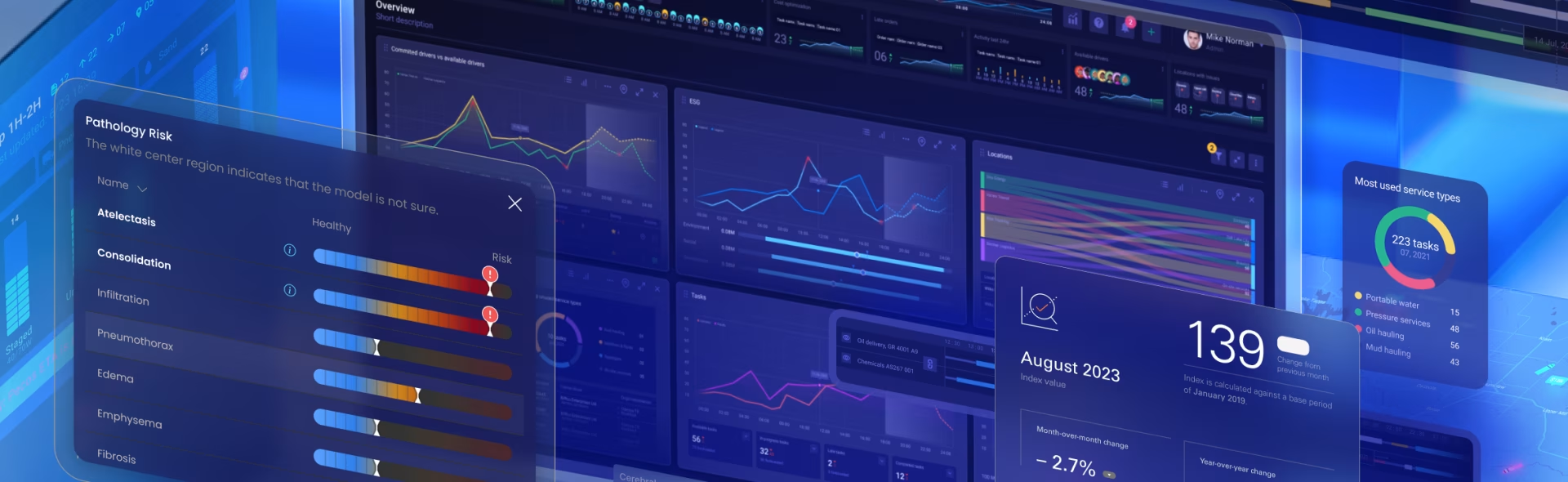
Fuselab built its practice around one of the hardest problems in product design: making complex, high-stakes data usable for the people who depend on it. The client list carries the argument. NASA data visualization systems. A three-year contract with the California Department of Health Care Services. Healthcare interfaces for NIH. Enterprise data products for Fiserv and Uber. These are regulated, high-consequence environments where a confusing interface has real downstream cost. Co-founders Marc Caposino and George Railean built the studio around Lean UX from the start, so hypothesis-driven design and user testing run through the process rather than bolted on at the end. For government, healthcare, and enterprise teams working in genuinely complex data: GSA contract holder (47QTCA22D00CV), $100–149/hr, from $25,000.
Strongest for: government data visualization, regulated healthcare dashboards, enterprise BI, and design systems for complex data environments.


Palo Alto, CA
Momentum Design Lab runs long enterprise engagements where design works alongside hardware and software teams instead of handing off a file and leaving. The portfolio leans Fortune 500 and deep-tech, with Qualcomm, HP, and Sony among named clients and offices in Palo Alto, New York, and London. For a company shipping a complex SaaS product that also carries brand weight, Momentum has the scale and the client relationships to support a multi-quarter build. Where they differ from a regulated-industry specialist is public track record: less demonstrated government, HIPAA, or Section 508 work than agencies built around those constraints. $150–199/hr, from $25,000.
Strongest for: Fortune 500 enterprise SaaS, hardware-and-software product design, and long-term design partnerships at scale.


Gurugram, India
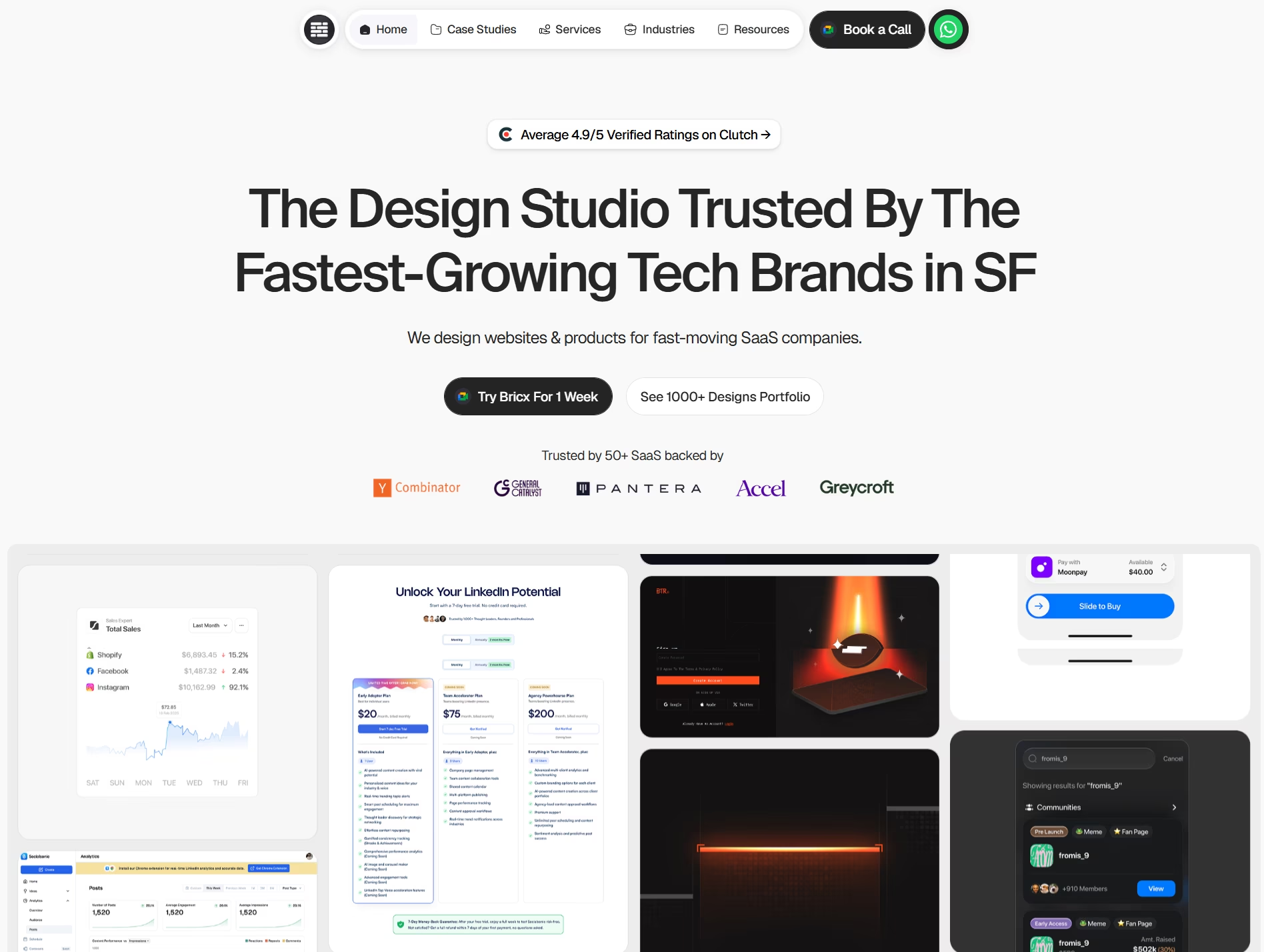
Bricx is a young SaaS design studio, founded in 2023, that works on a fixed monthly subscription instead of project bids, with packages from $4,800 to $14,400 a month. The model fits early-stage founders who need an MVP designed or a SaaS product redesigned quickly, and the studio assigns one design lead and one designer to each engagement. Its Clutch record is strong, a 5.0 rating across 22 reviews, though the portfolio sits in startup web and mobile apps across AI, fintech, and healthtech rather than enterprise platforms with layered permissions or Section 508 requirements. For a compliance-heavy or multi-role build, the small team and 2023 founding are the constraints to weigh. $25–49/hr, from $5,000.
Strongest for: early-stage SaaS founders who need fast MVP or redesign work on a predictable monthly retainer.

Toronto, Canada
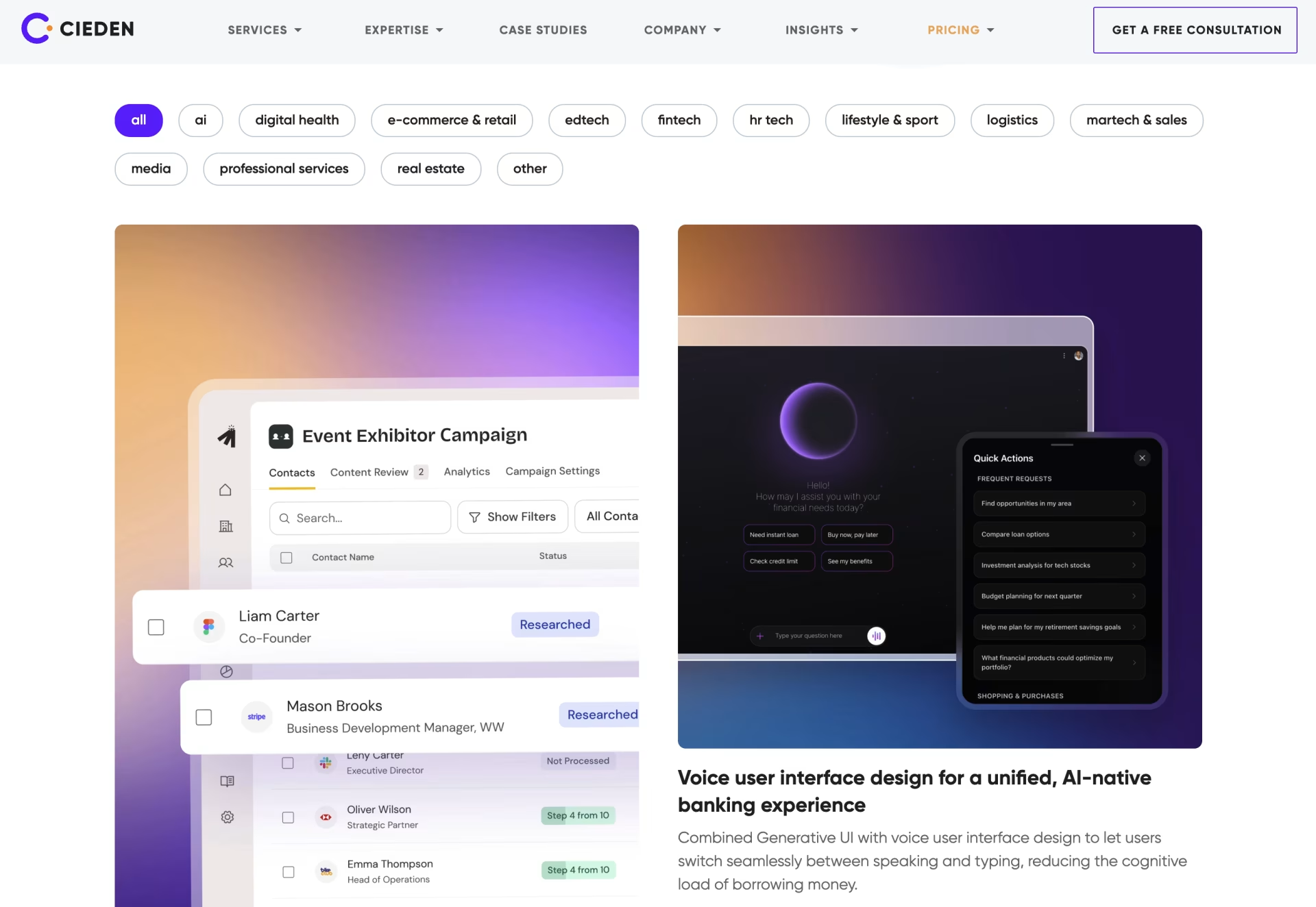
Cieden is a product design studio known for UI execution speed and design-system work across SaaS and enterprise interfaces, including data-heavy products. The team now markets a Toronto headquarters alongside its Lviv base and a Wilmington, Delaware registration, so confirm where your project would actually be run and which timezone your reviews land in. For buyers who need in-person collaboration, US data residency, or a documented HIPAA and Section 508 process, the public profile does not yet show that regulated-industry track record. Where the hierarchy and filter logic of a complex dashboard matter most, Cieden’s system discipline is the draw. $50–99/hr, from $10,000.
Strongest for: SaaS product UI, design systems, and data-heavy interfaces that need fast, consistent execution.

Kyiv, Ukraine
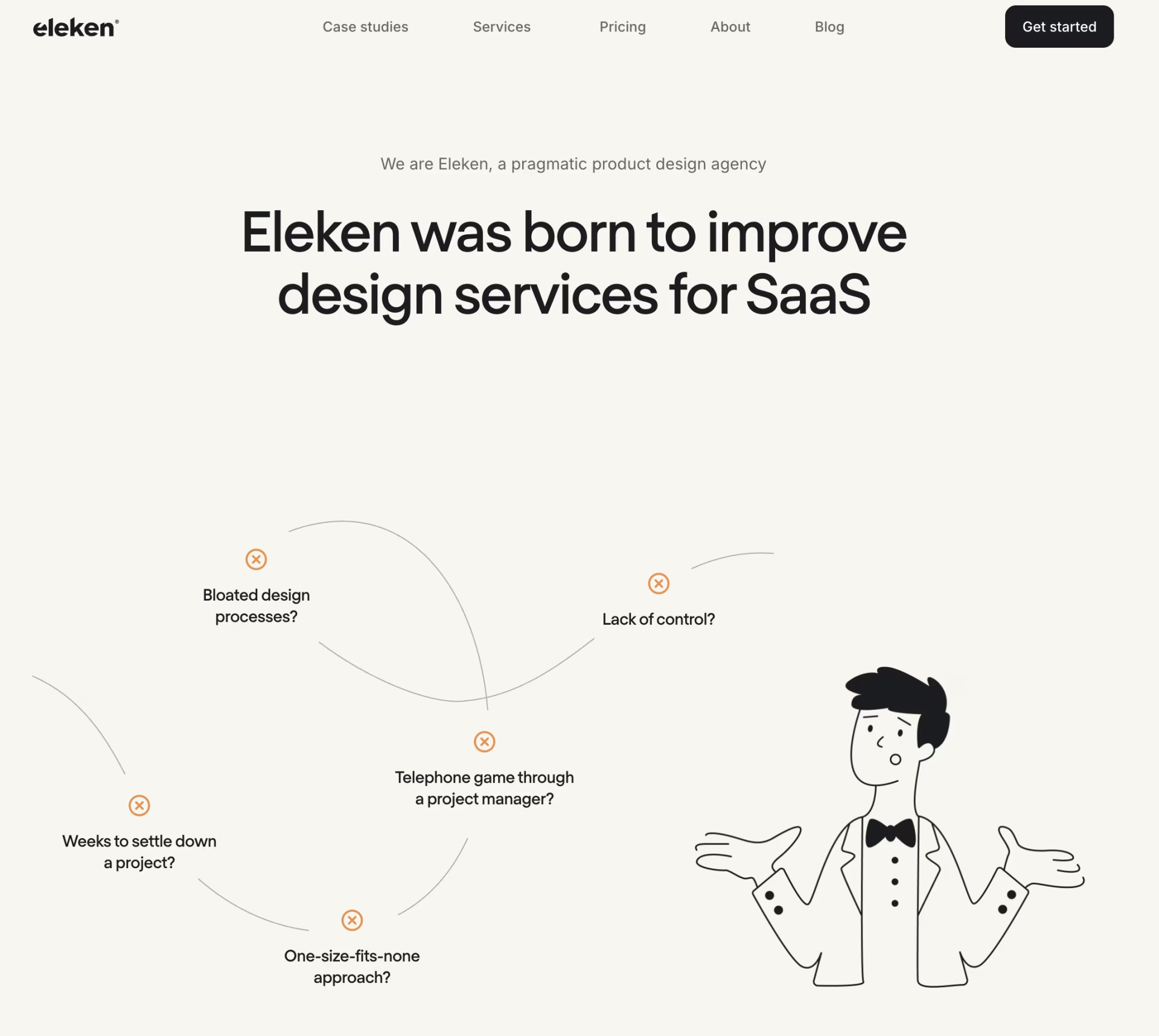
Eleken works on a subscription model, embedding a dedicated SaaS designer into the client’s workflow rather than scoping a fixed project. That suits teams who need continuous design support and a consistent UI across a growing product, and the dashboard portfolio is genuinely deep. The trade-off is structural: subscription means no fixed-scope deliverable, and the public profile shows little regulated-industry work in healthcare, government, or fintech compliance. With 126 reviews on Clutch, the consistency is well documented. For a US team needing in-person collaboration or data residency, the Kyiv base is a planning factor. $25–49/hr, from $10,000.
Strongest for: ongoing SaaS design support, dashboard UI, and teams that want an embedded designer over a fixed project.
San Francisco, CA
Ramotion pairs brand identity with product design and brings unusually strong motion and animation craft, with Netflix, Firefox, and Stripe among named clients. The work is polished and brand-led, the right fit for a launch or rebrand where identity and interface ship together. For dashboard and data-visualization projects specifically, the public portfolio is lighter on live operational data, multi-role permissions, and the failure-state design that production dashboards demand. Pricing and minimums sit at the top of this list, so Ramotion fits funded teams treating brand and product as a single flagship investment. $150–199/hr, from $50,000.
Strongest for: brand-and-product launches, motion-rich interfaces, and rebrands where identity and UI ship together.

Lviv, Ukraine
Qubstudio is a digital product design agency with a data-driven approach and real strength in fintech, logistics, and healthcare interfaces, backed by Red Dot recognition and a Clutch history that runs to 2007. For complex, role-heavy products, the discovery-led process and design-system work are the draw. The location facts matter for some buyers: the team runs from Lviv with a primarily European client base, and the public profile does not show a US regulated-industry track record in HIPAA or Section 508 contexts. For European fintech and SaaS dashboards, Qubstudio is a strong, deeply reviewed option. $50–99/hr, from $10,000.
Strongest for: fintech and SaaS product design, data-heavy interfaces, and discovery-led dashboard projects.
Poznań, Poland
Netguru is a large digital-acceleration consultancy where design sits within engineering, AI, and product delivery at scale, and a certified B Corp with clients including UBS, IKEA, Merck, and Volkswagen. For a company that needs design and build under one roof on a sizable program, the breadth is the advantage. For a focused dashboard or data-visualization engagement, the thing to confirm is how much senior design attention a project gets inside a development-led organization, and the Poznań base is a timezone and collaboration factor for US teams. Minimums sit at the enterprise tier. $50–99/hr, from $50,000.
Strongest for: large design-and-build programs, AI product work, and enterprise engagements that need engineering under the same roof.

Budapest, Hungary
UX Studio leads with research. The model is discovery-first, supported by a well-known education platform and courses, with Google and Unbounce among named clients. For a team that wants user research driving the design rather than execution alone, that rigor is the value. The trade-offs are timeline and location: research-led engagements run longer than execution-focused ones, the team works from Budapest, and the public profile does not show a US regulated-industry portfolio. For a dashboard project where the user problem is still unsettled, the research depth is worth the longer runway. $50–99/hr, from $10,000.
Strongest for: research-led product design, usability-driven dashboards, and projects where the user problem needs validation first.

Dnipro, Ukraine
Tubik is a craft-forward design studio with deep UI, branding, and motion work, more than a thousand projects, and a long shelf of design awards. Small multidisciplinary teams and a strong visual sensibility make it a fit for product and marketing surfaces where polish carries the brand. For dashboard and data-visualization work specifically, the public portfolio favors visual craft over live operational data and role-based complexity, and the Dnipro base is a collaboration and timezone factor for US teams. The low minimum makes Tubik accessible for smaller scopes. $50–99/hr, from $5,000.
Strongest for: visually polished product and marketing UI, brand-led design, and smaller-scope engagements.

Dubai, UAE (US-registered, Delaware)
Shakuro is a multidisciplinary design and development studio working across UI/UX, branding, and AI-driven product work, with React and Python build capability and a portfolio that includes data-visualization interfaces. Dubai is the working studio, with Clutch listing a staffed office of 76 to 100 people there; the Lewes, Delaware address is a US incorporation record, not a second office. For a project that needs design and front-end development from one team, the combined capability is the draw. For regulated US healthcare or government work, confirm that specific track record directly. $25–49/hr, from $5,000.
Strongest for: combined design-and-development builds, AI product interfaces, and data-visualization UI for smaller scopes.

New York, NY
Digital Silk is a premium web design and digital marketing agency that builds custom websites and brand systems for clients from startups to the Fortune 500, including SONY, P&G, Xerox, and NYU. The strength is conversion-focused web design, branding, and SEO delivered as an integrated program. It is the broadest agency on this list rather than a dashboard or data specialist, so for an operational dashboard with live data, multi-role permissions, and failure-state design, confirm that specific portfolio before shortlisting. For a marketing site or brand build with measurable conversion goals, the track record is strong. $100–149/hr, from $10,000.
Strongest for: conversion-focused web design, brand systems, and integrated marketing-and-SEO programs.

How to evaluate a dashboard design agency
Six criteria that separate a dashboard specialist from a generalist who ships a polished mockup and stops.
Evaluate a dashboard design agency on six things: whether it can read your data schema, design role-based views, build in accessibility, show domain and governance experience, document a clean engineering handoff, and support the dashboard after launch. The wrong choice costs you in training, support tickets, and slower decisions, and without a doubt, in an increased budget from original estimates.

Data architecture fluency
Data fluency is the line between a dashboard team and a UI team. A dashboard is only as good as the designer’s grasp of what the data can and cannot do. A specialist can name a real constraint they designed around: a rate-limited API, a field that arrives null half the time, a schema that could not support the filter the client wanted. A generalist talks about visual style. Ask for evidence of API documentation review on past work, and listen for whether the constraint, not the layout, drove the design.

Role-based UX depth
A CFO, a field analyst, and a compliance officer need different views of the same data, and role-based UX is the decision that determines whether all three keep using the dashboard or half of them quietly stop. A capable team can show how each role’s information hierarchy was set and tested with real users in that role. A weaker one shows a single default view with permission toggles added on top. Ask to see multi-persona dashboard work and how the roles were actually researched.

Accessibility credentials
WCAG 2.1 AA is not optional for enterprise, healthcare, or government dashboards. Whether a team designs accessibility in from the start or treats it as a QA pass tells you whether they have internalized the standard. Ask to see the accessibility annotation process, and ask specifically how the team handles color contrast on data-visualization components. Dense charts and status colors are where most dashboards fail contrast, and where you learn fast whether the team designs for it or discovers it late.

Domain and governance experience
Domain experience is the difference between a team that designs around your constraints and one that learns them on your budget. In healthcare that means HIPAA, clinical workflow, and the time pressure providers face on every screen. In fintech it is SOC 2 and the cost of a misread number; in government, FedRAMP and Section 508. None of it transfers cleanly from general SaaS work. Ask for portfolio work in your specific industry, and push for the constraint the team had to design around. The screens they shipped are easy to show. The constraint behind them is what proves they have done the work.

Handoff and documentation quality
A dashboard design is only worth what engineering can implement accurately and at scale, so the handoff is where good design either survives or quietly degrades. Ask to see real documentation from past projects: token libraries, component specifications, interaction annotations, and responsive behavior notes. If the design process does not include engineering reviews before handoff, treat that as disqualifying. The teams that document carefully are the ones whose work ships looking like the design.

Post-launch partnership
The best dashboard engagements do not end at handoff, because production behavior data routinely exposes gaps that no pre-launch testing catches. Ask how the agency structures ongoing support: retainer models, analytics-informed iteration sprints, and design-system maintenance are all legitimate. Silence is the answer that matters most. A team with no plan for the months after launch was built for one-time delivery.
How to use this list
Start with the six criteria, then match an agency’s demonstrated domain to your own regulatory and data complexity. Shortlist two or three, and verify each one’s current pricing and Clutch rating yourself before you sign. Directory data shifts quarterly, and the right fit depends on your data, your compliance constraints, and how you want to work with the team.

Dashboard design agency FAQ
How much does it cost to hire a dashboard design agency?
Hiring a dashboard design agency runs roughly $100 to $200 per hour with a US specialist and $25 to $99 with offshore or Eastern European studios. Project minimums on this list span $5,000 for a small scope to $50,000 at the enterprise tier, and a full enterprise or government dashboard with multiple roles, real-time data, and compliance work typically runs well into six figures, often $150,000 or more.
Why do agency rates range from $25 to $200 an hour for the same work?
The price gap reflects location and model, not quality alone. US specialists at $150 to $200 per hour carry higher labor costs but offer timezone overlap, in-person collaboration, and US data residency, while offshore studios at $25 to $99 keep rates low by running entirely from Eastern Europe. The cheaper rate often gets absorbed by extra iteration cycles and handoff friction, so the hourly figure tells you less than the total project cost does.
Can an offshore agency handle a regulated dashboard in healthcare, government, or fintech?
An offshore agency can deliver excellent work on non-regulated SaaS and consumer products, and several on this list do. For regulated dashboards the constraint is not skill but compliance exposure: HIPAA, FedRAMP, Section 508, and US data residency often require a documented process and sometimes a US-based team. Ask any overseas agency to show a project shipped under the specific regulation you face, because general SaaS experience does not carry over to it.
Should I hire a dashboard design agency or build the dashboard in-house?
The choice between an agency and in-house comes down to frequency and specialization. Building in-house makes sense when dashboards are core to your product and you ship changes weekly; an agency makes sense for a complex one-time build, or when the work needs compliance or domain experience your team lacks. Many teams use an agency for the initial build and design system, then maintain it in-house.
How long does a dashboard design project take?
A dashboard design project takes about 8 to 12 weeks for a focused MVP and 4 to 9 months for an enterprise platform with multiple roles and data sources. Phased government engagements with compliance review can run 12 to 18 months. Timeline depends more on data complexity and the number of user roles than on screen count.
What separates a dashboard design agency from a general UI/UX agency?
A dashboard design agency specializes in data-dense interfaces: reading a schema, designing role-based views, and handling what the screen shows when data is delayed, missing, or wrong. A general UI/UX agency works across marketing sites, mobile apps, and brand projects, where visual polish matters more than data architecture. Both produce attractive screens, but only a dashboard specialist routinely designs around live data constraints and multi-role permissions.
Which dashboard design agency is best for enterprise or regulated industries?
Enterprise and regulated buyers should prioritize agencies with shipped multi-role data products, a documented compliance process, and design-system delivery that holds up at scale. On this list that points toward the regulated and government specialists rather than the brand-led studios or the offshore teams without a US compliance track record. Map your own regulatory exposure and data complexity to an agency’s demonstrated work, and the shortlist narrows quickly.
Contact Us
Filling out the form!