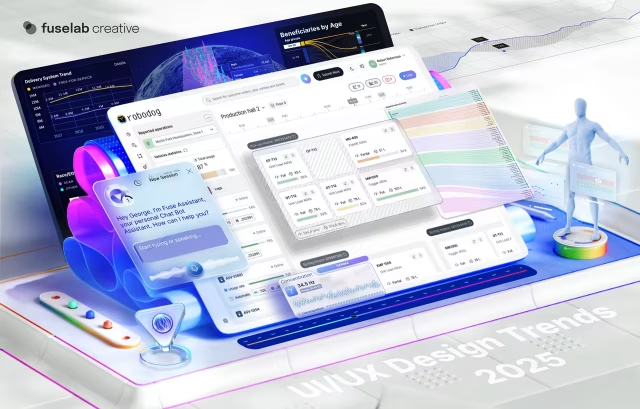
We believe that providing exceptional UX/UI design and development services requires some core elements such as conducting and integrating user research, developing detailed information architecture, expert visual design, ample knowledge of accessibility best practices, efficient iterative testing, and a collaborative implementation process the leads into a cohesive UX design process centered on human needs.
How Great Design Gets Done
Fuselab’s clear methodologies balance out our creative UI exploration with systematic validation, design teams that can then create digital experiences that not only delight users but drive business outcomes through increased engagement, conversion, and loyalty. The most valuable design partners combine technical expertise with strategic thinking, helping organizations transform user insights into competitive advantages.

Keys to Stellar Design

Effective UX/UI design begins with thorough user research to understand the target audience’s needs, behaviors, and pain points. Our designers conduct interviews, surveys, and usability testing to gather qualitative and quantitative data that has significant impact on all of our design decisions throughout the design and development lifecycle. This research phase establishes user personas and journey maps that serve as foundational references, ensuring that all solutions address genuine user problems rather than assumptions. The most successful design teams prioritize empathy during this discovery phase, immersing themselves in users’ perspectives to create intuitive experiences that feel natural.

Information architecture forms the backbone of any successful digital product, organizing content and functionality in a way that feels logical and intuitive to users. We are always attempting to build creative UX design, clear navigation systems, consistent hierarchies, and thoughtful categorization of information that align with users’ mental models and human-centered expectations. This structural planning involves creating sitemaps, user flows, and wireframes that establish the skeletal framework before our UI design team takes the reigns of the project. Well-executed information architecture reduces cognitive load by making complex systems feel simple and predictable, allowing users to find what they need without much effort at all.

Visual design transforms wireframes into engaging, brand-aligned interfaces through the strategic application of color, typography, imagery, and animation. Fuselab designers are reminded to balance aesthetic appeal with functional clarity at all times, regardless of how beautiful a design may be, which helps in the process of creating visually cohesive systems that reinforce the brand while enhancing usability. This phase includes developing comprehensive Figma-based design systems with reusable components that ensure consistency across platforms while accelerating development. The most effective designs employ purposeful visual hierarchies that guide attention, communicate importance.

Accessibility and inclusivity must be integrated throughout the design process, ensuring digital products work for users of all abilities and backgrounds. Our team typically follow all WCAG guidelines, providing appropriate color contrast, keyboard navigation, screen reader compatibility, and alternative text for images. This approach benefits not only users with disabilities but improves usability for everyone across different contexts and devices. Organizations that prioritize accessible design demonstrate ethical responsibility while expanding their potential user base and often gaining competitive advantages through superior usability.

Prototyping and testing form critical feedback loops that validate design decisions before significant development resources are invested, saves us time and our clients money. We create interactive prototypes at varying fidelities to simulate the user experience, then conduct usability testing with representative users to identify pain points and opportunities for improvement. This iterative process involves documenting findings, prioritizing issues, and refining designs based on actual user behavior rather than assumptions. Teams that establish robust testing protocols can measure success against clear metrics, building confidence in design decisions while reducing costly revisions during development.
UI UX Consulting
We are often asked to start a project with a product or digital service audit, which puts us in the role of design consultant, and usually culminates with a expansive report and list of recommendations.

User Experience Analysis
A comprehensive digital product audit begins with a thorough evaluation of the user experience through systematic testing across multiple devices, browsers, and user scenarios. Auditors identify friction points in user journeys by examining navigation paths, information architecture, and interaction design while measuring them against established UX heuristics and industry best practices.

Accessibility Compliance Review
The accessibility component of our digital product audit evaluates conformance with WCAG Guidelines and relevant legal standards to ensure inclusive use by people with disabilities and technical savviness. Auditors conduct both automated scans and manual testing to identify barriers related to screen reader compatibility, keyboard navigation, color contrast, etc.

Performance Optimization Assessment
A thorough performance audit examines loading speeds, rendering efficiency, and resource utilization across various network conditions and devices to identify bottlenecks affecting user experience. Fuselab auditors use specialized tools to measure core web vitals, server response times, asset optimization, caching strategies, and query performance.

Security Vulnerability Identification
The security component of a digital product audit systematically evaluates potential vulnerabilities through penetration testing, code reviews, and configuration analysis to identify exploitable weaknesses before malicious actors can discover them. We examine authentication systems, data encryption practices, input validation, session management, API security, and third-party integrations against current threat models and compliance standards.

Competitive Benchmarking
A strategic component of digital product audits involves comprehensive competitive benchmarking that compares the product or service against direct competitors and industry leaders across feature sets, user experience, performance, and market positioning. We then document relative strengths and weaknesses through side-by-side feature comparisons, user journey mappings, and experience evaluations, identifying both immediate competitive gaps and emerging market trends.

Analytics Implementation Review
The analytics component of a digital product audit evaluates the implementation and utilization of measurement systems to ensure business-critical data is being accurately collected, properly processed, and effectively leveraged for decision-making. Our next step is to examine tracking configurations, event implementations, conversion funnels, and reporting structures to identify gaps between business questions and available data.
Next Level UI UX Design Services

Behavioral Psychology Consultation
At Fuselab, rather than relying solely on traditional UX research methods, we sometimes employ this approach which embeds behavioral psychologists directly into design teams to apply cognitive and behavioral science principles throughout the design process. Our specialists conduct in-depth psychological profiling of target users, analyze decision-making patterns, and identify cognitive biases that influence interaction with digital products.

Environmental Context Simulation
This is one of our most forward-thinking solutions. It extends UX testing beyond controlled lab settings by conducting research in realistic environmental contexts where users actually engage with digital products. Specialized teams create immersive simulations of real-world scenarios - such as conducting usability tests on transit apps while participants are in moving vehicles, evaluating emergency response interfaces under simulated stress conditions.

Cross-Cultural Design Ethnography
Moving beyond superficial localization, our version of this comprehensive method employs anthropologists and cultural specialists to conduct deep ethnographic research across diverse cultural contexts. Field researchers immerse themselves in target markets for extended periods, documenting how cultural values, social norms, and local contexts shape digital interactions and expectations. The approach includes creating culture-specific design principles that address differences in visual symbolism, information processing styles, trust signals, and communication styles.

Sensory Design Integration
Fuselab’s approach here is to look beyond visual and auditory elements and to incorporate touch, smell, and even taste into cohesive product experiences. We send out teams with a combine expertise in haptic technology, sound design, olfactory marketing, and multi-sensory psychology to create integrated sensory experiences that engage users more holistically. The process includes developing custom haptic feedback patterns that communicate information through touch, creating branded sound environments that reinforce user actions, and exploring scent-delivery integrations.

Extreme User Co-Creation
This may be one of our more radical research techniques, which involves inverting traditional design processes by identifying and empowering extreme users—those with highly specialized needs or unique usage patterns—to lead collaborative design workshops as co-creators rather than passive research subjects. The methodology recruits diverse extreme users ranging from people with disabilities to technical power users, industry specialists with unique workflows, and demographic outliers who push product capabilities to their limits.

Predictive Emotion Mapping
This is where our advanced AI and biometric technologies to create dynamic maps of emotional responses throughout user journeys. Trained teams combine eye-tracking, facial expression analysis, galvanic skin response, and heart rate variability measurements during user testing to develop quantifiable emotional profiles for different interface elements and interactions. This technique includes creating emotional journey atlases that predict psychological responses across different user segments, identifying emotional friction points.

Future Self Design Methodology
Possibly one of our most crazy sounding strategies. This approach helps organizations design for users' future selves rather than current needs by applying speculative design thinking and futures research to UX processes. We combine trend forecasting, scenario planning, and participatory future-casting workshops to imagine how changing technologies, cultural shifts, and evolving user capabilities will transform expectations over 3-10 year horizons. The framework developing adaptive design systems capable of evolving with users over time, creating progressive disclosure interfaces that reveal additional complexity as user expertise grows.

Narrative Experience Architecture
This inventive approach reimagines digital products as narrative environments where user journeys follow dramatic structures. Very specialized teams combining UX designers with screenwriters, game designers, and narrative theorists develop comprehensive story architectures that transform utilitarian interactions into emotionally engaging experiences with narrative momentum. This capability includes creating character-driven user archetypes that evolve throughout product usage, designing narrative-based onboarding that establishes compelling context, and implementing dynamic storytelling elements that respond to user choices.
Our Projects
The future, the present, and the past.
2023



2022





Related Services and
Solutions


Industries We Love
To Design UX For Industry Expertise

Expert UI/UX design transforms transportation and logistics operations by creating intuitive interfaces that visualize complex supply chains, enabling quick decision-making during critical disruptions. Well-designed dashboards employ color-coding and progressive disclosure to present massive datasets without overwhelming operators, directly reducing errors and decision time. These thoughtfully crafted interfaces extend to driver-facing mobile experiences that prioritize safety while delivering essential information exactly when needed.

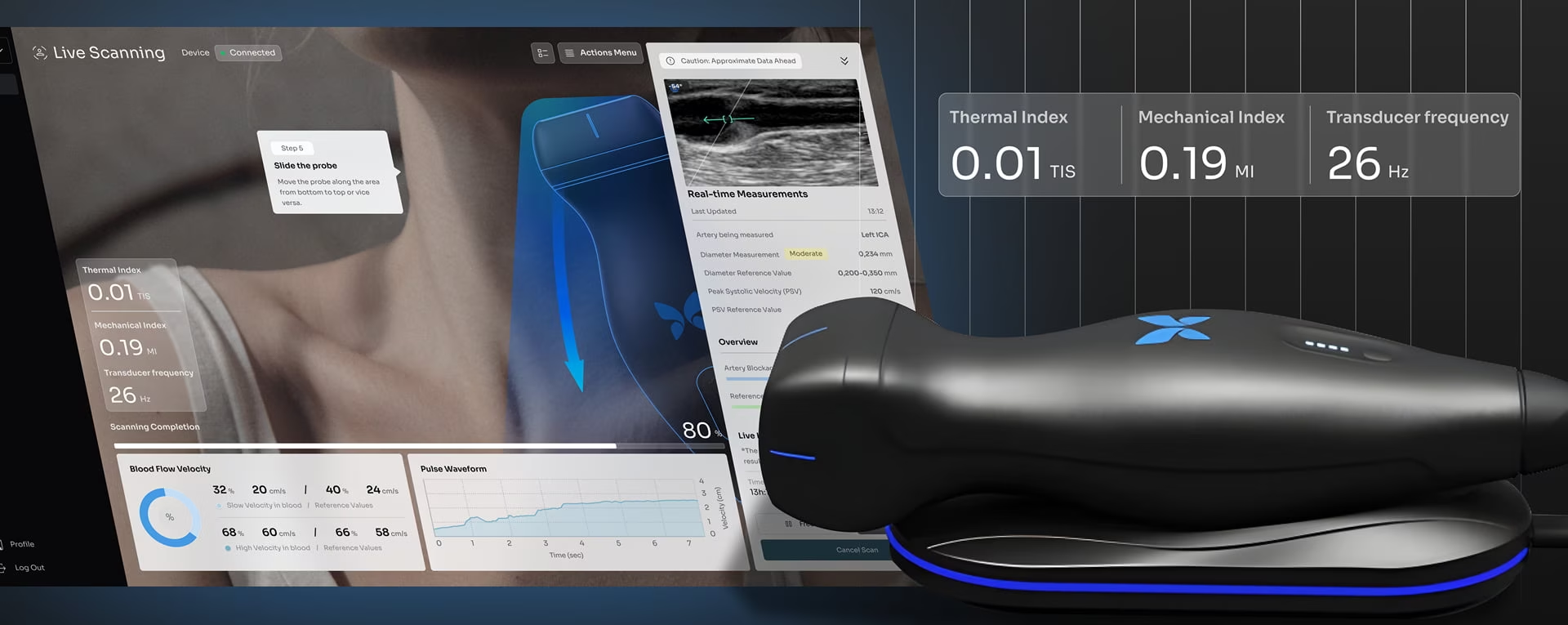
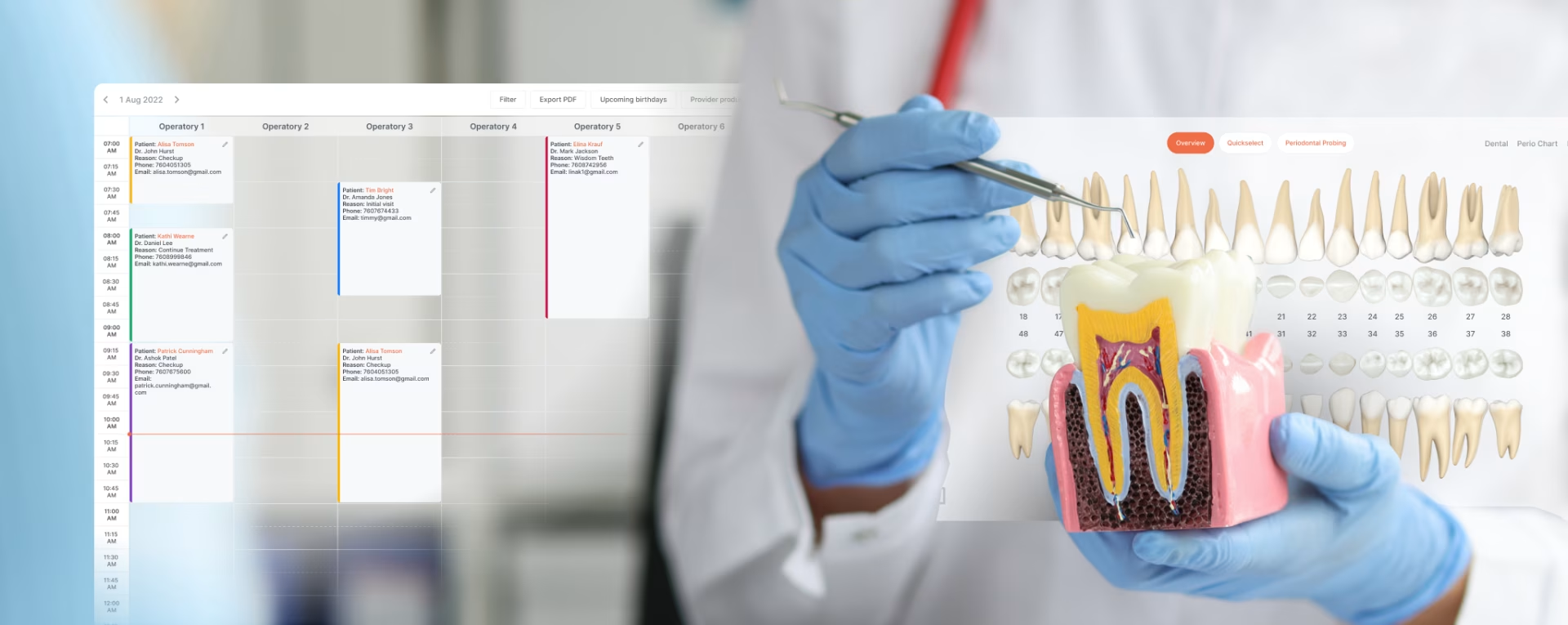
In healthcare, exceptional UI/UX design literally saves lives by streamlining clinical workflows through interfaces that minimize alarm fatigue, prevent medication errors, and present critical patient information at the right moment. Patient-facing designs that simplify appointment scheduling and medication management drive engagement in preventative care while improving treatment adherence. These specialized interfaces must balance strict regulatory requirements with the cognitive realities of high-stress medical environments while accommodating various clinical specialties’ unique needs.

The travel industry leverages sophisticated UI/UX design to transform overwhelming options into personalized journey planning experiences that balance inspiring discovery with efficient booking processes. Expert travel interfaces elegantly handle extraordinary complexity by displaying thousands of options while preventing decision paralysis through visual storytelling and interactive maps. Well-executed travel experiences must seamlessly transition between aspirational browsing and transactional efficiency while functioning across devices and variable network conditions.

AI applications are not like any other type of project. They demand revolutionary UI/UX that make complex algorithmic systems understandable, trustworthy, and controllable for both technical and non-technical users. The Fuselab approach to AI interfaces includes a progressive disclosure technique that allows casual users to benefit from AI capabilities while enabling specialists to access deeper insights. These designs address unique challenges like explaining confidence levels, handling probabilistic outputs, and establishing trust.

In e-commerce, world-class our UI/UX directly impacts revenue by creating a frictionless discovery-to-purchase pathways for our client’s that they then can easily build consumer confidence through immersive visualization, comprehensive product information, and strategic social proof integration. Effective interfaces employ sophisticated personalization that adapts to individual shopping patterns while maintaining checkout processes optimized to the millisecond level.

Our UI/UX design prowess has had a revolutionary impact on our real estate partners by transforming complex property evaluation into intuitive experiences through immersive photography, 3D tours, and neighborhood mapping that contextualizes properties within their surroundings. These interfaces elegantly handle extraordinarily complex demographically-based filtering requirements while keeping search approachable and creating natural pathways between discovery and agent engagement.
Contact Us
Fill out the form!
UI UX Design
Blogs
Fuselab UI/UX Expert Insights