How to choose a UX design agency in 2026
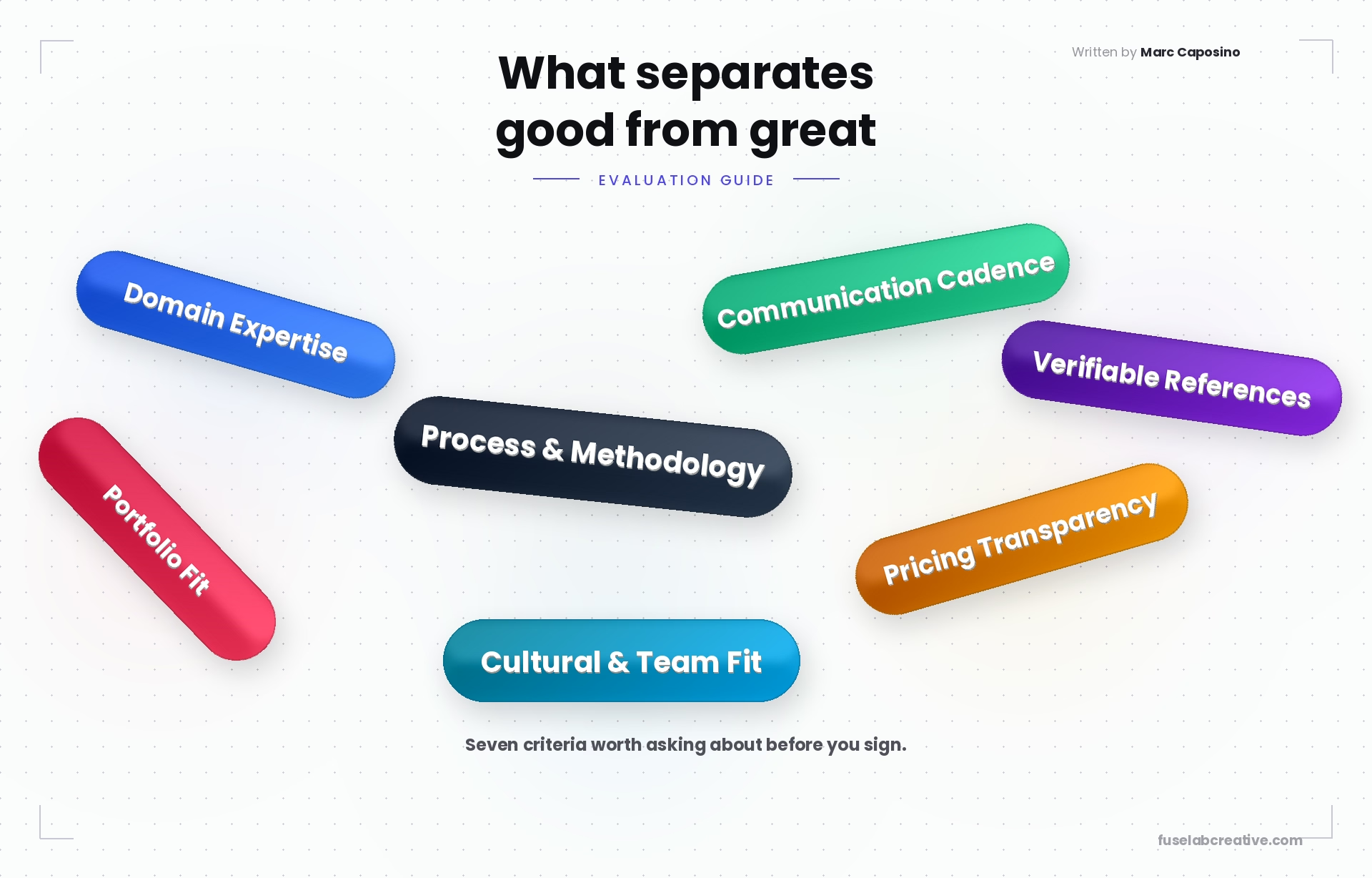
Choosing a UX design agency comes down to one match: the problem you need solved against a team that has already solved it, in a live product, for a client you can call. When a choice goes wrong, it shows months later, when the designs meet your real data, engineers and compliance rules, so this guide checks evidence first and visual polish last.
A note before you read on. Fuselab is a UX design agency, so we are probably one of the firms you are comparing. Every test in this guide applies to us too. We would rather you run these tests on our work than take our word for anything, and the same goes for every other firm on your list.
Start with the problem, not the portfolio
The right agency depends on what you are building. So start with a simple test: describe your problem in one sentence, then look for a team that has shipped that exact problem in a live product for a client you can name. Agencies that pass get a meeting. The rest do not, however good their case studies look.
Picture a company redesigning an analytics platform used by five different roles, next to a startup taking a clinical AI tool toward FDA submission. Add a federal team rebuilding a benefits portal. Those are three unrelated problems, and an agency that is excellent at one of them can easily be the wrong hire for the other two.
Most buyers do this backwards. They open the portfolio first, like what they see, and only then ask whether the work is relevant. By then they already like the work, and relevance becomes something they talk themselves into. Flip the order, and decide what counts as relevant before you look at a single screen.
Problem type matters more than industry. A team that has shipped multi-role onboarding, a platform rebuild or AI workflow design is a safer bet for that work than one that simply shares your industry label. Ten healthcare marketing websites do not add up to one clinician workflow, and a buyer who needs the workflow should not pay for the websites.
The further your product sits from a simple consumer app, the more this matters. Use the table below to find what your evaluation should focus on for your project, and which of our guides covers that type of work in more depth.
When you actually need to hire a UX design agency
Hire an agency when you need a skill your team does not have. Good examples are a research practice, a design system your team will keep building on, or experience with a problem your designers only meet once a decade. If you just need more hands for a few months, that is a different purchase.
Buying extra hours is a question of cost and control. A US team, in-house hires and a remote partner each win in different situations, and our comparison of US and remote design models walks through where each one makes sense before you sign anything.
Sometimes the problem is not design at all. If nobody owns the roadmap and priorities keep shifting, no outside team will fix that. Stronger product leadership inside the company will do more than any agency, and an honest agency will tell you so on the first call instead of selling you a project.
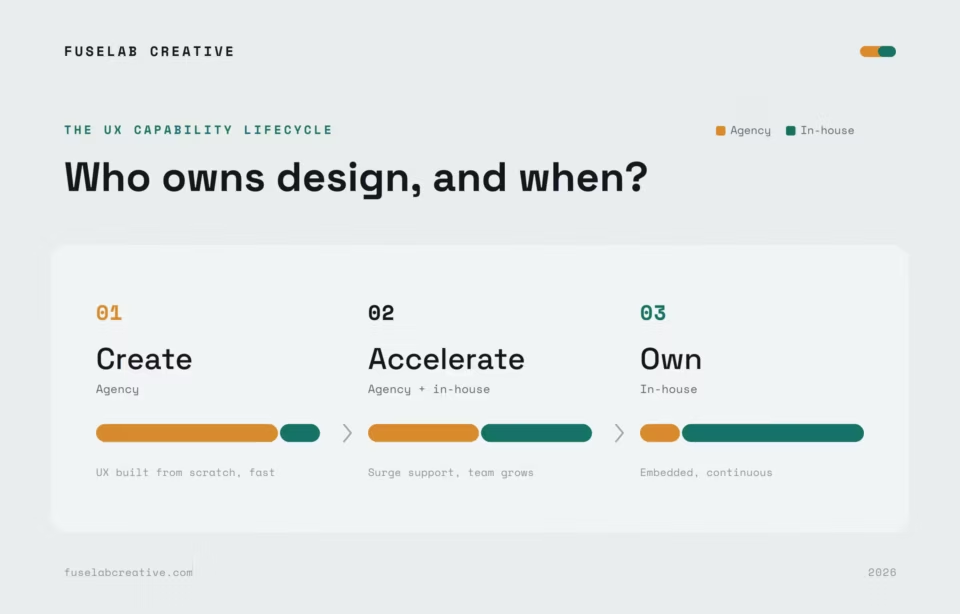
When the gap is real, a good agency leaves skills behind: research methods your team can repeat, documented patterns, and a design system it can extend. That is also the test behind the agency versus in-house decision. The question is whether design is a constant need for your product or an occasional one.
Why regulated and federal work changes the choice
In healthcare, finance and government, compliance experience is a basic requirement. An agency that has never worked under HIPAA, PCI DSS, Section 508, FDA human factors rules or federal AI policy should not make your list, whatever its visual work looks like. These rules shape the research, the structure of the product and the timeline from the first week.
Compliance shapes the work from week one
Compliance rules decide who you can recruit for research, what data a screen may show, who is allowed to see it and which accessibility standard it must meet, long before anything reaches testing. On ClyHealth, a platform that turns genomic and clinical data into treatment plans, we designed the data display rules, session handling and permissions around HIPAA before any visual design began.
Federal procurement changes the team you can use
A GSA Schedule lets a federal buyer order from pre-vetted vendors under simplified procedures instead of running a full open competition. That can take months out of procurement, and Fuselab holds a GSA Schedule contract. Security rules, data residency and clearance requirements can also rule out offshore teams entirely.
Federal approvals, such as the authority to operate, add time that never shows up in a portfolio but always shows up in the delivery plan. An agency that has not worked through these reviews will underestimate the calendar. You find out after signing, when changing course costs the most.
AI in a federal product adds one more layer. OMB Memorandum M-25-21, issued in April 2025, treats AI used in benefits and healthcare as high-impact, which brings documented testing, monitoring and human oversight. For the design team, that means users need a clear way to challenge an output, and uncertain cases need a route to a person.

Red flags when you evaluate an agency
Watch how the first meeting starts. An agency that opens with a generic capabilities deck, instead of questions about your users, your numbers and your engineering setup, is selling before it understands. Teams that know your kind of problem ask first, because they cannot scope work they do not understand yet.
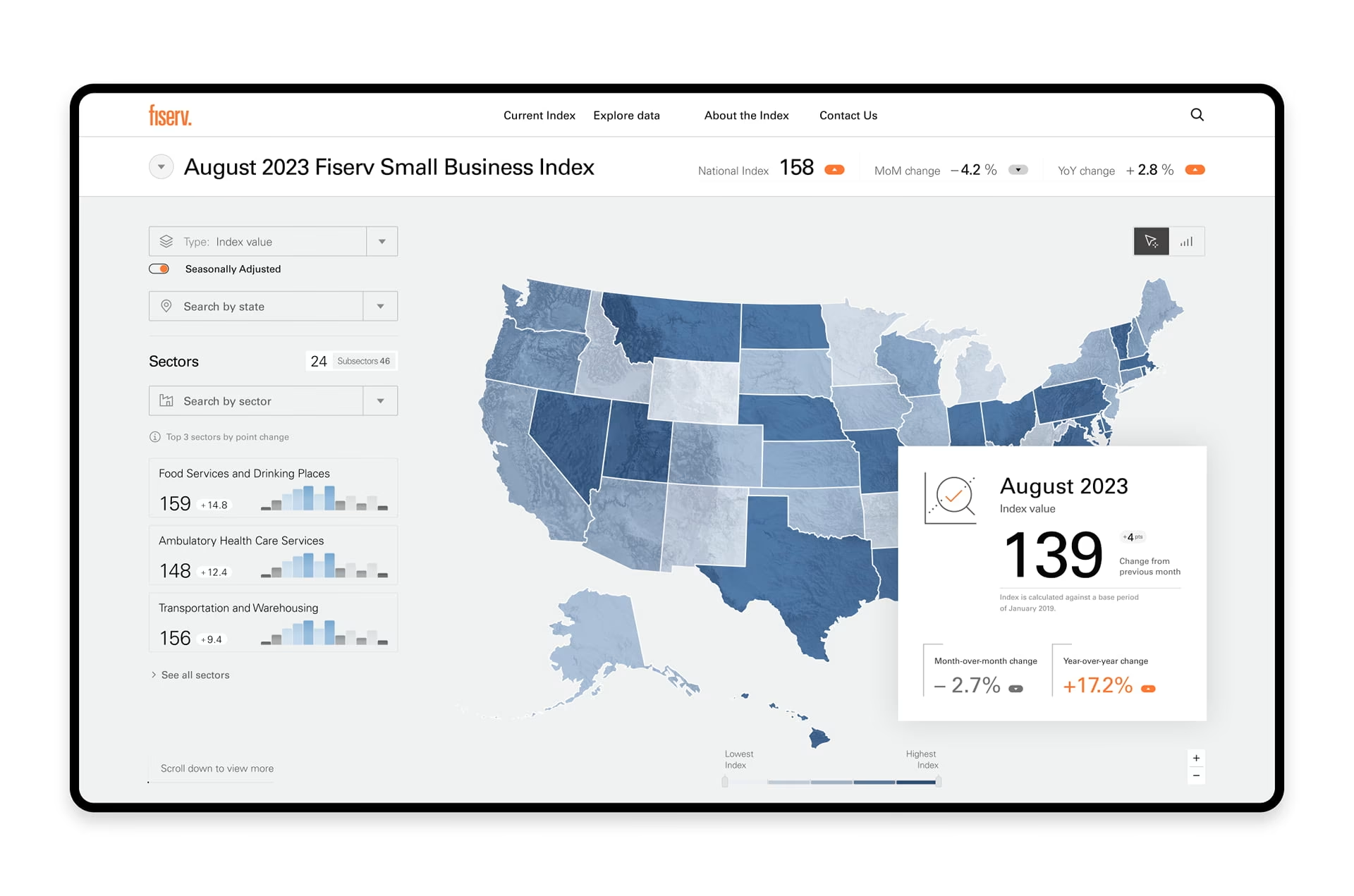
A beautiful dashboard proves the team can make things look good, and nothing more. What proves capability is the thinking behind it: how the information is organized, which error states were designed, and what research explains why one layout beat the others that were tested and dropped.
Listen for numbers. Teams with real experience talk about activation rate, time to first value or error rate. Teams without it talk about a modern look or a more intuitive experience, which nobody can check. Be careful, too, with agencies that claim equal expertise in every industry at once.
Two of these signals need a caveat. A thin public portfolio does not always mean shallow work, because regulated, government and enterprise projects often sit under NDA. And a brand-new product has no earlier baseline, so its team may have no before-and-after number to show you.
Both cases still leave one fair test. A team that cannot show you the work can still walk you through the method it used and the result it would measure. If it cites confidentiality and still cannot describe its method, treat that as a failed test.
What to ask in the first meeting
A rehearsed pitch can answer almost anything except a question about a real decision. So ask the agency to walk you through a product it shipped with several user roles and at least one compliance or workflow constraint. Then listen for whether they name the constraint and the decision it forced.
Ask how long it takes them to deliver something you can react to, and what they count as a scope change after kickoff. Ask who exactly will work on your project and how busy that person is right now, because the people in the room are not always the people who do the work.
Three more questions separate strong agencies from polished ones. What was the last project they turned down, and why? What would they still need to learn before recommending anything? And what happens after launch? A good answer to the first names a type of problem they know sits outside their skills.
The last question matters most. Projects usually go wrong when nobody planned the handoff, the training or the first month of fixes after launch. An agency with a real answer describes how your team will maintain the work after delivery, and who to call when something breaks.
Then ask for two references from projects like yours, and call them yourself. Ask what went wrong and how the agency handled it, whether the people from the pitch did the actual work, and whether the team still uses what was handed over. A reference who can only talk about the pitch has told you very little.
For any AI product, one question does more work than all the others: what does the interface do when the model is unsure? A credible answer covers how confidence is shown, what the fallback looks like, and who reviews a low-confidence result before it reaches the user.
A strong answer is specific. On ClyHealth, for example, showing the reasoning behind each treatment recommendation was a design decision from the start. The plan draws on genomic data, lab results and health history that a patient cannot check alone. Patients and clinicians both tested the system before launch.
Nielsen Norman Group’s guidance on explainable AI explains why this matters: explaining how a system reached an output helps people understand it and decide whether to trust it. An agency that has designed these explanation and uncertainty states before will not be learning them on your project.
What to check in a UX design agency proposal
A strong UX design agency proposal describes your problem in your own words and lists every deliverable your team will keep. It names the people who will do the work and defines in writing what counts as a scope change. If a proposal prices phases without saying what each one produces, every later dispute is still open.
Scope is where proposals quietly differ. Check whether it lists screens, flows and user roles by name, or only names a phase. Named scope lets you compare three proposals line by line. A phase name makes the cheapest bid look like the same work for less, and the difference comes back later as change orders.
The most useful term to negotiate is a paid discovery phase with its own written deliverable and a clean exit. Discovery is the first time the agency meets your real users, data and engineers, so it works as a trial. If the findings do not change how your team sees the problem, you have learned what the full project would deliver.
Read the ownership and handoff terms before you read the price. Design files, research recordings and the design system should transfer to you. The proposal should also say how the work reaches your engineers: annotated specs, a component library, front-end code if the agency builds it, or shared sprints. Silence here usually means the project ends at the final presentation.
How to read an agency’s portfolio
Every agency portfolio is edited, and your job is to find out what was cut. The screens show what the agency wants you to see. What matters is the problem behind the design, the options the team rejected and why, and whether the product is live with real users or only exists as a design file.
Good case studies explain the problem before they show the design. Look for a clear statement of who the user is, where they work and what failure the design had to prevent. Then look for tradeoffs, because the most revealing question is what the team built, tested and threw away.
Experienced teams have dropped navigation patterns that tested badly and cut onboarding steps that looked logical but made people quit. That discarded work tells you more than the finished screens. It shows a real process, where the answer came out of testing instead of from the first idea in the room.
Finally, check that the product is live. A team that shipped something can talk about adoption, completion rates and what its design changed. Years in production suggest the design fits how people really work. A list of launches with no history after launch only proves the team can ship.
What the engagement actually costs
A US-based UX agency usually charges $100 to $200 per hour, while offshore and Eastern European studios charge roughly $25 to $99. Minimum project sizes run from about $5,000 at small studios to $50,000 at the enterprise end. A full enterprise or government program often costs $150,000 or more.
The hourly rate is the smallest part of the real cost. A proposal does not show the engineering rework when designs ignore technical limits, the cost of a delayed launch, or a second agency hired to finish an incomplete handoff. A specialist who has solved your problem before can easily cost less in total than a cheaper team learning on your budget.
Check every rate you are quoted against the agency’s current Clutch profile. That is how we verify the rates in our comparison guides, and it takes two minutes. Our own Clutch profile lists $100 to $149 per hour with a $25,000 project minimum, and it is checked the same way.
How long the work should take
A focused UX project on an existing product, such as a dashboard redesign, usually takes six to sixteen weeks of design. Platforms with many user roles, clinical tools, AI products and federal modernization take longer, because research access, compliance review and approval cycles add time that faster design cannot remove.
Squeezing that work into an aggressive schedule moves the cost into rework and poor adoption, which is more expensive than the weeks the tight plan seemed to save. A credible agency will push back on an unrealistic timeline, even when that makes its proposal look slower than a competitor’s.
Ask each agency to split its timeline into discovery, design and handoff, and to list what it needs from you: access to users, a data sample, an engineering contact and a compliance reviewer. On our own projects, delays most often start on that client-side list, and a good plan names those items before kickoff.
How to score a UX design agency shortlist
Score a UX design agency shortlist on five dimensions from 0 to 5, but do not simply average them. Shipped-problem match works as a gate: below 3, the agency is out, whatever else it scores. For regulated work, compliance experience is a second gate. Only agencies that pass every gate that applies to you get a full score.
The table below shows what a 5 and a 0 look like on each dimension. Use it during first meetings and proposal reviews, so every agency on your list is judged on the same terms instead of on whoever gave the most memorable pitch.
For agencies that pass, add up every dimension that applies, gate scores included, so strong shipped evidence keeps counting. Then pick the one dimension your situation makes decisive, count it twice, and write that down before the first meeting. The example below is a SaaS analytics platform whose in-house team will own the product after launch.
Agency C gave the most polished pitch and stopped at the gate, because it had no live analytics product to show. A and B tie at 16. Counting handoff twice decides it for B, and because that rule was written down in advance, the choice holds up when procurement asks why.
Conclusion
The decision in 2026 rests on evidence you can check: a live product that solved your problem, a proposal that names its scope and people, and a handoff your team can live with. Run the gate first, write your weights down before the meetings, and the shortlist will mostly sort itself out.
Frequently asked questions
How do I choose a UX design agency?
Choosing the right agency starts with the shipped-problem test: name the specific problem you need solved in production, then verify which agencies have built that exact problem before. Score the agencies that pass on problem-type depth, process evidence and team clarity, and use a paid discovery phase as the last check before a full contract.
What does a UX design agency do?
A UX design agency studies how real users understand and struggle with a product, then designs the screens and flows that let them finish tasks with fewer errors. Most projects also hand over research findings, a design system and developer-ready specs, so your team can keep building after the agency leaves.
What should an agency proposal contain?
A credible agency proposal states your problem in your own terms, with the success metrics you care about, a research method, a list of everything that transfers to you at the end, and a timeline that shows its dependencies. It should also name the people doing the work and define in writing what counts as a scope change.
How long does a UX design agency engagement take?
A UX design engagement on an existing product, such as a dashboard redesign, usually runs six to sixteen weeks of design work. Clinical, AI and federal projects add weeks for recruiting, approvals and compliance review that no design team can shorten.
Does industry experience matter more than problem-type experience?
Problem-type experience usually matters more than industry experience when choosing an agency. A team that has solved your specific kind of problem, such as multi-role onboarding or a clinical AI workflow, is often a better fit than one that shares your industry but has only built nearby products.
How many agencies should I shortlist?
Three to five agencies is the right shortlist once you have applied the shipped-problem test, because the gate has already removed the firms that never built your problem. Fewer than three gives you no real comparison on price or team, and more than five turns first meetings into a week of pitches that blur together.
How much does a UX design agency cost in 2026?
A UX design agency in the US usually charges $100 to $200 per hour, and offshore or Eastern European studios charge roughly $25 to $99. The number of user roles, the research needed and the compliance scope drive the total, and full enterprise or government programs often pass $150,000.