UI/UX Design Agency for Complex Products










Work that demands more than UX
Fuselab is a UI/UX design agency for products where the interface carries real technical and regulatory weight. We combine product strategy, technical depth, and interface design to make complex systems intuitive and usable.





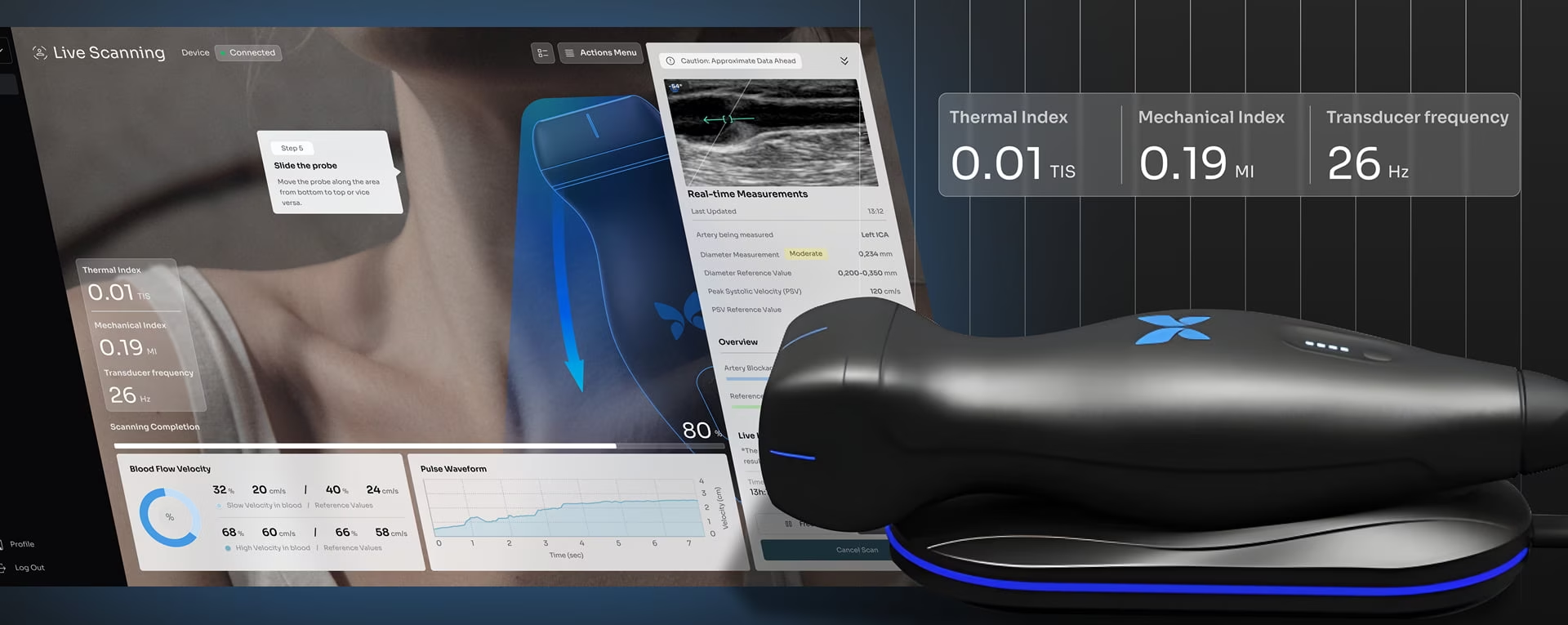
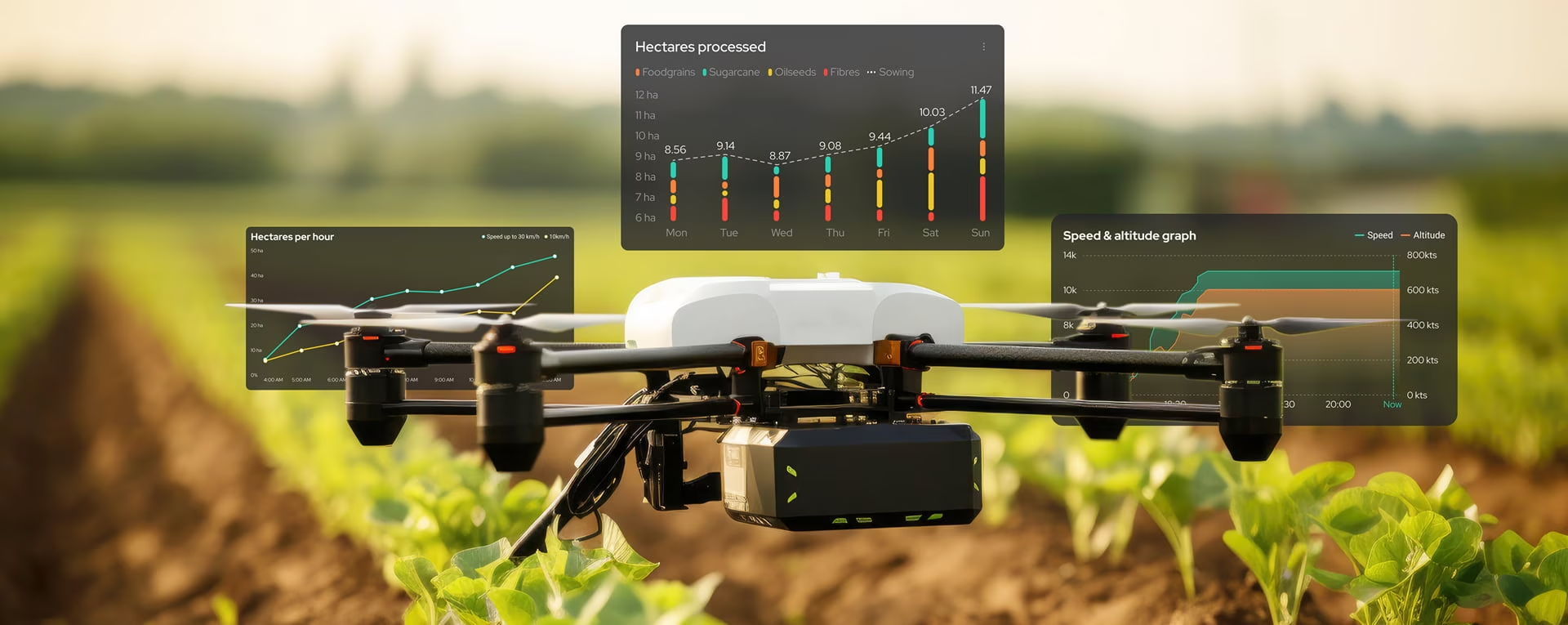


UI/UX design services, from research to build
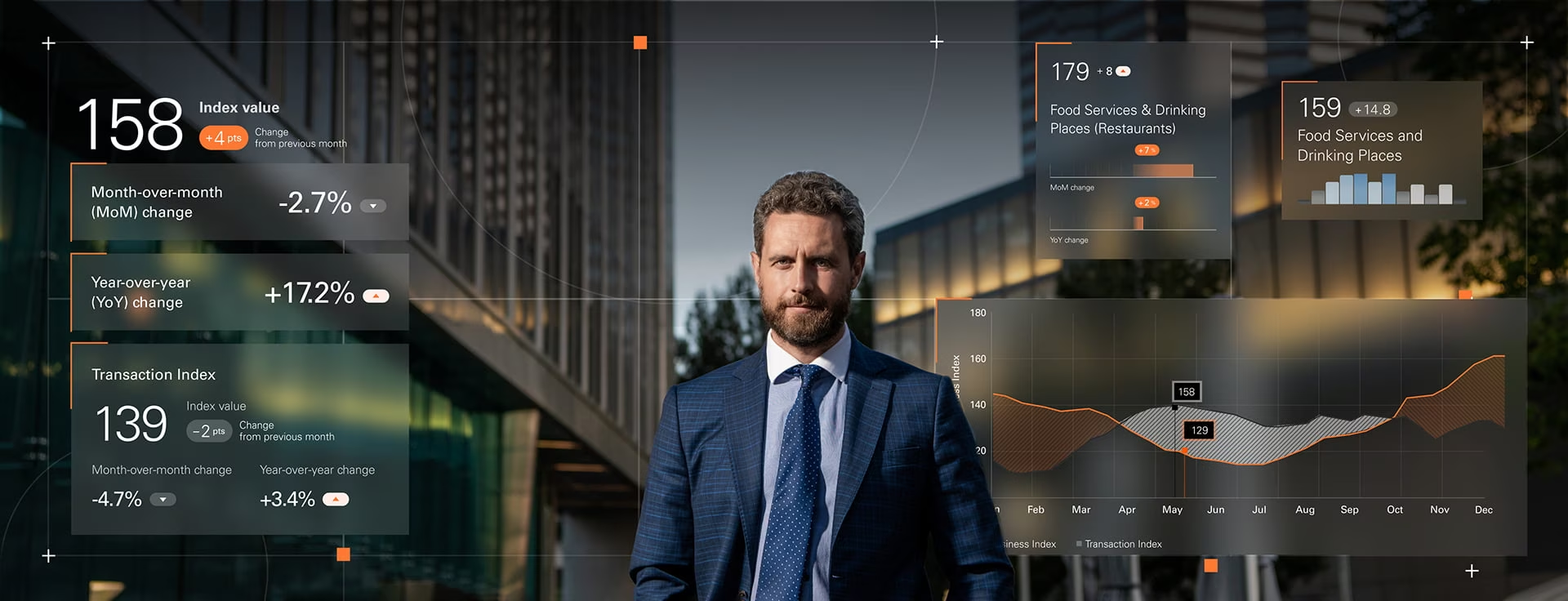
Data Visualization
We design data visualizations that surface anomalies in seconds and give non-analysts a path from a number to an action. Most of the work happens before chart styling: choosing the metrics that matter and building a hierarchy that exposes outliers without burying their context.

AI Interface Design
AI systems are non-deterministic, so we design interfaces that show when the model is confident, when it is guessing, and how to push back on a wrong answer. Confidence cues, fallback states, and recovery paths matter more than visual polish when results are uncertain.

Dashboard Design
Enterprise dashboards can overwhelm users when they show too much at once. We design around user roles and decision priorities, focusing each screen on the metrics that matter most to that role and connect to a clear next action.

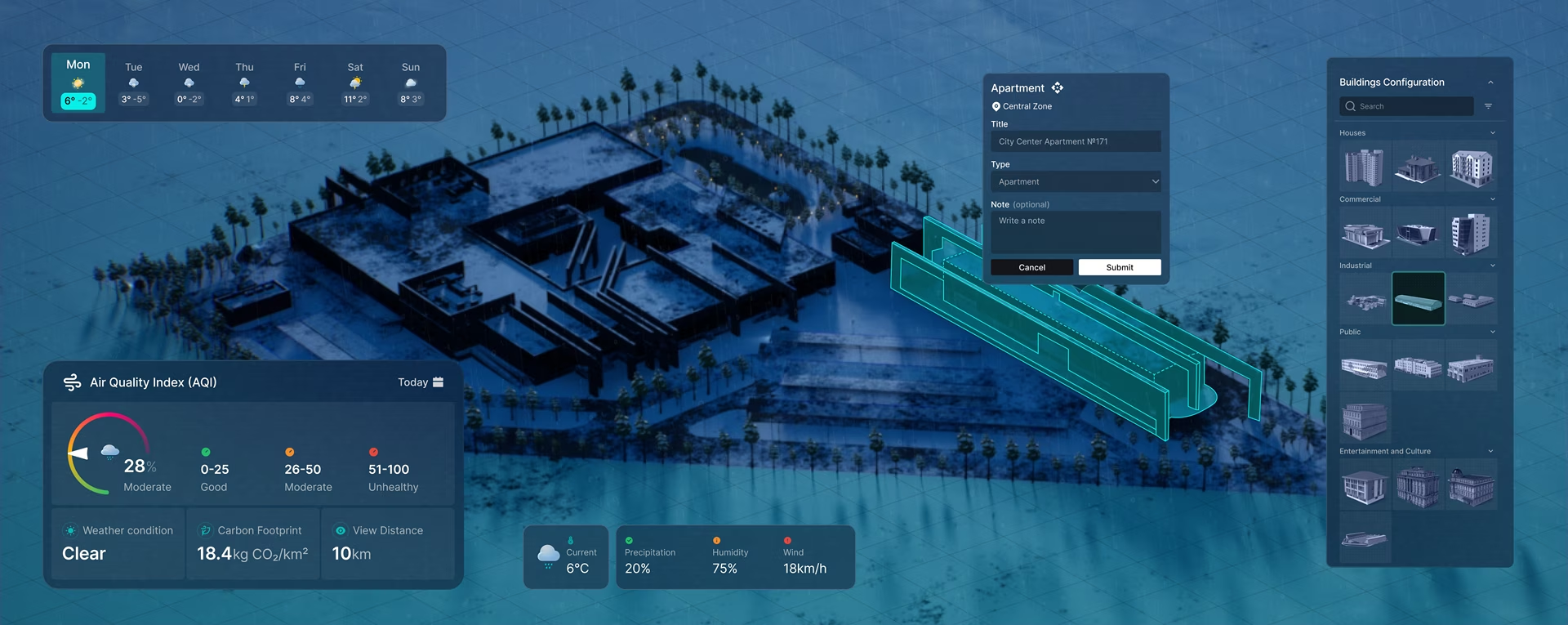
Map Visualization
Geographic accuracy is rarely the only challenge in map interface design. We design for legibility at every zoom level, determine which information to surface at each scale, and provide layers and filters that turn maps into tools for exploration rather than static images.

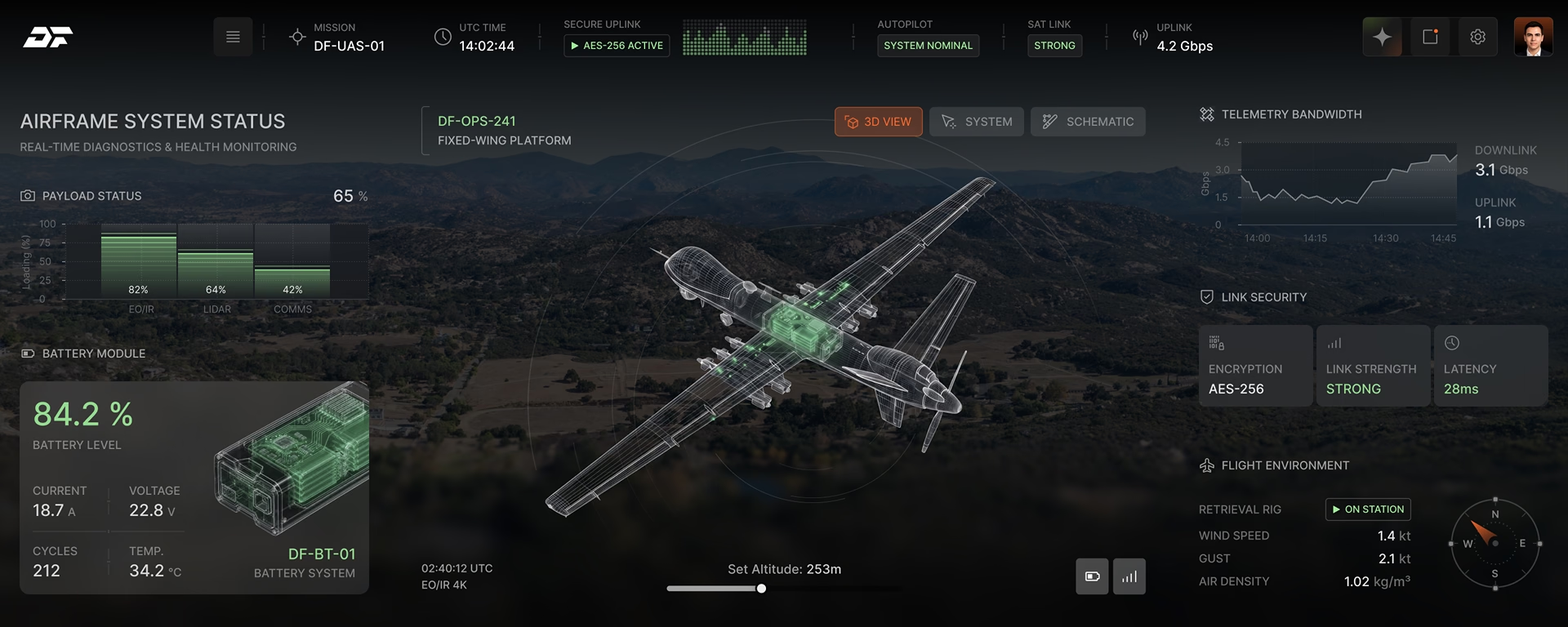
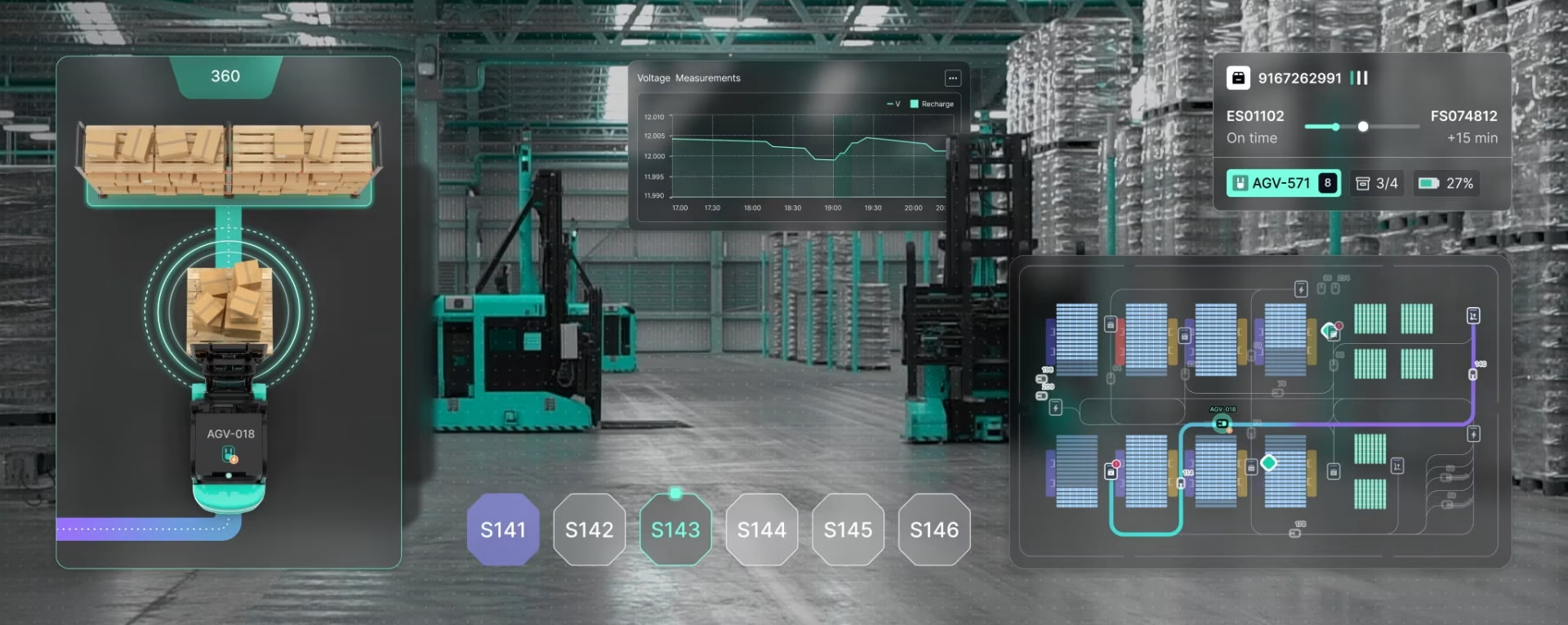
Simulation Interface Design
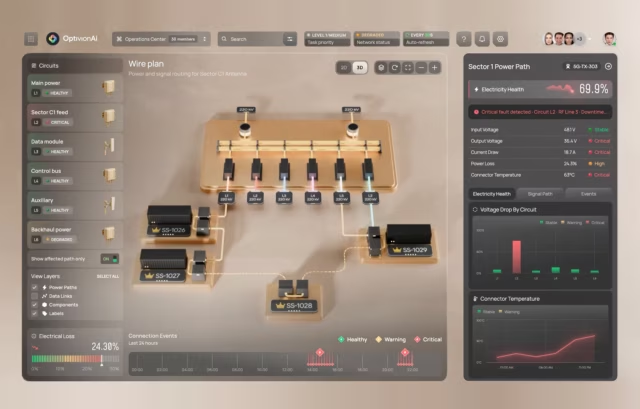
Operators using 2D and 3D simulators face demanding cognitive tasks. We design interfaces for training, industrial operations, and emergency response, helping users maintain situational awareness, interpret changing conditions, and make decisions under pressure.

MVP Development
Design and build with one team, from early concept to working first release. We help startups validate ideas through investor-ready prototypes and functional MVPs, with a clearly defined scope and fixed price agreed before development begins.

Our Team
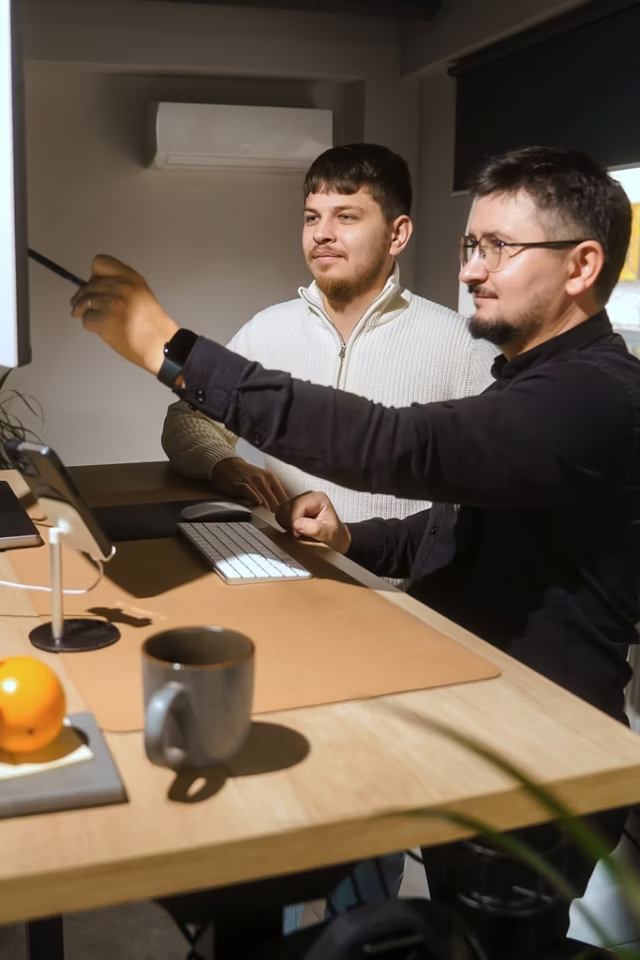
At Fuselab, product strategy, UI/UX design, and engineering work as one team, helping us design products that balance technical requirements, regulatory constraints, and user needs.
Founded in 2017 in McLean, Virginia, we work with teams across the US. Senior designers lead every engagement and collaborate directly with your engineers.
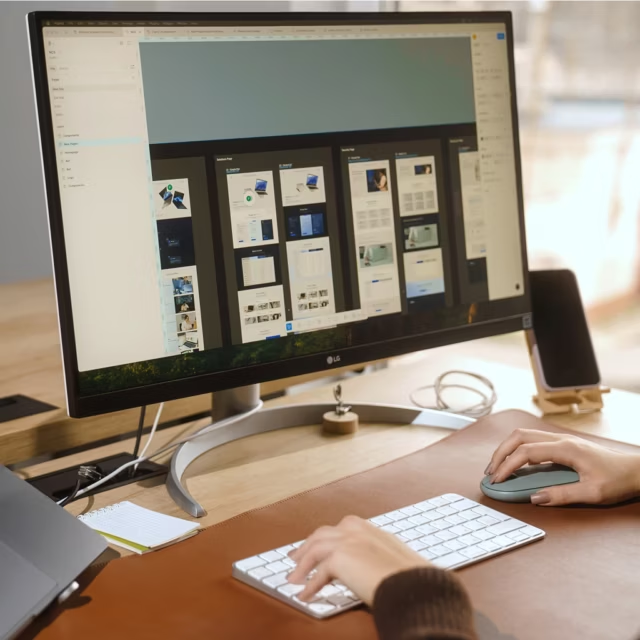
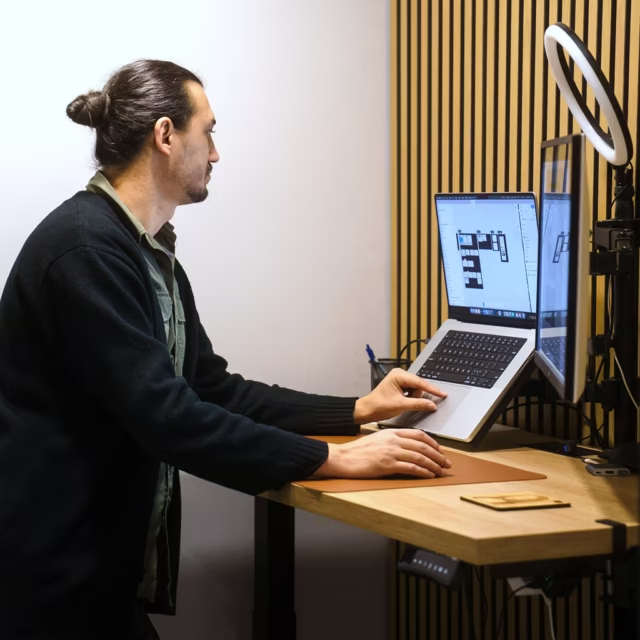







Trusted by Product Teams Since 2017
“After only a few weeks
we knew we had a partner for the long haul with the Fuselab team.”

AI-driven product design and user experience services by Fuselab Creative

Uber
Case StudyMobile app design for transportation services by Fuselab Creative

EY
Enterprise digital twin design by Fuselab Creative

NASA
Data visualization and user experience design for America's space agency by Fuselab Creative

NIH
Healthcare interface design for the National Institutes of Health by Fuselab Creative

Avison Young
AI-canvas platform for commercial real estate by Fuselab Creative

Informa.com
interface design for a global knowledge and information company by Fuselab Creative

Mozilla
Case StudyOpen-source voice data platform design by Fuselab Creative

Grid AI
Case StudyMachine learning dashboard and interface design by Fuselab Creative


POGO
Case StudyGovernment spending transparency and data visualization platform by Fuselab Creative

Blis
Case StudyAdvertising technology platform design by Fuselab Creative

Nike
Case StudyCustom print and digital experience design by Fuselab Creative


Rybbon
Digital rewards and e-gift card platform design by Fuselab Creative

ReferralMd
Case StudyHealthcare referral management and EHR platform design by Fuselab Creative


Novadontics
Dental EHR, scheduling, and marketing platform design by Fuselab Creative

Aircraft Bluebook
Aircraft valuation data platform design by Fuselab Creative

George Mason University
AI-powered healthcare injury records platform design by Fuselab Creative

Aviation Week
Aviation industry information platform design by Fuselab Creative

Wärtsilä
Energy and maritime data visualization and platform design by Fuselab Creative

Corelight
Cybersecurity threat detection platform design by Fuselab Creative

Leadership Connect
Government intelligence and connections platform design by Fuselab Creative

RhythmX Al
Healthcare AI platform and data experience design by Fuselab Creative

Public Health Institute
Addiction support and treatment digital platform design by Fuselab Creative

Impac
Real-time oil and gas drilling analytics dashboard design by Fuselab Creative

Riderintel
AI threat intelligence platform design by Fuselab Creative

EM Dental
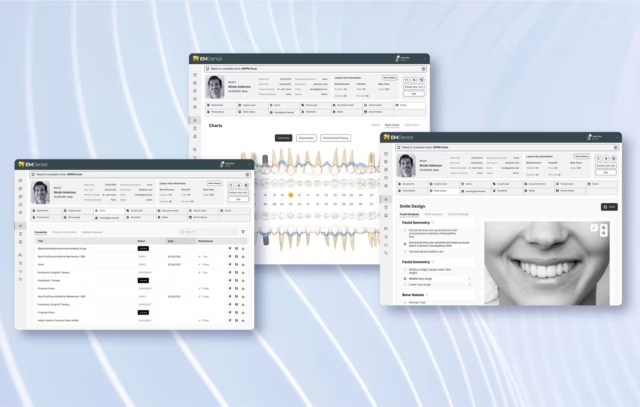
Case StudyDental practice management software design by Fuselab Creative

CYNGN
Autonomous vehicle technology platform design by Fuselab Creative

Hyperframe
Construction technology platform design by Fuselab Creative

ATB Banks
Financial services user experience design by Fuselab Creative

CRISP
Health information exchange platform design by Fuselab Creative

DHCS
Case StudyHealthcare data visualization and dashboard design by Fuselab Creative

Handshake
Case StudyProfessional networking and career platform design by Fuselab Creative
UI/UX design across 9 industries
We design digital products for healthcare, AI, government, fintech, cybersecurity, manufacturing, transportation, ecommerce, and real estate. Our research, UI/UX design, and product strategy adapt to each industry's technical, operational, and regulatory demands; the standards do not.
 Healthcare
  AI and ML
  Government & Non-Profit
  FinTech
  Cybersecurity
  Manufacturing & Robotics
  Transportation and Logistics
  Ecommerce and Retail
  Real Estate
 Don't Listen to Us, Read What Our Clients Are Saying.
Every review below is unedited and independently verified, and every one is from a project that shipped. The names and roles are real, and you are welcome to ask us for an introduction.
We went from prototype to usable software lightening fast, and our customer reviews have never been better."


"Their creativity and mastery of UX UI design has made our years of working together enjoyable and incredibly successful!"

"If you need to re-think your product and need some truly unique design talent , Fuselab Creative design team is your answer."

"We needed a nimble team of UX UI designers to work with our development team and they quickly became one of our most vital resources and far exceeded our expectations."


Design Perspectives
Practitioner essays on AI interface design, chatbot UI, dashboard design, and healthcare UX, plus what it takes to run a UI/UX agency. Grounded in real product work, not the news cycle.
Written by the senior practitioners behind our client work, including the founder and the designers leading Fuselab's AI, healthcare, and dashboard projects. Every article comes out of a live engagement.


Before you hire a UI/UX design agency
Straight answers on scope, pricing, timelines, and procurement, so you can compare us with the other agencies on your shortlist.
What does Fuselab Creative do?
Fuselab Creative is a UI/UX design and digital product agency based in McLean, Virginia, that designs dashboards, data visualizations, and AI interfaces for enterprise teams, government programs, and funded startups. Founded in 2017, we have shipped data-intensive products for NASA, Fiserv, Uber, NIH, and the California Department of Health Care Services. Typical engagements deliver Figma design systems, custom data-visualization libraries, and engineering-ready specifications.
What types of products do you design?
Fuselab Creative designs enterprise dashboards, data visualization and analytics products, AI interfaces including chat, agent, and decision-support tools, and the mobile and web apps around them. Recent work ranges from clinical and government data platforms to robotics control interfaces and startup MVPs. Most projects involve dense data, multiple user roles, and compliance requirements.
Which industries do you specialize in?
Fuselab Creative works across nine industries: healthcare, AI and machine learning, government, fintech, cybersecurity, manufacturing and robotics, transportation and logistics, ecommerce, and real estate. Each engagement adapts to the industry’s regulations and standards, including clinical workflows and HIPAA-related requirements in healthcare and Section 508 accessibility for federal projects.
How much does a project cost?
Fuselab Creative projects start at $25,000, with most work priced as a fixed-price proposal after a scoping call based on product complexity, user roles, compliance needs, and platform scope. Where hourly applies, rates run $100 to $149. The agreed scope and budget are confirmed before any work begins, with no open-ended hourly engagements.
How long does a typical project take?
Timelines at Fuselab Creative are set during scoping and depend on user roles, platforms, and research scope. Discovery typically takes two to four weeks, with design running in two-week prototype and testing cycles after that. A confirmed timeline is part of every proposal.
How does the engagement process work?
Every Fuselab Creative engagement starts with a scoping call, followed by a fixed-price proposal. Discovery then runs two to four weeks to define business outcomes and research questions, and if we are not the right fit after the first two weeks you can walk away owing nothing. Design proceeds in two-week prototype and testing cycles, and each engagement closes with a Figma design system your own team can extend.
Do you work with startups and early-stage teams?
Yes. Startups and enterprise teams both hire Fuselab Creative, with scope sized to the client’s stage. Early-stage teams typically start with an MVP or investor-ready prototype, while later-stage teams engage for dashboards and regulated product interfaces. Senior practitioners lead every engagement either way.
Do you work with government and regulated organizations?
Yes. Federal agencies can procure Fuselab Creative’s services through our GSA contract, and regulated clients in healthcare and finance make up a large share of the portfolio. Government work includes the Medi-Cal interface redesign for the California Department of Health Care Services and data products for NASA and NIH, with Section 508 accessibility built in where applicable.
What makes Fuselab Creative different from other UI/UX design agencies?
Fuselab Creative differs in three ways. Product strategy, UI/UX design, and engineering sit in one team, so the people who scope the product are the people who design and build it. Senior practitioners lead every project directly, and for teams that want faster iteration we run AI-assisted design workflows, including Claude Design, to move from brief to testable prototype in days. Every engagement ends with a Figma design system and specifications your own team can extend without coming back for each new screen. For federal buyers, a GSA contract adds direct procurement.